
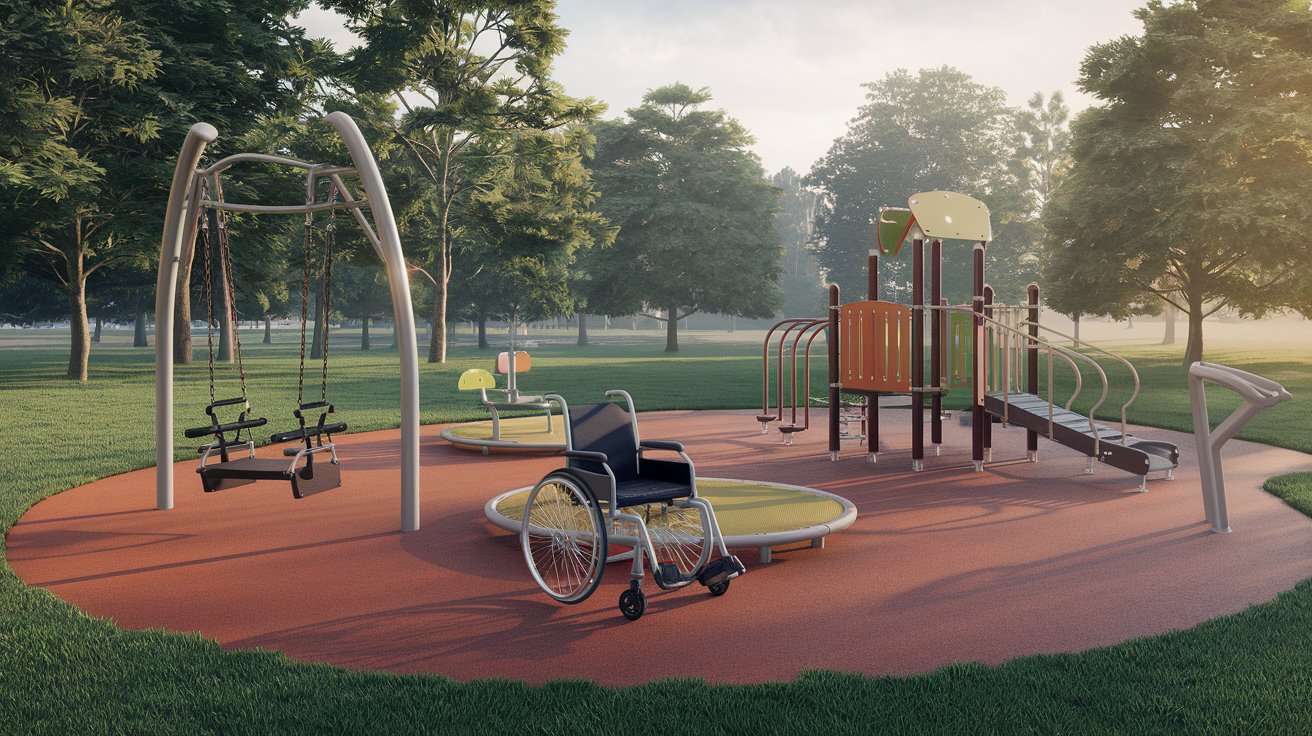
Creating a wheelchair accessible playground surface is essential for building truly inclusive recreational spaces where all children can play together. In 2026, approximately 1 in 4 families in the United States have a child with mobility challenges, making accessible playground surfaces more critical than ever. This comprehensive guide covers ADA-compliant surface options, installation requirements, cost considerations, and practical solutions to ensure your playground meets federal accessibility standards while providing safe, enjoyable play experiences for children of all abilities.
Understanding ADA Accessible Playground Surfaces
ADA accessible playground surfaces must meet specific requirements established by the Americans with Disabilities Act and updated through the 2010 ADA Standards for Accessible Design. These surfaces ensure that children using wheelchairs, walkers, or other mobility devices can safely access playground equipment and navigate play areas. The U.S. Access Board requires that accessible routes have a firm, stable, and slip-resistant surface with proper shock absorption to prevent injuries from falls.
In 2026, the Consumer Product Safety Commission reports that playground surface accessibility has become a priority for over 78% of municipal park districts across the United States. Accessible surfaces must maintain their accessibility characteristics under normal use and weather conditions typical to the installation location. The surface must also comply with ASTM F1951 standards, which test wheelchair maneuverability by measuring the force required to propel a wheelchair across the surface.
Types of Wheelchair Accessible Playground Surfaces
Several surface materials meet ADA compliance standards while providing the necessary accessibility features for wheelchair users. Each option offers distinct advantages in terms of durability, maintenance requirements, and cost considerations for playground installations throughout the United States.
Poured-in-Place Rubber Playground Surface
Poured-in-place rubber surfaces remain the gold standard for wheelchair accessible playgrounds in 2026, with installation costs ranging from $12 to $18 per square foot across most U.S. markets. This seamless surface consists of two layers: a shock-absorbing base layer of recycled rubber and a wear layer of colored EPDM rubber granules. The continuous surface eliminates gaps and transitions that could impede wheelchair movement, providing smooth accessibility from parking areas to play equipment.
The material offers exceptional durability with a lifespan of 12 to 15 years under normal use conditions, and its permeability allows water drainage while preventing puddle formation. Poured-in-place installations can achieve critical fall heights up to 12 feet when properly installed at appropriate thicknesses, meeting both safety and accessibility requirements simultaneously. Over 62% of new public playgrounds in the United States now specify this surface type for accessibility zones.
Bonded Rubber Tiles and Mats
Bonded rubber tiles provide a cost-effective alternative to poured surfaces, with prices typically ranging from $8 to $14 per square foot including installation in 2026. These interlocking tiles feature beveled edges that create smooth transitions between sections, allowing wheelchairs to roll easily across the playground surface. The modular design enables targeted replacement of damaged sections without resurfacing the entire play area, reducing long-term maintenance expenses.
Commercial-grade rubber playground tiles meet ASTM F1951 accessibility standards when properly installed on a level, compacted base. The tiles typically measure 2×2 feet or larger to minimize the number of seams, and many manufacturers now offer ADA-certified products with third-party testing documentation. Installation time averages 40% faster than poured surfaces, making tiles an attractive option for projects with tight completion deadlines or phased playground renovations.
Engineered Wood Fiber Surface Systems
Engineered wood fiber represents the most economical ADA-compliant option, with material and installation costs between $3 to $6 per square foot in most U.S. regions during 2026. When properly maintained at a minimum depth of 9 inches and contained within borders, engineered wood fiber can meet ASTM F1951 accessibility standards. However, this surface requires significantly more maintenance than rubber alternatives, with monthly raking and annual replenishment necessary to maintain accessibility characteristics.
The wood fiber surface compacts over time and in high-traffic areas, potentially creating accessibility barriers if not regularly maintained. Weather conditions significantly impact performance, with heavy rain temporarily reducing accessibility until the surface dries and is re-raked. Despite these limitations, approximately 23% of community playgrounds in rural United States areas utilize engineered wood fiber due to budget constraints, with maintenance protocols established to ensure continued ADA compliance throughout the year.
ADA Playground Requirements for Surface Installation
Federal regulations mandate specific ADA playground requirements for surface installation to ensure genuine accessibility rather than nominal compliance. The 2010 ADA Standards require accessible routes at least 60 inches wide connecting the playground entrance to accessible play components, with ground-level play components accessible via routes throughout the playground. These pathways must maintain maximum slopes of 1:12 for ramps and 1:48 for running slopes in the direction of travel.
The accessible surface must extend across the use zone of accessible play equipment, typically 6 feet in all directions from the equipment perimeter for structures 30 inches or lower in height. For elevated play structures, accessibility requirements apply to ground-level transfer systems and ramp access points. The surface must maintain slip resistance in both wet and dry conditions, with the U.S. Access Board recommending a minimum static coefficient of friction of 0.60 for accessible routes and 0.80 for ramps under wet conditions.
In 2026, digital compliance verification has become standard practice, with playground surfacing companies utilizing laser grading equipment and electronic accessibility testing devices to document ADA compliance. These tools measure surface firmness using calibrated force gauges and verify proper slopes with digital inclinometers, creating comprehensive compliance reports for facility owners. Municipal playgrounds now face potential ADA violation penalties averaging $75,000 to $150,000 for first-time offenses, making proper surface installation documentation essential for risk management.
How to Make a Playground Handicap Accessible
Transforming existing playgrounds into handicap accessible facilities requires systematic evaluation and strategic improvements beyond simply installing compliant surfacing. The accessibility upgrade process begins with a comprehensive site audit using the ADA Playground Accessibility Checklist, which evaluates entrance routes, parking facilities, accessible play components, surface conditions, and transfer systems for elevated play structures.
Priority improvements for making playgrounds accessible include establishing at least one accessible route from parking or public sidewalks to the playground entrance, ensuring minimum 36-inch clear width pathways throughout the facility. Surface replacement in high-priority zones comes next, focusing first on routes to accessible play equipment and expanding compliant surfacing as budget allows. The International Play Equipment Manufacturers Association reports that phased accessibility improvements average $45,000 to $85,000 for typical community playgrounds, with surface upgrades representing 40-50% of total project costs.
Successful accessibility projects incorporate input from families with children who have disabilities, ensuring that theoretical compliance translates to practical usability. Community stakeholder meetings during the planning phase identify specific barriers and preferred play activities, informing equipment selection and layout decisions. Many municipalities in 2026 now employ Certified Playground Safety Inspectors with specialized ADA training to oversee accessibility renovation projects from design through final inspection and acceptance.
Wheelchair Accessible Playground Surface Cost Analysis
Understanding the wheelchair accessible playground surface cost requires analyzing both initial installation expenses and long-term ownership costs over the expected surface lifespan. In 2026, budget planning must account for site preparation, material selection, professional installation, and ongoing maintenance requirements that vary significantly among surface types available to United States playground operators.
Initial Installation Cost Breakdown
Installation costs for accessible playground surfaces vary widely based on surface type, site conditions, and regional labor rates across different areas of the United States. Poured-in-place rubber installations represent the highest upfront investment at $12-$18 per square foot, with a typical 2,000-square-foot playground accessibility zone costing $24,000 to $36,000 including site preparation. Bonded rubber tiles average $8-$14 per square foot installed, positioning them as a mid-range option at $16,000 to $28,000 for equivalent coverage.
Engineered wood fiber offers the lowest initial cost at $3-$6 per square foot, but the surface cost comparison must include containment borders averaging $18-$25 per linear foot for treated lumber or recycled plastic edging. A complete 2,000-square-foot wood fiber installation with proper borders typically totals $8,000 to $15,000. Site preparation costs add $2-$5 per square foot across all surface types for excavation, grading, and base installation, with poor drainage conditions potentially increasing preparation expenses by 30-50% to install proper drainage systems.
Long-term Maintenance and Lifecycle Costs
Lifecycle cost analysis reveals that surfaces with higher initial costs often provide better long-term value through reduced maintenance requirements and extended lifespans. Poured-in-place rubber requires minimal maintenance beyond quarterly inspections and annual pressure washing, with total maintenance costs averaging $400-$600 annually for typical installations. The expected 12-15 year lifespan without major repairs results in total lifecycle costs of $30,000 to $42,000 including initial installation for a 2,000-square-foot area.
Engineered wood fiber demands significantly higher maintenance investment despite lower installation costs, requiring monthly raking at $150-$250 per visit and annual material replenishment costing $1,200-$2,400 depending on loss rates. Over a comparable 12-year period, wood fiber maintenance adds $36,000-$54,000 to initial installation costs, frequently exceeding the total lifecycle expense of rubber surfaces. Bonded rubber tiles occupy the middle position with moderate maintenance needs and 10-12 year lifespans, making them cost-competitive with poured surfaces when factors like modular repairability are considered.
DIY Wheelchair Accessible Playground Surface Options
While professional installation ensures optimal accessibility and compliance, some wheelchair accessible playground surface DIY approaches can reduce costs for small projects or budget-constrained organizations. Community groups and small private facilities in 2026 increasingly explore self-installation options for accessible surfacing, particularly for modest playground expansions or home play areas where commercial installation costs prove prohibitive.
DIY-friendly surface options center primarily on interlocking rubber tiles specifically designed for user installation without specialized equipment or technical expertise. These products feature simple connection systems that create secure bonds between tiles while maintaining accessibility standards when installed on properly prepared bases. Quality DIY rubber tiles meeting ASTM F1951 standards cost $6-$10 per square foot for materials only, with homeowners completing typical 200-400 square foot installations over 2-3 weekend workdays.
Critical success factors for DIY accessible surfaces include proper site preparation with compacted gravel base material, accurate leveling to prevent drainage issues and accessibility barriers, and strict adherence to manufacturer installation guidelines. The National Program for Playground Safety emphasizes that DIY installations must still meet ADA requirements, recommending professional accessibility testing after completion to verify compliance. Some playground advocacy organizations now offer tool lending programs and installation workshops that enable community volunteer groups to complete accessible surface projects while ensuring proper installation techniques and regulatory compliance.
Selecting Playground Surfacing Companies
Choosing qualified playground surfacing companies requires careful evaluation of credentials, experience, and warranty offerings to ensure successful accessible surface installation. In 2026, the playground surface installation industry includes over 2,400 contractors across the United States, with significant variation in expertise, quality standards, and understanding of ADA accessibility requirements among providers.
Reputable surfacing contractors maintain certifications from recognized industry organizations including the International Play Equipment Manufacturers Association and employ Certified Playground Safety Inspectors on installation crews. Request documentation of at least 5 similar accessible playground projects completed within the past 3 years, including references from municipal clients or school districts with stringent compliance requirements. Quality installers provide comprehensive warranties covering both material performance and installation workmanship for minimum 5-year periods, with leading companies offering 8-10 year warranties on poured rubber installations.
The selection process should include detailed proposal comparisons examining not just unit pricing but also site preparation specifications, drainage solutions, edge treatments, and accessibility testing protocols. Professional installation companies conduct thorough pre-installation site assessments, identifying potential drainage issues, base preparation requirements, and accessibility challenges before project commencement. Many municipalities now require performance bonds and insurance certificates with minimum $2 million aggregate coverage for playground surface contractors, protecting facility owners from installation defects or contractor default during project execution.
Maintaining Accessible Playground Surfaces
Proper maintenance ensures that accessible playground surfaces retain their ADA-compliant characteristics throughout their expected service lives, preventing gradual degradation that creates accessibility barriers. The U.S. Consumer Product Safety Commission recommends formal inspection protocols at three different frequencies: high-frequency inspections every 2 weeks during peak use seasons, functional inspections monthly, and comprehensive annual inspections by certified professionals.
Routine maintenance tasks for rubber surfaces include removing debris and organic matter that can deteriorate surface materials, inspecting for damage or separation at seams and borders, and monitoring drainage performance after rainfall events. Poured rubber and bonded tiles require annual power washing at appropriate pressures (1,500-2,000 PSI maximum) to remove embedded dirt without damaging the wear surface. Studies show that properly maintained rubber surfaces retain 95% of their original accessibility characteristics after 10 years, while neglected surfaces may fail accessibility standards within 5-7 years despite adequate structural integrity.
Wood fiber surfaces demand intensive maintenance protocols to preserve accessibility, including weekly surface checks during active use seasons and immediate attention to compressed areas or displaced material. Accessibility maintenance for wood fiber requires monthly raking to redistribute material and maintain proper depth, with documentation of fiber depth measurements at multiple locations throughout the play area. The surface must be maintained at 9-12 inch uncompressed depth to meet ASTM F1951 standards, necessitating annual replenishment of 15-25% of the original material volume in typical installations across varied U.S. climate conditions.
Finding Wheelchair Accessible Playgrounds Near You
Locating wheelchair accessible playgrounds near me has become significantly easier in 2026 through specialized databases and mobile applications dedicated to inclusive play facility mapping. The National Center on Accessibility maintains a comprehensive database of ADA-compliant playgrounds throughout the United States, with detailed accessibility features documented for over 38,000 facilities including surface types, accessible equipment inventories, and parking accommodations.
Popular playground locator apps like AccessPlay and InclusivePlayMap utilize crowdsourced data from families and occupational therapists to provide real-time accessibility information and user reviews. These platforms allow filtering by specific accessibility features including wheelchair-friendly surfaces, sensory play elements, and adapted swings designed for children with mobility limitations. Community Facebook groups focused on special needs parenting have also emerged as valuable resources, with parents sharing firsthand experiences about local accessible playgrounds and providing practical details about parking proximity, shade availability, and surface conditions.
Municipal park departments increasingly promote their accessible playground locations through dedicated website sections featuring virtual tours, accessibility maps, and equipment specifications. Many cities now designate flagship inclusive playgrounds that exceed minimum ADA requirements, incorporating universal design principles that make play activities accessible and enjoyable for children with diverse abilities. Research indicates that 68% of families with children who have disabilities travel more than 5 miles to access fully inclusive playgrounds, highlighting the continued need for accessible facility expansion across suburban and rural areas of the United States.
Related video about wheelchair accessible playground surface
This video complements the article information with a practical visual demonstration.
Key Questions and Answers
What are ADA accessible playground surfaces?
ADA accessible playground surfaces are ground materials that meet Americans with Disabilities Act requirements for wheelchair accessibility and safety. These surfaces must be firm, stable, and slip-resistant while providing adequate impact attenuation to prevent injuries from falls. Common ADA-compliant surfaces include poured-in-place rubber, bonded rubber tiles, and properly maintained engineered wood fiber. The surface must allow wheelchair users to navigate freely with minimal effort, meeting ASTM F1951 standards that measure the force required to propel a wheelchair across the material. In 2026, accessible surfaces must maintain these characteristics under normal weather conditions and throughout their expected service life.
How much does wheelchair accessible playground surfacing cost?
Wheelchair accessible playground surface costs range from $3 to $18 per square foot depending on material selection and installation complexity in 2026. Poured-in-place rubber represents the premium option at $12-$18 per square foot installed, while bonded rubber tiles cost $8-$14 per square foot. Engineered wood fiber offers the lowest upfront cost at $3-$6 per square foot but requires significantly higher maintenance expenses over time. A typical 2,000-square-foot accessible play area costs $24,000-$36,000 for poured rubber, $16,000-$28,000 for rubber tiles, or $8,000-$15,000 for wood fiber including site preparation and installation across most United States markets.
Are all playgrounds required to be ADA compliant?
Not all playgrounds must be ADA compliant, but specific categories face mandatory accessibility requirements. Public playgrounds operated by state and local governments must comply with ADA Title II regulations, while playgrounds at places of public accommodation like shopping centers, private schools, and childcare facilities must meet Title III requirements. New playgrounds or those undergoing significant renovations must incorporate accessible routes and play components as specified in the 2010 ADA Standards for Accessible Design. Private residential playgrounds and some religious facilities may be exempt from ADA requirements. However, in 2026, approximately 89% of new playground installations across the United States voluntarily incorporate accessibility features regardless of legal requirements, reflecting evolving social expectations for inclusive play spaces.
What is the best surface for wheelchair accessible playgrounds?
Poured-in-place rubber surfacing is widely considered the best option for wheelchair accessible playgrounds due to its seamless construction, durability, and minimal maintenance requirements. This continuous rubber surface eliminates gaps and transitions that could impede wheelchair movement while providing excellent impact attenuation for fall safety. The material maintains accessibility characteristics for 12-15 years under normal use conditions and performs consistently across diverse weather conditions throughout the United States. While poured rubber carries higher upfront costs at $12-$18 per square foot, lifecycle cost analysis shows it often provides better value than alternatives when maintenance expenses are considered. For budget-conscious projects, bonded rubber tiles offer comparable accessibility at lower cost, though the seams between tiles require proper installation and occasional maintenance to prevent accessibility issues.
Can I install wheelchair accessible playground surface myself?
DIY installation of wheelchair accessible surfaces is possible for certain materials, particularly interlocking rubber tiles designed for non-professional installation. DIY-friendly rubber tiles feature simple connection systems that create secure bonds without specialized tools or expertise, with materials costing $6-$10 per square foot. Successful DIY projects require proper site preparation including excavation, compacted gravel base installation, and precise leveling to ensure drainage and accessibility. However, poured-in-place rubber installations require professional equipment and expertise to achieve proper thickness, uniformity, and accessibility compliance. The National Program for Playground Safety recommends professional accessibility testing after DIY installations to verify ADA compliance. In 2026, many community organizations complete successful DIY tile installations for small accessible play areas, particularly home playgrounds where commercial installation costs would be prohibitive.
How do you maintain wheelchair accessible playground surfaces?
Maintaining wheelchair accessible surfaces requires regular inspections, debris removal, and surface-specific care protocols to preserve ADA compliance characteristics. Rubber surfaces need quarterly visual inspections checking for damage, separation at seams, and drainage issues, plus annual power washing at 1,500-2,000 PSI to remove embedded dirt. Engineered wood fiber demands more intensive maintenance including weekly surface checks, monthly raking to redistribute material, and annual replenishment of 15-25% of the original fiber volume to maintain required 9-12 inch depth. All accessible surfaces should undergo comprehensive annual inspections by Certified Playground Safety Inspectors who verify continued compliance with ASTM F1951 accessibility standards. Properly maintained rubber surfaces in the United States retain 95% of their original accessibility characteristics after 10 years, while neglected surfaces may fail accessibility standards within 5-7 years.
| Surface Type | Installation Cost per Sq Ft | Lifespan | Maintenance Level | Best Application |
|---|---|---|---|---|
| Poured-in-Place Rubber | $12-$18 | 12-15 years | Low – Quarterly inspections | High-traffic public playgrounds, premium accessibility |
| Bonded Rubber Tiles | $8-$14 | 10-12 years | Low-Moderate – Seam checks | Budget-conscious projects, phased installations |
| Engineered Wood Fiber | $3-$6 | 8-10 years | High – Monthly raking required | Rural community playgrounds, natural aesthetics |
| DIY Rubber Tiles | $6-$10 (materials only) | 8-10 years | Moderate – Installation quality dependent | Small home playgrounds, community volunteer projects |