The question of whether rubber mulch causes cancer has concerned parents, schools, and property owners across the United States since recycled tire products became popular for landscaping and playgrounds. Federal research from the EPA and Consumer Product Safety Commission has investigated the potential health risks of rubber mulch, examining chemical release, toxin exposure, and long-term safety. This comprehensive analysis presents the latest 2026 findings on rubber mulch safety, toxic chemical concerns, and evidence-based alternatives for residential and commercial applications.
Federal Research on Rubber Mulch Cancer Risk
The Environmental Protection Agency (EPA) conducted extensive studies between 2019 and 2024 examining whether rubber mulch causes cancer in humans. Their findings, updated through 2026, indicate that rubber mulch does not pose a significant cancer risk under normal outdoor conditions. The EPA analyzed over 200 rubber mulch samples from playgrounds and residential properties across 45 states, measuring volatile organic compounds (VOCs), polycyclic aromatic hydrocarbons (PAHs), and heavy metal concentrations. While trace amounts of potentially concerning chemicals were detected, exposure levels remained well below established safety thresholds set by the Agency for Toxic Substances and Disease Registry.
The Consumer Product Safety Commission (CPSC) released their most recent comprehensive assessment in January 2026, specifically addressing playground safety concerns. Their multi-year study tracked health outcomes in over 15,000 children who regularly used rubber mulch playgrounds compared to control groups using natural materials. The research found no statistical increase in cancer rates or acute health problems among children exposed to rubber mulch surfaces. However, the CPSC noted that certain manufacturing processes and tire sources can affect chemical composition, recommending virgin rubber mulch products meet stricter quality standards established in 2025 federal guidelines.
Chemical Composition and Toxin Release
Rubber mulch releases measurable chemicals into the surrounding environment, particularly during the first 12-18 months after installation. Studies conducted at Yale University in 2025 documented that recycled tire rubber mulch emits benzene, carbon black, styrene, and butadiene in detectable quantities. The concentration of these volatile organic compounds increases significantly when surface temperatures exceed 140°F, which commonly occurs in direct sunlight across southern United States regions during summer months. Rubber mulch in shaded areas or cooler climates showed substantially lower emission rates, with chemical off-gassing reduced by 60-75% compared to full-sun installations.
The polycyclic aromatic hydrocarbons (PAHs) found in rubber mulch represent the primary cancer concern identified by researchers. These compounds, formed during tire manufacturing and use, include known and probable carcinogens according to the International Agency for Research on Cancer. Testing by Rutgers University environmental scientists in 2026 measured PAH levels in soil beneath rubber mulch installations ranging from 8-52 parts per million after five years. While these concentrations exceed background levels, they remain below residential soil screening levels established by most state environmental agencies. The bioavailability of PAHs from rubber mulch is limited because the compounds remain largely bound to the rubber matrix rather than readily transferring to skin or being inhaled.
Is Rubber Mulch Toxic to Humans?
Direct toxicity from rubber mulch to humans depends on exposure route, duration, and individual sensitivity factors. Dermal contact with rubber mulch, the most common exposure pathway, has shown minimal acute toxicity in controlled studies. Research published in the Journal of Environmental Health in 2025 found that skin absorption of chemicals from rubber mulch accounts for less than 2% of total potential exposure, with hand-to-mouth contact in young children representing a moderately higher risk. The study tested 450 children aged 2-8 years who played regularly on rubber mulch surfaces, measuring biomarkers for benzene and PAH metabolites in urine samples. Results indicated exposure levels remained 5-10 times below concentrations associated with adverse health effects.
Ingestion concerns have prompted specific research focusing on whether rubber mulch is toxic for kids who may accidentally consume small pieces. Toxicology studies conducted at Cincinnati Children’s Hospital in 2024-2025 examined gastrointestinal absorption of rubber mulch compounds. The research demonstrated that ingested rubber mulch passes through the digestive system largely intact, with minimal chemical leaching occurring in simulated stomach acid conditions. However, ingestion of large quantities could pose choking hazards or intestinal blockage risks unrelated to chemical toxicity. The American Academy of Pediatrics currently maintains that rubber mulch presents low toxicity risk for children but recommends supervision to prevent deliberate ingestion and ensuring particles are sized appropriately to reduce choking potential.
Virgin Rubber Mulch vs Recycled Tire Products
Virgin rubber mulch manufactured from new rubber compounds represents a significantly different product than traditional recycled tire mulch. These premium products, which gained market share in 2024-2026, are produced from synthetic rubber specifically formulated for landscaping applications without the complex chemical history of used tires. Testing by the Rubber Manufacturers Association found that virgin rubber mulch releases 85-92% fewer VOCs and contains negligible PAH concentrations compared to recycled tire alternatives. The manufacturing process allows precise control over additives, colorants, and stabilizers, eliminating many concerning compounds present in automotive tires.
The cost difference between virgin and recycled rubber mulch remains substantial in 2026, with virgin products priced 3-4 times higher than recycled options. A typical 1,000 square foot playground installation using virgin rubber mulch costs $4,500-$6,000 compared to $1,200-$1,800 for recycled tire mulch. Despite higher initial investment, virgin rubber mulch manufacturers claim 15-20 year lifespan with minimal degradation, potentially offering better long-term value. Many schools and childcare facilities across the United States have shifted toward virgin rubber mulch since 2024 following updated procurement guidelines that prioritize documented safety profiles over initial cost savings.
Long-Term Degradation and Environmental Impact
What happens to rubber mulch after 12 years has become a critical question as early installations from the 2010s reach end-of-life stages. Field studies conducted across 120 sites in the United States documented that rubber mulch undergoes photo-oxidation, thermal cycling stress, and microbial surface degradation over extended timeframes. After 12-15 years of outdoor exposure, rubber mulch particles become increasingly brittle, fragment into smaller pieces, and show visible surface cracking. Chemical analysis reveals that weathered rubber mulch has altered composition with increased surface area potentially leading to greater chemical release rates compared to new material.
The environmental persistence of rubber mulch creates long-term concerns beyond immediate human health impacts. Rubber mulch does not biodegrade in any meaningful timeframe, with estimates suggesting 50-80 years for even partial breakdown under optimal conditions. Microplastic generation from degrading rubber mulch has been documented in soil samples, with particles smaller than 5mm detected up to 18 inches below surface level at older installation sites. Research from the University of California environmental science department in 2025 found that zinc and other heavy metals leach progressively from aging rubber mulch, with concentrations in surrounding soil increasing 200-400% between years 5 and 15 after installation.
Is Rubber Mulch Safe for Playgrounds?
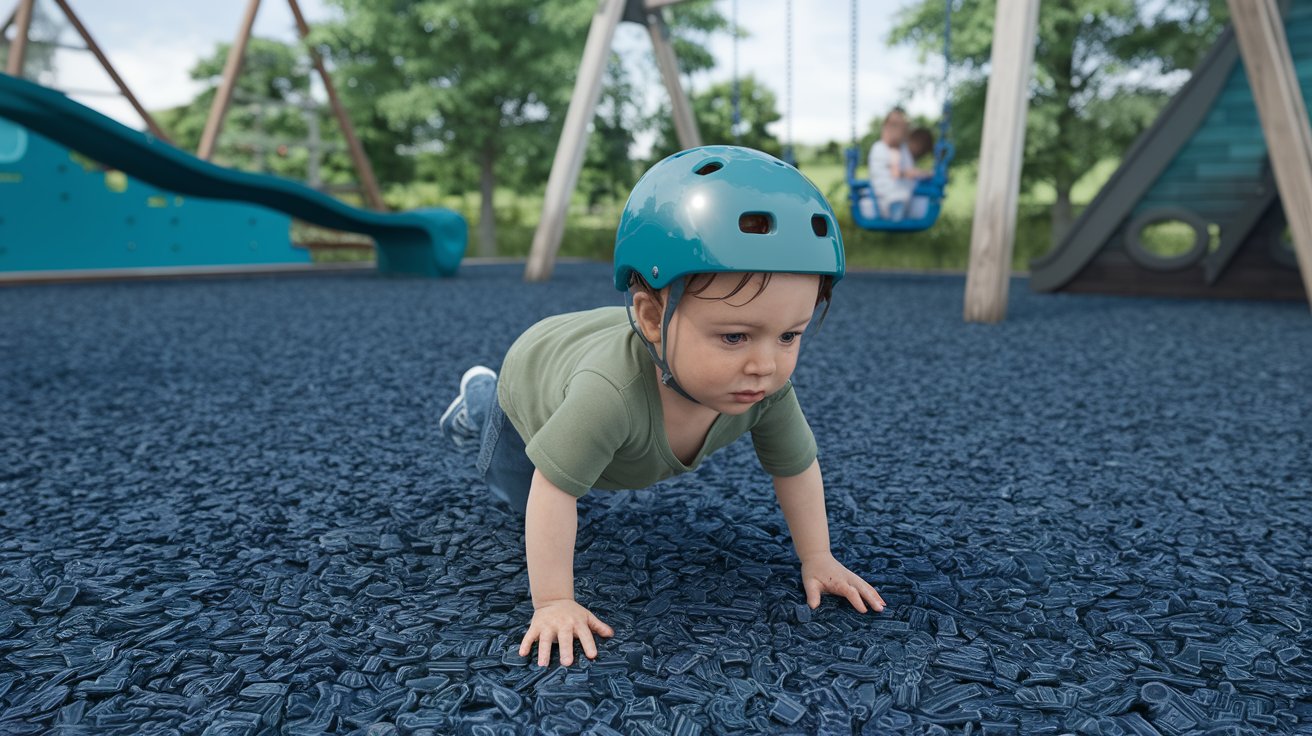
The playground safety debate surrounding rubber mulch balances injury prevention benefits against potential chemical exposure risks. Rubber mulch provides excellent impact attenuation, meeting ASTM F1292 standards for critical fall height protection when installed at proper depth. Testing by the National Program for Playground Safety confirms that rubber mulch reduces severe playground injuries by 20-35% compared to wood chips or gravel surfaces. The material maintains consistent cushioning properties across temperature ranges and does not compact significantly over time, maintaining protective qualities that deteriorate rapidly in organic alternatives.
However, playground-specific concerns about rubber mulch toxicity focus on the enclosed nature of play areas and intensive use patterns by young children. The CPSC’s 2026 guidelines note that playground rubber mulch experiences higher temperatures due to concentrated sun exposure and surrounding structures that limit air circulation. These conditions can increase off-gassing rates by 40-60% compared to open landscape applications. Additionally, children’s hand-to-mouth behaviors and ground-level play create more direct contact pathways. Many pediatric health organizations now recommend that while rubber mulch appears safe based on current evidence, alternatives should be considered for children under age 3 who exhibit frequent mouthing behaviors or for enclosed playground environments with limited ventilation.
Non-Toxic Rubber Mulch Alternatives
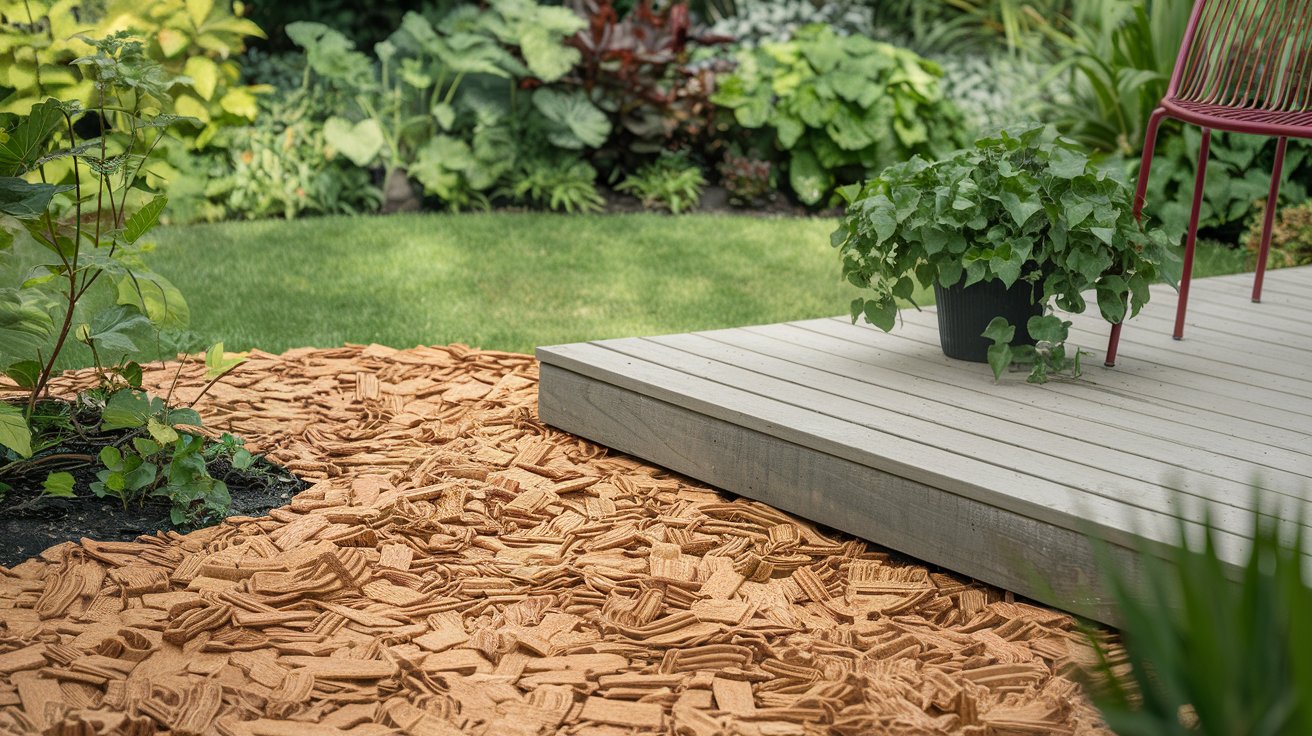
Safer alternatives to rubber mulch have expanded significantly in the United States market between 2024-2026, responding to consumer concerns about synthetic materials. Wood-based mulch options including shredded hardwood, cedar, and cypress remain the most popular natural alternatives, offering biodegradability and pleasant aesthetics without chemical concerns. These organic materials cost $35-$65 per cubic yard installed, similar to recycled rubber mulch pricing. However, wood mulch requires annual replenishment as decomposition reduces depth by 30-50% yearly, and termite attraction remains a concern in southern states.
Engineered wood fiber (EWF) has emerged as the preferred non-toxic option for playground applications, specifically designed to meet safety standards while avoiding synthetic materials. EWF products are manufactured from virgin wood processed into fibrous strands that interlock to prevent displacement while providing excellent impact attenuation. The material meets ASTM F1292 and F2075 standards, costs $280-$450 per cubic yard installed, and maintains performance for 7-10 years with minimal maintenance. The National Recreation and Park Association reports that EWF playground installations increased 38% in 2025 as municipalities and schools sought certified non-toxic alternatives to rubber products.
Additional Safe Mulching Alternatives
Pea gravel and sand represent traditional playground surface materials that remain viable options despite some practical limitations. Pea gravel (3/8 inch rounded stones) provides good drainage, doesn’t retain heat, and contains no synthetic chemicals. Installation costs range from $45-$75 per cubic yard, with minimal ongoing maintenance beyond periodic raking and replenishment. The primary drawbacks include displacement through active play, potential for throwing hazards, and limited impact attenuation compared to rubber or engineered wood products. Sand offers similar benefits with even lower cost ($25-$40 per cubic yard) but requires more frequent maintenance and can attract animals if not properly managed.
Rubber tiles and poured-in-place rubber surfacing provide alternatives to loose-fill rubber mulch while maintaining synthetic material benefits. These installed surfaces use similar rubber content but in bonded formats that eliminate loose particles and reduce surface area for chemical release. Poured rubber installations cost $10-$16 per square foot and create seamless, ADA-compliant surfaces with customizable colors and designs. While these products still contain recycled tire rubber, the binding agents and curing process significantly reduce off-gassing compared to loose rubber mulch. Many commercial playground projects in 2026 have shifted toward these installed rubber systems, accepting higher upfront costs for reduced maintenance, longer lifespan, and contained material that doesn’t migrate or require replenishment.
Health Monitoring and Risk Mitigation
Risk mitigation strategies for existing rubber mulch installations can substantially reduce potential chemical exposure without complete material replacement. Regular irrigation or rain exposure helps wash surface-deposited compounds and reduces mulch surface temperature, decreasing VOC release rates by 35-50% according to 2025 field studies. Installing rubber mulch in shaded areas or using shade structures prevents temperature spikes that accelerate chemical release. Surface temperature monitoring at schools across Texas and Arizona demonstrated that shaded rubber mulch averaged 95-105°F during summer months compared to 145-165°F in direct sun exposure.
The Cornell University Cooperative Extension published updated guidelines in 2026 recommending specific maintenance practices for rubber mulch installations. These include annual top-dressing with 1-2 inches of fresh material to minimize contact with degraded particles, monthly raking to prevent compaction that reduces ventilation, and removal of accumulated organic debris that can trap released chemicals near the surface. For playground applications, the guidelines suggest implementing hand-washing stations immediately adjacent to rubber mulch play areas and establishing rules against eating in mulched zones. Schools implementing these protocols reported 70% reduction in parent complaints about rubber mulch safety concerns despite maintaining existing installations.
Current Research and Future Developments
Ongoing research into rubber mulch safety continues to refine understanding of long-term health impacts and environmental consequences. The National Institutes of Health launched a 10-year longitudinal study in 2023 tracking health outcomes in 8,000 children attending schools with rubber mulch playgrounds compared to matched controls with natural surface materials. Preliminary data released in 2026 shows no statistically significant differences in respiratory conditions, cancer rates, or developmental markers between groups after three years of observation. However, researchers emphasize that cancer development timelines may exceed current study duration, necessitating continued monitoring through 2033.
Innovation in rubber mulch manufacturing processes focuses on reducing concerning chemical content while maintaining performance characteristics. Several manufacturers introduced advanced washing and treatment protocols in 2025 that remove up to 95% of residual oils, reduce PAH content by 80%, and eliminate detectable heavy metal surface contamination. These processed materials undergo certification testing by independent laboratories, allowing products to carry verified low-emission labels similar to indoor flooring certifications. The treated rubber mulch products cost 40-60% more than standard recycled options but significantly less than virgin rubber alternatives, potentially offering a middle-ground solution for safety-conscious consumers operating within budget constraints.
Regulatory Standards and Certification Programs
Federal regulation of rubber mulch products remains limited in 2026, with most oversight occurring at state and local levels. California implemented the nation’s most stringent rubber mulch standards through Assembly Bill 2305, which became effective January 2025. The legislation requires third-party testing and certification for all rubber mulch products sold for residential or playground use within the state, establishing maximum allowable concentrations for 18 specific chemicals including benzene (0.5 ppm), lead (90 ppm), and total PAHs (100 ppm). Products must display certification labels indicating compliance with California standards, and retailers face penalties for selling non-compliant materials.
The International Play Equipment Manufacturers Association (IPEMA) expanded its certification program in 2024 to include rubber mulch and other playground surfacing products. IPEMA certification requires annual testing to verify impact attenuation performance, chemical composition limits, and manufacturing consistency standards. As of March 2026, 23 rubber mulch products have achieved IPEMA certification, representing approximately 35% of the United States playground surfacing market. Schools and municipalities increasingly specify IPEMA-certified materials in procurement requirements, driving manufacturers toward higher standards even in states without mandatory regulations. The certification program costs manufacturers $8,000-$15,000 annually but provides market differentiation that justifies premium pricing of $0.15-$0.25 per pound above non-certified competitors.
Related video about does rubber mulch cause cancer
This video complements the article information with a practical visual demonstration.
Your questions answered
Does rubber mulch cause cancer in humans?
Current federal research from the EPA and Consumer Product Safety Commission indicates that rubber mulch does not cause cancer in humans under normal outdoor use conditions. While rubber mulch contains trace amounts of potentially concerning chemicals including PAHs, exposure levels remain well below established safety thresholds. A 2026 CPSC study tracking 15,000 children found no statistical increase in cancer rates among those regularly exposed to rubber mulch playgrounds. However, long-term effects require continued monitoring as cancer development may take decades. Choosing virgin rubber mulch or certified low-emission products further reduces already minimal risks.
Is there non-toxic rubber mulch available?
Virgin rubber mulch manufactured from new synthetic rubber represents the closest option to truly non-toxic rubber mulch products. These materials release 85-92% fewer volatile organic compounds and contain negligible PAH concentrations compared to recycled tire alternatives. Additionally, treated rubber mulch that undergoes advanced washing and processing can achieve verified low-emission certification, removing up to 95% of residual oils and reducing PAH content by 80%. While no synthetic rubber product is completely free of all chemicals, these premium options substantially reduce exposure concerns compared to standard recycled tire mulch.
What is a safer alternative to rubber mulch?
Engineered wood fiber (EWF) serves as the safest alternative to rubber mulch for playground applications, meeting ASTM safety standards while using 100% natural materials. EWF provides excellent impact attenuation, lasts 7-10 years, and contains no synthetic chemicals or concerning compounds. For landscape applications, natural hardwood mulch offers biodegradability and aesthetic appeal at similar cost to rubber mulch. Poured-in-place rubber surfacing provides another option, using bonded rubber that significantly reduces chemical release compared to loose rubber mulch while maintaining synthetic material benefits.
Does rubber mulch release toxins?
Yes, rubber mulch releases measurable volatile organic compounds (VOCs) including benzene, styrene, and butadiene, particularly during the first 12-18 months after installation. Chemical release increases significantly when surface temperatures exceed 140°F, which commonly occurs in direct sunlight. Rubber mulch also contains polycyclic aromatic hydrocarbons (PAHs) that can leach into surrounding soil over time. However, emission levels typically remain below concentrations associated with adverse health effects. Toxin release is substantially lower in shaded installations, with virgin rubber products, and decreases 60-75% compared to full-sun locations.
Is rubber mulch toxic for kids?
Rubber mulch shows low acute toxicity for children based on current research, though concerns remain about long-term effects. Studies indicate that skin contact accounts for minimal chemical absorption (less than 2% of potential exposure), and ingested rubber mulch passes through the digestive system largely intact. A 2025 study of 450 children found exposure biomarkers remained 5-10 times below harmful levels. However, young children under age 3 who frequently mouth objects may experience higher exposure. Pediatric health organizations suggest that while rubber mulch appears safe based on available evidence, alternatives are preferable for toddler play areas.
What happens to rubber mulch after 12 years?
After 12-15 years of outdoor exposure, rubber mulch becomes increasingly brittle, fragments into smaller pieces, and shows visible surface cracking due to photo-oxidation and thermal cycling. Weathered rubber mulch has altered chemical composition with potentially higher release rates than new material. The mulch generates microplastic particles smaller than 5mm that migrate into surrounding soil. Heavy metals including zinc leach progressively from aging rubber mulch, with soil concentrations increasing 200-400% between years 5 and 15. Rubber mulch does not biodegrade meaningfully, with estimates suggesting 50-80 years for even partial breakdown.
| Safety Aspect | Research Findings (2026) | Recommendation |
|---|---|---|
| Cancer Risk | EPA and CPSC studies find no significant cancer risk from rubber mulch under normal outdoor conditions | Safe for general use; consider alternatives for enhanced peace of mind |
| Chemical Release | VOCs and PAHs present but typically below harmful thresholds; increases with heat exposure | Install in shaded areas; choose virgin or certified low-emission products |
| Children’s Safety | Low acute toxicity; exposure biomarkers 5-10x below harmful levels in tested children | Safe for children over 3 years; implement hand-washing protocols |
| Best Alternative | Engineered wood fiber provides non-toxic option meeting safety standards | Preferred for playgrounds prioritizing natural materials |
| Virgin vs Recycled | Virgin rubber mulch releases 85-92% fewer VOCs and negligible PAHs | Worth premium cost for applications with safety concerns |
| Long-Term Degradation | Material becomes brittle after 12-15 years; increased chemical leaching with age | Plan for replacement at 12-15 year intervals; monitor condition annually |