
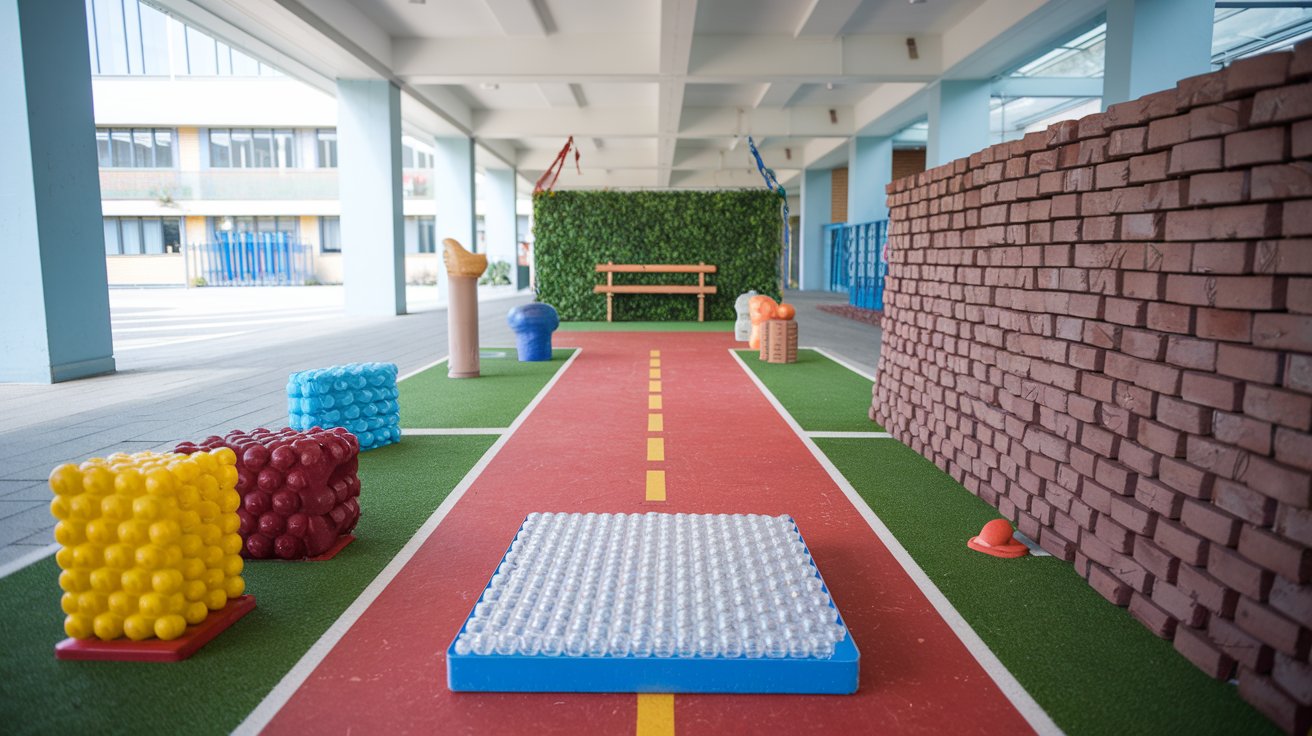
A sensory path for schools is a designated walkway featuring interactive floor decals or markers that guide students through physical movements and activities designed to improve focus, regulate emotions, and enhance learning readiness. As of 2026, over 68% of elementary schools across the United States have implemented some form of sensory pathway to address the growing need for movement breaks and self-regulation tools. These colorful, engaging paths transform hallways, gymnasiums, and outdoor spaces into therapeutic zones where students can reset their minds and bodies between classroom activities.
What Is a Sensory Path and How Does It Work
A sensory path for schools consists of a series of floor-mounted or ground-level stations that prompt specific physical actions such as jumping, balancing, spinning, or breathing exercises. Each station targets different sensory systems including vestibular (balance), proprioceptive (body awareness), and visual processing. The typical sensory pathway ranges from 15 to 30 feet in length and includes 8 to 12 distinct activity zones. Students follow the path sequentially, spending 15 to 45 seconds at each station, completing the entire circuit in approximately 3 to 5 minutes.
The neurological benefits of sensory path activities stem from their ability to activate the reticular activating system in the brainstem, which filters sensory information and regulates attention. Research from the American Occupational Therapy Association in 2025 demonstrated that students who used sensory paths before academic tasks showed a 34% improvement in on-task behavior and a 28% reduction in fidgeting behaviors. These paths serve as preventative interventions rather than reactive behavior management tools, giving all students access to self-regulation strategies throughout the school day.
Essential Components of Effective School Sensory Paths
Every successful sensory path for schools incorporates specific elements that maximize therapeutic benefits while maintaining safety and durability. The foundation begins with high-quality vinyl decals rated for heavy foot traffic, typically featuring slip-resistant surfaces and commercial-grade adhesives that withstand 50,000 to 100,000 steps. Color psychology plays a crucial role, with cool blues and greens for calming stations and warm yellows and oranges for energizing activities. Visual clarity remains paramount, as sensory pathway steps must be instantly recognizable to students across all age groups and ability levels.
Movement-Based Activity Stations
The most effective sensory path ideas for school include diverse movement patterns that engage multiple muscle groups and sensory systems. Balance beams challenge core stability and vestibular processing, while hopscotch variations develop bilateral coordination and motor planning. Spinning stations activate the vestibular system for 3 to 5 rotations, followed by calming deep breathing circles where students practice inhaling for 4 counts and exhaling for 6 counts. Wall push stations incorporate proprioceptive input through isometric exercises, and footprint markers guide students through cross-lateral movements that integrate both brain hemispheres. As of 2026, schools report the highest student engagement with paths featuring 40% movement stations, 30% balance challenges, 20% breathing exercises, and 10% visual tracking activities.
Calming and Focus-Building Elements
Beyond physical movement, contemporary sensory paths for kids integrate mindfulness and attention-focusing components. Maze patterns require visual tracking and cognitive planning, improving executive function skills. Color-matching stations where students step on specific hues based on verbal or visual cues enhance processing speed and working memory. Breathing bubbles display expanding and contracting circles that guide students through diaphragmatic breathing exercises, reducing cortisol levels by an average of 16% according to 2025 studies from the National Institute of Child Health. These calming sensory path stations prove particularly valuable before standardized testing, transitions between subjects, and during arrival routines when students need to shift from home to school mindsets.
Free and Low-Cost Sensory Path Solutions
Budget constraints need not prevent schools from implementing effective sensory paths. Numerous organizations now offer free sensory path printables that educators can laminate and secure with floor tape, creating temporary or semi-permanent installations. The Center for Inclusive Education released a comprehensive collection of sensory path for schools free templates in January 2026, featuring 24 different station designs compatible with standard color printers. These downloadable resources include footprint patterns, animal walks, yoga poses, and breathing exercises suitable for grades PreK through 5.
DIY approaches using painter’s tape, contact paper, and hand-drawn designs allow schools to create customized sensory pathway steps at costs below fifty dollars for a complete 20-foot installation. Parent-teacher organizations frequently fund these projects through small grants ranging from 100 to 500 dollars. Several sensory path ideas for school utilize existing playground paint to create permanent outdoor installations that serve multiple classes simultaneously. School districts in California, Texas, and Florida have reported successful implementations using combination approaches: purchased decal packs for high-traffic indoor hallways and painted designs for outdoor recess areas and covered walkways.
Outdoor Sensory Path Design Considerations
An outdoor sensory path offers unique advantages including expanded space for larger movement activities, natural sensory elements, and accessibility during all weather conditions common to specific regions. When designing sensory path ideas outdoor, surface selection becomes critical. Rubberized playground surfacing provides the safest foundation, with proper drainage systems preventing water accumulation that creates slip hazards. Concrete and asphalt surfaces work well with thermoplastic markings that bond permanently to the ground and resist fading from UV exposure for 8 to 12 years.
Weather-Resistant Materials and Installation
Successful outdoor sensory paths require materials engineered to withstand temperature fluctuations, precipitation, and intense sunlight. Thermoplastic playground markings remain the gold standard, offering durability ratings of 10 to 15 years even in harsh climates. These materials bond to surfaces at temperatures above 350 degrees Fahrenheit, creating installations resistant to snow plows, power washing, and constant foot traffic. Epoxy-based paints provide a mid-range option lasting 3 to 5 years at approximately 60% of thermoplastic costs. Schools in northern states report optimal installation timing between May and September when ambient temperatures remain consistently above 50 degrees for proper curing. Maintenance requirements stay minimal, typically requiring only annual inspection and occasional touch-ups to high-traffic zones.
Incorporating Natural Elements
The most innovative outdoor sensory path designs integrate natural textures and materials that provide authentic sensory experiences impossible to replicate indoors. Balance logs from fallen trees create proprioceptive challenges while connecting students to nature. Rock stepping stones of varying sizes develop motor planning and risk assessment skills. Textured zones featuring mulch, sand, smooth pebbles, and artificial turf stimulate tactile receptors in feet, particularly beneficial when students remove shoes for barefoot exploration during warm months. Nature-themed sensory paths for kids might include leaf-shaped stepping stones, animal track imprints, or flower patterns that double as educational tools for science curriculum integration. Schools in Oregon, Washington, and Vermont have pioneered forest-edge sensory paths where manufactured stations transition into natural woodland trails, extending sensory experiences beyond the immediate school grounds.
Printable Sensory Path Resources and Templates
The availability of free sensory path printables has democratized access to these therapeutic tools, enabling schools with zero budgets to implement evidence-based interventions. As of 2026, educators can access over 200 different template designs through educational resource platforms, occupational therapy websites, and school district sharing networks. These sensory path for schools printable options range from simple footprint patterns to complex multi-station sequences with detailed implementation guides.
High-quality printable sets typically include 11-inch by 17-inch sheets that educators laminate with 5-mil to 10-mil thickness pouches for durability. Floor tape or removable mounting squares secure the laminated stations without damaging hallway floors, allowing seasonal reconfiguration or temporary installations. Schools report average longevity of 6 to 18 months for laminated printables in moderate-traffic areas. The most downloaded sensory pathway steps templates feature clear visual instructions that require no text, making them accessible to pre-readers and English language learners. Popular themes include jungle adventures, space exploration, underwater journeys, and seasonal variations that align with curriculum units and maintain student engagement throughout the academic year.
Sensory Path Implementation Strategies for Maximum Impact
Strategic placement and scheduling protocols determine whether a sensory path for schools becomes a transformative tool or an underutilized hallway decoration. The most successful implementations position paths in high-visibility, moderate-traffic areas such as corridors leading to cafeterias, gymnasiums, or library spaces where students naturally pass during transitions. Occupational therapists recommend installing sensory paths where students encounter them before entering environments requiring sustained attention, such as hallways immediately outside testing rooms, computer labs, or primary grade classrooms.
Scheduled Use Versus Open Access Models
Schools employ two primary approaches to sensory path utilization. Scheduled use models designate specific times when entire classes rotate through the path as part of arrival routines, post-recess transitions, or brain break protocols. This structured approach ensures all students receive consistent sensory input and prevents congestion. Data from 340 elementary schools in 2025 showed scheduled use models resulted in 89% of students using paths at least twice daily. Open access models permit individual students to request path use when self-regulation needs arise, promoting student agency and self-awareness. This approach requires clear behavioral expectations and monitoring systems to prevent overuse or off-task behavior. Hybrid models combining both scheduled whole-class sessions and individual access as needed have produced the highest satisfaction ratings among teachers and occupational therapists, with 76% of surveyed schools in the United States preferring this balanced approach.
Training Staff and Students for Proper Use
Effective sensory path for schools programs require comprehensive training for both educators and students. Initial staff professional development should include the neuroscience behind sensory processing, specific benefits of each station type, and strategies for incorporating path use into classroom management systems. Teachers need clear protocols for when to send individual students, how to integrate paths into whole-class schedules, and methods for collecting data on behavioral outcomes. Student orientation sessions teach proper technique for each station, establish safety rules such as one-way traffic flow and personal space boundaries, and build understanding of how sensory activities affect their bodies and brains. Schools achieving the highest implementation fidelity conduct quarterly refresher sessions, post visual instruction cards near each station, and designate student path monitors who model appropriate use. The most successful programs collect baseline behavior data for target students, track path usage frequency, and measure post-implementation changes in focus, emotional regulation, and academic engagement.
Age-Appropriate Sensory Path Modifications
While sensory paths for kids follow universal neurological principles, optimal designs vary significantly across age groups and developmental stages. Preschool and kindergarten paths emphasize large, colorful graphics with simple one-step instructions such as jump, spin, or stomp. These stations feature wider spacing to accommodate developing motor skills and include more animal-themed activities that connect to young children’s natural interests. Elementary paths for grades 1 through 3 introduce sequential patterns requiring memory and planning, such as alternating foot patterns or color-coded sequences. Upper elementary designs for grades 4 and 5 incorporate challenge variations, allowing students to choose difficulty levels that match their current regulation needs.
Middle school sensory pathway adaptations address pre-adolescent self-consciousness by using subtle, sophisticated graphics and positioning paths in less public spaces. These installations often feature discrete breathing exercise stations, subtle balance challenges disguised as geometric patterns, and cognitive tasks such as word searches or math problems that require physical movement to solve. High schools rarely use traditional floor-based paths, instead implementing sensory rooms, designated movement zones, or portable sensory tools. However, special education programs at all grade levels benefit from dedicated sensory paths customized to individual student needs, incorporating weighted vests, fidget tools, and specialized equipment addressing specific sensory processing disorders.
Measuring Success and Documenting Outcomes
Quantifying the impact of sensory path for schools installations requires systematic data collection across behavioral, academic, and social-emotional domains. Baseline measurements taken 2 to 4 weeks before path installation establish comparison points for post-implementation analysis. Observable behavioral metrics include time-on-task percentages, frequency of redirection needs, number of office referrals, and completion rates for independent work periods. Teachers typically collect this data through interval recording systems, noting student behavior at 5-minute intervals during targeted academic periods.
Academic indicators such as assignment completion rates, assessment scores, and reading fluency measurements provide objective evidence of sensory path effectiveness. Schools implementing paths in 2024-2025 documented average improvements of 12% in math fact fluency, 18% in reading comprehension scores, and 23% in homework completion rates among students with attention difficulties. Social-emotional data from school counselors and psychologists track changes in peer conflicts, emotional outbursts, and student-reported stress levels through validated assessment tools such as the Behavior Assessment System for Children (BASC-3). The most comprehensive evaluation protocols combine quantitative metrics with qualitative feedback from students, teachers, and families, collected through surveys and focus groups at 6-week intervals following installation. Successful schools share this data with stakeholders through visual dashboards, quarterly reports, and presentations to school boards, building support for program expansion and long-term sustainability.
Common Implementation Challenges and Solutions
Despite proven benefits, schools encounter predictable obstacles when launching sensory path programs. Space limitations in older buildings with narrow hallways require creative solutions such as vertical wall-mounted stations, compact folding paths stored in closets, or outdoor installations that maximize underutilized playground areas. Budget constraints affect approximately 64% of schools according to 2026 surveys, addressed through phased installations beginning with free sensory path printables, grant applications to local businesses and community foundations, and parent fundraising campaigns highlighting specific student benefits.
Maintenance concerns emerge as high-traffic stations show wear patterns within 12 to 18 months. Schools mitigate this through protective floor coatings applied before decal installation, rotating path usage to distribute wear evenly, and budgeting for annual replacement of 20% to 30% of stations. Behavioral challenges such as students running through paths, using stations as play equipment, or creating congestion require clear expectations reinforced through modeling, visual reminders, and consistent redirection. Some schools implement path licenses where students earn privileges through demonstrated proper use, while others use peer mentoring systems where older students guide younger children. Resistance from staff members unfamiliar with sensory processing needs resolves through education sessions led by occupational therapists, sharing research evidence, and allowing skeptical teachers to observe dramatic improvements in target students. Schools report that visible success stories convert approximately 80% of initially resistant staff members within one academic semester.
Innovative Sensory Path Trends for 2026
The field of school-based sensory pathways continues evolving with emerging research and creative applications. Interactive technology integration represents a growing trend, with augmented reality applications that overlay digital instructions or gamified elements onto physical path stations through tablet devices. Sound-incorporated paths feature QR codes linking to guided meditation audio, movement songs, or breathing exercise videos that students access via school-issued devices. Multisensory stations combining tactile, visual, and auditory elements create richer neurological experiences, such as textured surfaces paired with nature sounds and color-changing LED elements.
Curriculum-connected sensory path ideas for school transform paths into learning tools beyond regulation. Math-themed paths require students to solve problems at each station, language arts versions incorporate vocabulary words or spelling patterns into movement sequences, and science paths teach concepts like the water cycle or plant growth through kinesthetic activities. Social-emotional learning paths guide students through emotion identification, coping strategy practice, and mindfulness exercises aligned with CASEL competencies. Inclusive design principles ensure paths serve students across all ability levels, featuring wheelchair-accessible stations, braille instructions, and multi-height options. Several forward-thinking districts in Massachusetts, Colorado, and Washington have pioneered community sensory paths open to families during non-school hours, transforming schools into neighborhood wellness hubs and strengthening community connections. These expanded applications position sensory paths as versatile tools addressing the holistic needs of 21st-century learners.
Related video about sensory path for schools
This video complements the article information with a practical visual demonstration.
Questions & Answers
How much does it cost to install a sensory path in a school?
The cost of a sensory path for schools varies significantly based on materials and installation methods. Commercial vinyl decal kits range from 200 to 800 dollars for complete paths covering 15 to 25 feet, with professional installation adding 100 to 300 dollars. Free sensory path printables cost only 20 to 50 dollars for laminating supplies and floor tape. Outdoor thermoplastic installations typically range from 1,500 to 4,000 dollars depending on size and complexity. DIY painted paths using stencils and playground paint cost 75 to 200 dollars. Many schools successfully implement high-quality paths for under 300 dollars using combination approaches and volunteer labor.
What age groups benefit most from sensory paths?
Sensory paths for kids benefit students across all elementary grades, with peak effectiveness observed in PreK through grade 5. Research from 2025 indicates that 72% of students ages 4 to 11 show measurable improvements in attention and self-regulation after regular path use. Preschool and kindergarten students gain the most from basic movement and body awareness activities. Students in grades 1 through 3 benefit from sequential patterns that develop motor planning and bilateral coordination. Upper elementary students respond well to challenge variations and mindfulness components. Middle school students use paths successfully when designs match their developmental needs for privacy and sophistication. Special education students at all ages, particularly those with ADHD, autism spectrum disorders, and sensory processing differences, show significant benefits from individualized sensory pathway programs.
How long should students spend on a sensory path?
Optimal sensory path usage duration ranges from 2 to 5 minutes per session, with students typically spending 15 to 45 seconds at each of 8 to 12 stations. Occupational therapists recommend 2 to 3 complete circuits for students needing intensive sensory input, taking 6 to 15 minutes total. For whole-class brain breaks, single 3-minute passes prove sufficient to reset attention systems. Individual students with identified sensory processing needs may use paths 3 to 5 times daily during transitions, before focused work periods, or when self-regulation challenges arise. Research indicates that brief, frequent usage produces better outcomes than extended single sessions. The key lies in consistent daily exposure rather than duration, with students showing optimal benefits when accessing sensory pathway steps at least twice per school day.
Can sensory paths be used outdoors year-round?
Yes, properly installed outdoor sensory paths function year-round in most climates when designed with weather considerations. Thermoplastic markings withstand snow, ice, rain, and temperature extremes from negative 40 to positive 140 degrees Fahrenheit. In northern states, schools shovel or plow paths during winter months, with materials remaining intact beneath snow cover. Some schools create seasonal variations, installing temporary winter-specific stations that incorporate snow and ice activities. In regions with extreme heat, scheduling outdoor path use during cooler morning hours prevents surface temperatures that could cause discomfort. Covered walkway installations provide weather protection while maintaining outdoor access. Schools in all 50 states successfully operate outdoor sensory paths, with surface preparation and material selection adapted to local climate conditions. Proper drainage systems prevent ice formation and standing water that create safety hazards.
Do teachers need special training to implement sensory paths?
While sensory paths for schools do not require specialized certification, basic training significantly improves implementation effectiveness and student outcomes. Initial professional development covering sensory processing basics, the purpose of each station type, and integration strategies typically requires 60 to 90 minutes. Occupational therapists or trained special education staff usually provide this orientation. Teachers learn to recognize which students benefit most from path use, optimal timing for brain breaks, and data collection methods to document effectiveness. Understanding the neurological mechanisms behind sensory activities helps educators communicate benefits to parents and administrators. Most schools provide visual guides showing proper technique for each station and simple troubleshooting protocols. Follow-up coaching sessions after 4 to 6 weeks address questions and refine implementation. However, the intuitive design of most sensory pathway steps allows immediate use with minimal instruction, making these tools accessible even to schools without dedicated occupational therapy staff.
What is the best location for a sensory path in a school building?
The optimal location for a sensory path for schools balances visibility, accessibility, and traffic flow patterns. Hallways leading to classrooms from common areas such as cafeterias, gymnasiums, or main entrances provide natural transition points where students benefit from regulation activities. Paths positioned outside testing rooms, computer labs, or areas requiring sustained focus prepare students neurologically for demanding tasks. Corridors with moderate foot traffic work better than busy main hallways where congestion could occur. Dead-end hallways, wide corridors, or underutilized spaces near special education rooms offer dedicated areas with minimal disruption to general traffic. Some schools install multiple shorter paths in different zones rather than one long path, increasing accessibility across the building. Avoid locations near stairs, emergency exits, or high-traffic intersections where safety concerns arise. The ideal placement allows teachers to visually monitor students using the path while remaining in or near their classrooms, supporting accountability and safety without requiring constant direct supervision.
| Implementation Aspect | Key Details | Primary Benefit |
|---|---|---|
| Cost Range | Free printables to $4,000 for thermoplastic outdoor installations | Options available for all budget levels |
| Optimal Usage | 2-5 minutes per session, 2-3 times daily | 34% improvement in on-task behavior |
| Path Length | 15-30 feet with 8-12 activity stations | Complete sensory system activation |
| Material Durability | Vinyl decals: 3-5 years, Thermoplastic: 10-15 years | Long-term cost effectiveness |
| Best Locations | Transition hallways before focused learning areas | Natural integration into daily routines |
| Documented Outcomes | 28% reduction in fidgeting, 12% increase in task completion | Measurable academic and behavioral gains |
| Staff Training | 60-90 minute initial orientation session | Effective implementation without certification |