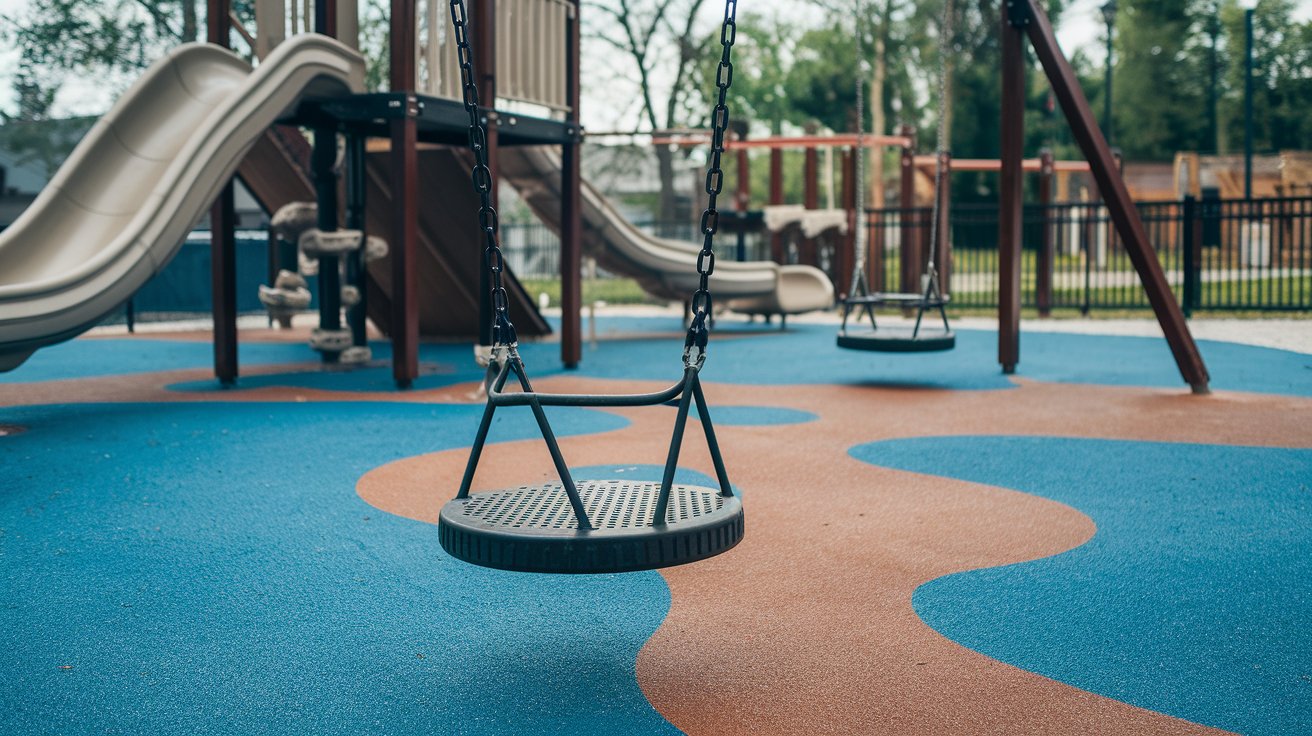
Creating ADA compliant playground equipment ensures that children of all abilities can safely enjoy outdoor play experiences together. The Americans with Disabilities Act establishes comprehensive standards for accessible playground design, requiring specific surface materials, equipment configurations, and transfer systems. With over 7.3 million children with disabilities in the United States as of 2026, implementing accessible playground equipment has become both a legal requirement and a community priority for parks, schools, and recreational facilities nationwide.
Understanding ADA Compliance for Playgrounds in 2026
The ADA compliance requirements for playgrounds are governed by the 2010 ADA Standards for Accessible Design, with updated guidance issued in 2024 and enforced throughout 2026. These regulations apply to newly constructed or altered play areas in state and local government facilities, public accommodations, and commercial facilities. The standards specify that accessible routes must connect playground entry points to elevated play components, ground-level activities, and all required accessible elements within the play area.
As of 2026, the Department of Justice has increased enforcement actions, with over 1,200 playground accessibility complaints filed annually. Facilities must ensure that ground-level play components and elevated play components meet minimum quantity requirements based on the total number of play components provided. For playgrounds with 20 or more elevated components, at least 25 percent must be accessible, while facilities with fewer components follow a tiered calculation system established in the Access Board guidelines.
Essential ADA Requirements for Accessible Playgrounds
Meeting ADA playground standards requires careful attention to multiple technical specifications that ensure genuine accessibility rather than token compliance. The foundation of any accessible playground begins with proper surfacing and clear floor space measurements.
Accessible Routes and Surface Requirements
All accessible playground surfaces must meet ASTM F1951 standards for wheelchair accessibility, with firmness and stability tested using a rotational penetrometer. In 2026, approved surface materials include poured-in-place rubber, rubber tiles, synthetic turf with proper padding, and engineered wood fiber when properly maintained. The accessible route must be at least 60 inches wide, with a maximum running slope of 1:16 and cross slope not exceeding 1:48. Wood chips, sand, and pea gravel no longer meet accessibility standards due to insufficient firmness for wheelchair navigation.
The Department of Justice clarified in 2025 that accessible surfacing must extend beyond equipment boundaries to create useable clear floor spaces measuring 30 by 48 inches at each accessible component. Recent testing data from 2026 shows that poured-in-place rubber maintains optimal accessibility for 12-15 years, while rubber tiles last 8-10 years under typical playground use conditions in various climates across the United States.
Transfer Systems and Elevated Play Access
When elevated play components exceed 20 inches from the protective surface, playgrounds must provide either ramps or transfer systems to enable access. A transfer system consists of transfer platforms and transfer steps allowing children using wheelchairs to move themselves from their mobility device onto elevated play structures. Transfer platforms must provide 14 inches minimum depth and 24 inches minimum width, positioned 11-18 inches above the ground surface at the initial transfer point.
As of 2026, manufacturers have developed innovative transfer station designs incorporating side-entry access, graduated step configurations, and intuitive handholds that accommodate diverse mobility needs. Studies from the National Center on Accessibility indicate that properly designed transfer systems enable 78 percent of wheelchair users ages 5-12 to independently access elevated play structures. Ramp access remains the gold standard when feasible, requiring 1:12 maximum slope with handrails on both sides and 60-inch minimum width for two-way traffic.
ADA Compliant Playground Equipment Types
Selecting the right mix of accessible playground equipment ensures inclusive play opportunities that engage children across the ability spectrum. Current ADA standards categorize equipment into ground-level and elevated play components, each serving distinct developmental and accessibility functions.
Ground-Level Play Components
Ground-level play components include spring riders, swings, diggers, sand and water tables, sensory panels, and interactive musical elements positioned at accessible heights. These components must provide clear floor space of 30 by 48 inches positioned for forward or parallel approach, with operable parts located 48 inches maximum above the ground surface. The 2026 market offers enhanced sensory play equipment including tactile discovery walls, wheelchair-accessible spinners rated for 800-pound capacity, and inclusive expression swings that accommodate multiple seating positions.
Playgrounds must provide at least one of each type of ground-level play component at an accessible height, with a minimum of 50 percent of all ground-level components being accessible. The latest accessible swing sets feature ADA-compliant bucket seats with high backs, transfer platforms for traditional swings, and adaptive harness systems meeting ASTM F1487 safety standards while enabling independent use by children with varying support needs.
Elevated Play Structures and Composite Units
Elevated play structures create vertical play experiences through slides, bridges, overhead activities, and lookout points positioned above the protective surface. When facilities provide 20 or more elevated components, at least 50 percent must be connected by ramps, forming an accessible route throughout elevated areas. For smaller playgrounds with fewer elevated components, minimum accessibility requirements range from three to seven accessible components depending on total quantities provided.
Modern composite play structures manufactured in 2026 incorporate universal design principles with multiple entry and exit points, varied activity types at different heights, and intuitive wayfinding through color-coded pathways. Leading manufacturers now offer modular systems where 70-80 percent of components meet accessibility standards without requiring extensive customization. These inclusive structures feature accessible slides with transfer platforms, roller slides accommodating prone positioning, and spiral tube slides with 360-degree enclosed entries that work for diverse mobility approaches.
Inclusive Swing Set Requirements
ADA compliant swing sets must provide specific configurations and spacing to accommodate wheelchair approaches and transfer movements. Current standards require swing bays to maintain 60 inches minimum spacing between seat suspensions, with 24 inches minimum clearance from support structures on each side. At least one swing bay must accommodate an accessible swing seat with clear floor space extending the full width of the bay plus 12 inches beyond each side.
The 2026 market offers diverse accessible swing options including bucket seats with full back support for children ages 2-5, adaptive belt swings for ages 5-12, and platform swings supporting multiple users or prone positioning. Expression swings have gained popularity, providing wheelchair-accessible platforms measuring 28 by 60 inches that enable side-by-side swinging experiences. Facilities serving 50 or more children should provide at least two different types of accessible swings to accommodate varying support needs and age ranges within the community.
Compliance Standards and Legal Requirements
Understanding the legal framework surrounding ADA playground compliance helps facility managers prioritize improvements and avoid costly enforcement actions. The 2010 ADA Standards for Accessible Design, specifically sections 240 and 1008, establish enforceable requirements while the Access Board’s Play Areas Guidelines provide technical specifications.
Federal Regulations and Enforcement
The Department of Justice enforces Title II (state and local government facilities) and Title III (public accommodations) of the ADA as they apply to playgrounds. As of 2026, enforcement priorities include ensuring accessible routes connect parking areas to play components, verifying transfer systems meet dimensional specifications, and confirming surface materials maintain required accessibility. Facilities constructed or altered after March 15, 2012 must meet current standards, while older playgrounds face compliance deadlines when undergoing modifications affecting 20 percent or more of equipment value.
Penalty structures updated in 2025 allow civil penalties up to $75,000 for first violations and $150,000 for subsequent violations of ADA accessibility requirements. Beyond federal enforcement, 42 states have enacted parallel accessibility laws with additional requirements. California, New York, and Massachusetts maintain stricter standards requiring enhanced surfacing specifications and greater percentages of accessible components than federal minimums mandate.
Safety Standards Integration
While ADA compliance focuses on accessibility, all playground equipment must simultaneously meet ASTM F1487 safety standards and Consumer Product Safety Commission guidelines. The 2026 revisions to ASTM F1487 include updated fall height requirements, entrapment specifications, and material durability testing that align with accessibility surfacing needs. Equipment manufacturers must certify that accessible playground components meet both safety and accessibility standards, with third-party testing confirming compliance before installation.
The intersection of safety and accessibility requirements particularly affects surfacing decisions, as materials must provide both adequate fall attenuation and wheelchair accessibility. Testing protocols now require surface materials maintain accessibility standards while providing appropriate impact protection based on equipment fall heights. The National Program for Playground Safety reports that properly installed and maintained accessible surfaces reduce injury rates by 34 percent compared to traditional loose-fill materials while improving accessibility for an estimated 4.2 million children annually.
Designing Inclusive Play Spaces
Creating truly inclusive playgrounds requires moving beyond minimum compliance to embrace universal design principles that welcome all children. Research from the Inclusive Play Design Guide shows that thoughtfully designed accessible playgrounds increase usage by children with disabilities by 340 percent while also enhancing play experiences for typically developing children.
The seven principles of universal design apply directly to playground planning: equitable use, flexibility, simple and intuitive design, perceptible information, tolerance for error, low physical effort, and appropriate size and space for approach and use. In 2026, successful inclusive playgrounds incorporate varied play types addressing physical, sensory, social, and cognitive development across mixed-age groups. Recommended equipment mixes include 40 percent physical play components, 30 percent sensory elements, 20 percent social-dramatic play features, and 10 percent cognitive challenge activities.
Maintenance and Long-Term Accessibility
Ensuring continued ADA compliance requires comprehensive maintenance programs addressing both equipment functionality and surface accessibility. The National Recreation and Park Association recommends daily visual inspections, monthly operational checks, and annual professional audits using certified playground safety inspectors trained in accessibility standards. Surface materials require particular attention, as compaction, displacement, and deterioration directly impact wheelchair accessibility even when equipment remains functional.
Documentation protocols updated for 2026 recommend facilities maintain accessibility compliance records including installation certifications, surface firmness testing results, quarterly maintenance logs, and annual compliance audits. Engineered wood fiber surfaces require weekly raking and monthly depth measurements, with firmness testing every six months using rotational penetrometers. Rubber surfaces should undergo annual inspections for separation, damage, and firmness degradation, with professional refurbishment recommended every 8-10 years to maintain accessible surface standards throughout the expected 15-year lifespan.
Budget Planning for ADA Compliance
Implementing ADA compliant playground equipment requires strategic budget planning balancing initial costs, long-term maintenance, and potential funding sources. As of 2026, fully accessible playground installations range from $45,000 for small neighborhood parks serving 25-50 children to $500,000 for comprehensive community playgrounds accommodating 200-plus users. Per-square-foot costs average $85-$125 for basic compliance and $150-$200 for enhanced inclusive design exceeding minimum standards.
The largest cost components include accessible surfacing at $12-$28 per square foot for poured-in-place rubber, $8-$15 for rubber tiles, and $4-$8 for properly maintained engineered wood fiber. Accessible play structures cost 15-30 percent more than standard equipment due to specialized components like transfer systems, ramp networks, and accessible activity panels. However, federal and state grant programs offset these costs, with the Land and Water Conservation Fund, Community Development Block Grants, and state-specific accessibility grants providing $180 million annually for accessible playground projects across the United States in 2026.
Selecting ADA Compliant Equipment Manufacturers
Partnering with experienced manufacturers specializing in accessible playground equipment ensures compliance while maximizing play value and longevity. Reputable manufacturers provide detailed compliance documentation, third-party testing certifications, and comprehensive installation support. In 2026, leading accessible playground manufacturers include companies with certified accessible play consultants on staff, proven track records installing 100-plus compliant facilities, and warranties covering both equipment and surface accessibility for 10-15 years.
When evaluating manufacturers, facilities should request ADA compliance verification including dimensional specifications, surface material certifications, transfer system documentation, and layout plans showing accessible routes. The best manufacturers offer complimentary site assessments, customized equipment configurations meeting specific community needs, and post-installation training for maintenance staff. Industry analysis shows that choosing manufacturers with National Recreation and Park Association partnerships and Certified Playground Safety Inspector credentials reduces long-term maintenance costs by 25 percent while ensuring sustained compliance throughout the equipment lifecycle.
Related video about ada compliant playground equipment
This video complements the article information with a practical visual demonstration.
Questions & Answers
What makes playground equipment ADA compliant?
ADA compliant playground equipment must provide accessible routes connecting all play components, meet specific dimensional requirements for transfer systems or ramps, include ground-level components at accessible heights, and feature surfaces meeting firmness and stability standards. Equipment must provide clear floor spaces measuring 30 by 48 inches at each accessible component, with operable parts positioned within reach ranges of 48 inches maximum. As of 2026, compliance requires meeting both the 2010 ADA Standards for Accessible Design and ASTM F1487 safety standards simultaneously.
How much accessible playground equipment is required?
The required quantity of accessible equipment depends on total components provided. Playgrounds must offer at least 50 percent of ground-level play components at accessible heights. For elevated components, facilities with 20 or more must provide 50 percent accessible via ramps. Smaller playgrounds follow tiered requirements ranging from three accessible components for facilities with 4-7 total elevated components to seven accessible components for those with 13-19 elevated components according to current Access Board guidelines.
What surfaces are ADA compliant for playgrounds?
ADA compliant playground surfaces must meet ASTM F1951 standards for firmness and stability to accommodate wheelchair access. Approved materials in 2026 include poured-in-place rubber, rubber tiles, synthetic turf with proper padding, and properly maintained engineered wood fiber. Traditional materials like wood chips, sand, and pea gravel do not meet accessibility standards due to insufficient firmness. Surfaces must maintain accessibility while providing appropriate impact attenuation based on equipment fall heights, requiring specialized testing and certification.
Do all playgrounds need to be ADA accessible?
All newly constructed or altered playgrounds in state and local government facilities, public accommodations, and commercial facilities must meet ADA accessibility requirements. This includes school playgrounds, park facilities, childcare centers, and recreation areas. Playgrounds constructed after March 15, 2012 must comply with current standards. Existing older playgrounds must achieve compliance when alterations affect 20 percent or more of equipment value. As of 2026, the Department of Justice actively enforces these requirements, with over 1,200 playground accessibility complaints filed annually nationwide.
What is a transfer system in accessible playgrounds?
A transfer system consists of platforms and steps enabling children using wheelchairs to move from their mobility device onto elevated play structures. Transfer platforms must measure 14 inches minimum depth by 24 inches minimum width, positioned 11-18 inches above the ground at the initial transfer point. Transfer steps follow with 8-inch maximum height between levels. These systems provide an alternative to ramps when space constraints prevent 1:12 slope ramp installation, allowing independent access to elevated play components for children with mobility limitations throughout the play structure.
How often should accessible playground surfaces be tested?
Accessible playground surfaces require regular testing to maintain compliance throughout their lifespan. Industry standards recommend firmness testing every six months for engineered wood fiber using rotational penetrometers meeting ASTM F1951 specifications. Rubber surfaces should undergo annual inspections examining firmness, separation, damage, and deterioration. The National Recreation and Park Association recommends daily visual inspections, monthly operational checks, and annual professional audits by certified playground safety inspectors trained in accessibility standards to ensure continued compliance with ADA requirements and surface performance specifications.
| Key Aspect | 2026 Requirements | Primary Benefit |
|---|---|---|
| Accessible Routes | 60 inches wide minimum, 1:16 maximum slope, connecting all play areas | Ensures wheelchair navigation throughout playground |
| Surface Materials | ASTM F1951 compliant firmness and stability, poured rubber or tiles preferred | Provides wheelchair accessibility and fall protection |
| Ground-Level Components | 50% minimum accessible, 48-inch maximum reach height | Enables independent play for all ability levels |
| Elevated Access | 50% accessible via ramps or transfer systems when 20+ components provided | Creates vertical play opportunities for children with disabilities |
| Transfer Systems | 14×24 inch platforms, 11-18 inch initial height, 8-inch step maximum | Allows wheelchair users to access elevated structures independently |
| Swing Requirements | 60-inch minimum bay spacing, accessible seat options with transfer space | Provides inclusive swinging experiences for diverse mobility needs |