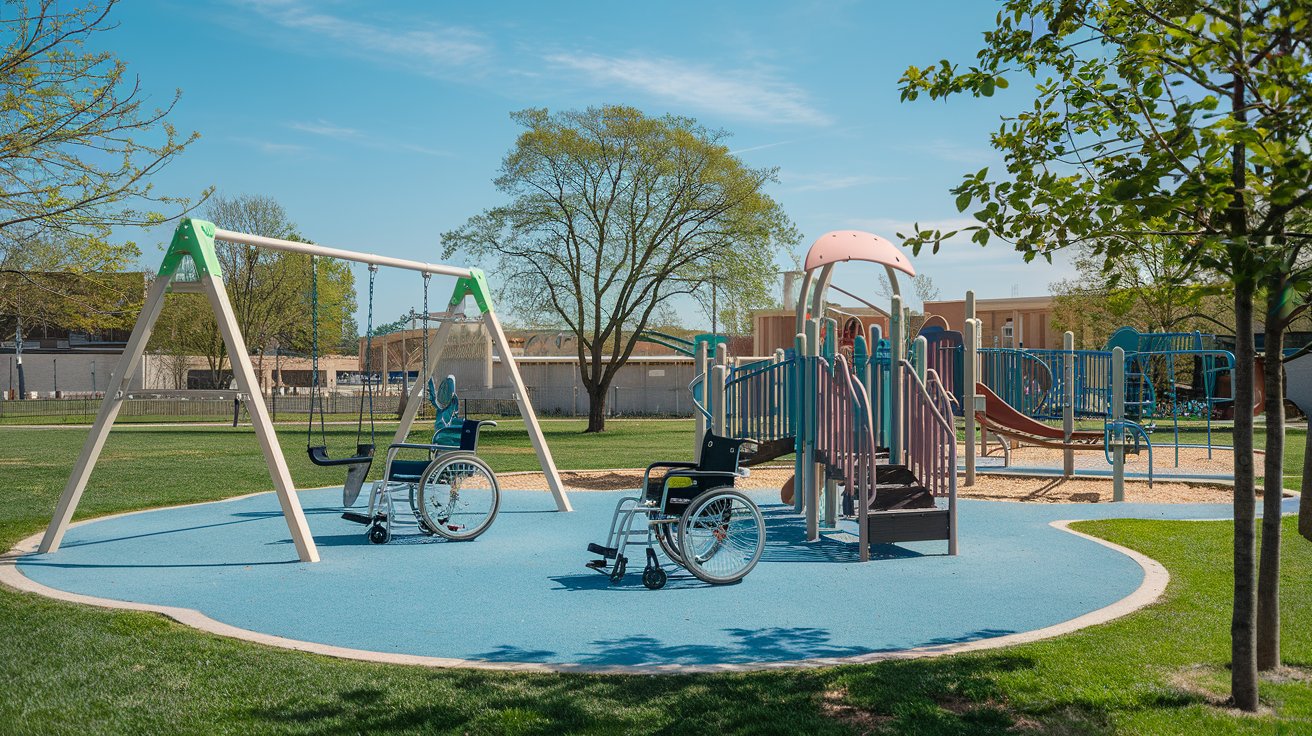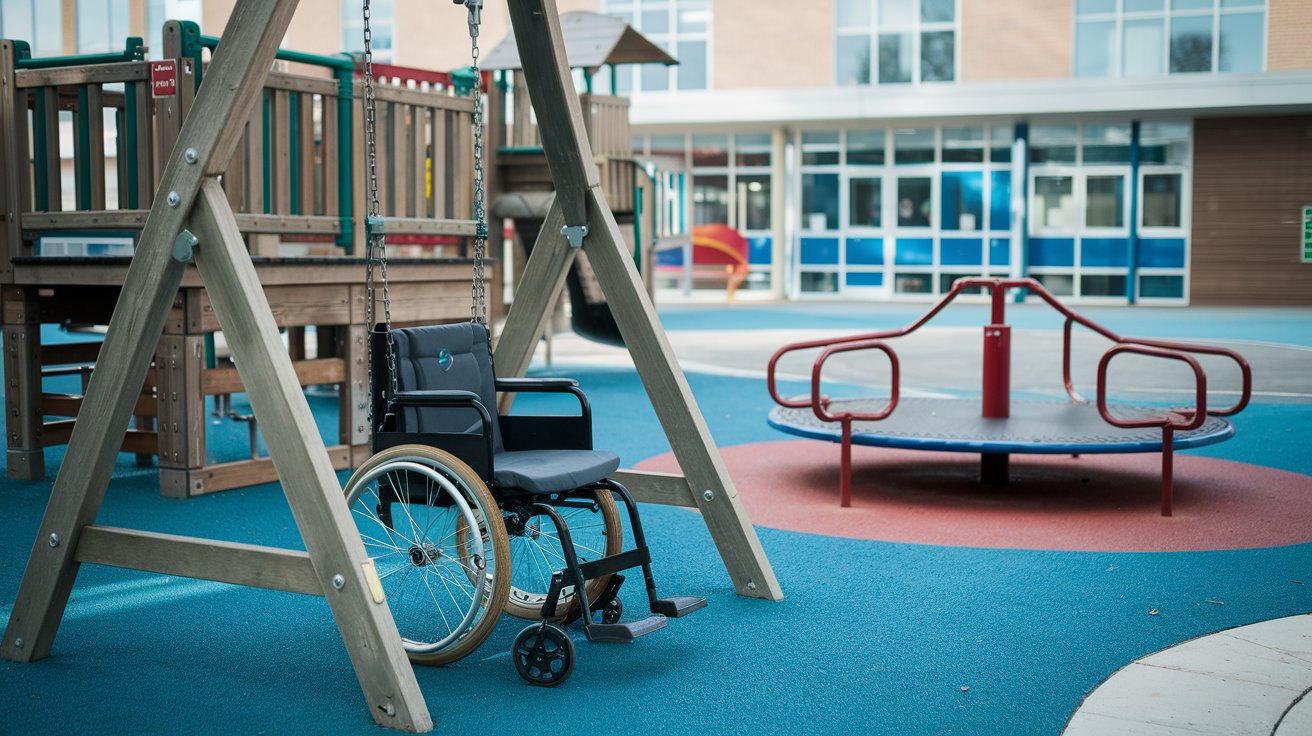
Selecting accessible playground equipment for schools requires understanding ADA compliance, universal design principles, and the diverse needs of all students. In 2026, approximately 7.3 million students with disabilities attend U.S. schools, making inclusive playground equipment essential for creating equitable play environments. This comprehensive guide covers everything from wheelchair accessible playground equipment to funding resources, helping administrators make informed decisions that benefit every child.
Understanding Accessible and Inclusive Playground Design
The distinction between accessible design and universal design significantly impacts how schools approach playground planning. Accessible design focuses on meeting minimum ADA compliance standards, ensuring pathways, ramps, and transfer stations accommodate wheelchairs and mobility devices. Universal design goes further by creating play experiences that all children can enjoy together, regardless of physical, sensory, or cognitive abilities. In 2026, leading schools across the United States prioritize universal design to foster social integration and equal participation.
Modern inclusive playground equipment incorporates features like ground-level play panels, sensory-rich textures, and adaptive swings that accommodate multiple users simultaneously. These designs eliminate the segregation that occurs when only basic accessibility features are present. Research from the National Center on Accessibility indicates that playgrounds using universal design principles see 43% higher engagement rates among students with disabilities compared to minimally compliant installations.
ADA Compliance Requirements for School Playgrounds
Understanding whether school playgrounds have to be ADA compliant is fundamental for administrators and facility managers. Under the 2010 ADA Standards for Accessible Design and the updated 2026 guidelines, all public schools must provide accessible routes to and throughout play areas. This includes maintaining surface materials with firmness and stability ratings that accommodate wheelchairs, walkers, and other mobility devices. The Access Board requires that at least 50% of ground-level play components and 25% of elevated play components meet accessibility standards.
Specific accessibility considerations for playgrounds include transfer systems that allow children to move from wheelchairs to play structures, with platforms positioned at appropriate heights between 11 and 18 inches. Ramp slopes cannot exceed 1:12 ratios, and accessible routes must be at least 60 inches wide to accommodate two-way traffic. In 2026, schools face penalties ranging from $75,000 to $150,000 for first-time violations of ADA playground standards, making compliance both an ethical and financial priority.
Types of Adaptive Playground Equipment
Defining what adaptive playground equipment encompasses helps schools make strategic purchasing decisions. Adaptive equipment includes modified swings with high backs and safety harnesses, sensory play panels at wheelchair-accessible heights, inclusive merry-go-rounds with wheelchair platforms, and transfer stations with multiple access points. These components specifically address the needs of children with physical disabilities, allowing them to experience motion, social interaction, and sensory stimulation alongside their peers.
Wheelchair Accessible Playground Equipment
Wheelchair accessible playground equipment forms the foundation of inclusive play spaces in 2026. This category includes ramp systems with gentle slopes, ground-level activity panels featuring tactile and visual elements, accessible sand and water tables at 24-inch heights, and inclusive spinner platforms that accommodate wheelchairs. Leading manufacturers now offer modular systems where schools can customize configurations based on student populations and available space. The average cost for comprehensive wheelchair accessible equipment ranges from $45,000 to $125,000 depending on playground size and complexity.
Transfer stations represent critical components, allowing students to independently move from mobility devices to elevated play structures. Modern designs include multiple transfer points at varying heights, textured gripping surfaces, and clear visual indicators showing proper use. Schools report that well-designed transfer systems increase independent play participation by 67% among wheelchair users compared to facilities requiring adult assistance for equipment access.
Sensory Playground Equipment
Sensory playground equipment addresses the needs of children with autism spectrum disorders, sensory processing differences, and developmental delays. Components include musical instruments like outdoor xylophones and drums, tactile walls with varied textures, visual panels featuring mirrors and color wheels, and quiet zones with enclosed spaces for sensory breaks. In 2026, approximately 1 in 36 children in the United States has been diagnosed with autism, making sensory-friendly design increasingly important for school playgrounds.
Effective sensory equipment provides both stimulating and calming experiences. Spinning elements offer vestibular input, while bubble tubes and fiber optic lighting create calming visual effects. Schools implementing comprehensive sensory playground equipment report 52% reductions in playground-related behavioral incidents and increased recess participation among students with sensory processing challenges. Installation costs typically range from $8,000 to $35,000 for dedicated sensory zones within larger playground environments.
How to Make Existing Playgrounds More Accessible
Schools frequently ask how to make playgrounds more accessible when working with existing infrastructure and limited budgets. The most cost-effective approach involves retrofitting current equipment with accessible features before considering complete replacement. Installing pour-in-place rubber surfacing creates firm, stable pathways connecting existing structures. Adding ground-level play panels alongside traditional equipment ensures children using wheelchairs have immediate play options. These modifications typically cost 30-40% less than new playground installation while significantly improving accessibility.
Surface upgrades represent the highest impact modification for making playgrounds more accessible. Engineered wood fiber, when properly maintained at depths between 9-12 inches and compacted to industry standards, provides adequate wheelchair access at costs averaging $8-12 per square foot. Pour-in-place rubber surfacing, while more expensive at $18-25 per square foot, offers superior durability and requires less maintenance over its 15-20 year lifespan. Schools should evaluate surface options based on climate conditions, as regions with high rainfall benefit from rubberized surfaces that resist compaction and maintain firmness.
Accessible Pathways and Surfaces
Creating accessible pathways requires attention to width, slope, and surface materials that meet ASTM F1951 standards for wheelchair maneuverability. Pathways must maintain minimum 60-inch widths, though 72 inches allows more comfortable two-way traffic and reduces congestion during peak recess periods. Cross slopes cannot exceed 1:48 ratios to prevent wheelchairs from veering off course. In 2026, schools increasingly choose bonded rubber surfaces that provide shock absorption, ADA compliance, and vibrant color options that enhance wayfinding for students with visual impairments.
Maintenance protocols significantly impact long-term accessibility of playground surfaces. Engineered wood fiber requires monthly raking and annual replenishment to maintain proper depth and compaction levels. Schools should budget approximately $2,500-4,500 annually for surface maintenance on average-sized playgrounds. Pour-in-place rubber requires only periodic cleaning and inspection for damage, with maintenance costs averaging $800-1,200 annually. Documentation of maintenance schedules helps schools demonstrate ongoing ADA compliance during inspections.
Transfer Systems and Ramp Access
Transfer systems enable independent access to elevated play structures for children using wheelchairs or mobility devices. Compliant systems include transfer platforms at 11-18 inch heights, transfer steps with proper rise-to-run ratios, and handrails positioned 20-28 inches above transfer surfaces. Schools should install transfer stations at multiple entry points around play structures, allowing children to choose access routes based on their abilities and preferences. Modern systems incorporate color-contrasted surfaces and tactile indicators that assist children with visual impairments.
Ramp access provides alternatives for children who cannot use transfer systems or prefer gradual inclines. ADA-compliant playground ramps maintain 1:12 maximum slopes with level landings every 30 feet and handrails on both sides. Wider ramps at 72 inches accommodate adults assisting young children or multiple users traveling simultaneously. The average cost for installing comprehensive ramp and transfer systems ranges from $12,000 to $28,000, depending on structure height and complexity. Schools report that proper transfer and ramp systems increase independent play by 73% among students with mobility impairments.
Special Needs Playground Equipment Features
Special needs playground equipment encompasses designs that address physical, sensory, cognitive, and social-emotional requirements of diverse student populations. Key features include multi-user equipment promoting peer interaction, adjustable components accommodating various ability levels, clear visual signage with picture symbols, and graduated challenge elements allowing skill progression. In 2026, leading manufacturers offer equipment specifically designed through collaboration with occupational therapists, special education teachers, and disability advocates, ensuring products meet real-world needs rather than minimum compliance standards.
Inclusive swing systems exemplify effective special needs equipment design. Options include bucket seats with safety harnesses for younger children, platform swings accommodating wheelchairs or multiple users, sensory swings with cocoon designs, and traditional belt swings for independent users. Installing diverse swing types in clustered arrangements promotes social interaction and allows siblings and friends to swing together. Schools should allocate at least 25% of swing bays to adaptive designs, with costs averaging $2,800-6,500 per specialized swing unit including installation and safety surfacing.
Safety Considerations for Accessible Playgrounds
Enhanced safety considerations for accessible playgrounds address unique risks associated with adaptive equipment and diverse user needs. Fall zones around accessible equipment require the same safety surfacing depths as traditional structures, calculated based on maximum fall heights. However, schools must also consider wheelchair approach zones, ensuring sufficient maneuvering space exists around equipment without compromising safety zones. The Consumer Product Safety Commission’s 2026 guidelines specify that accessible routes cannot overlap with fall zones unless using impact-attenuating surfaces meeting both accessibility and safety requirements.
Supervision strategies for accessible playground equipment differ from traditional playgrounds due to varied user abilities and equipment complexity. Staff should receive training in transfer assistance techniques, recognizing signs of sensory overload, and emergency evacuation procedures for children using mobility devices. Many schools implement buddy systems pairing students with and without disabilities, fostering social connections while enhancing safety monitoring. Incident data shows that properly supervised accessible playgrounds have 41% fewer injuries compared to unsupervised facilities, emphasizing the importance of adequate staffing during recess periods.
Surfacing and Impact Attenuation
Selecting appropriate surfacing for accessible playgrounds requires balancing ADA compliance with ASTM F1292 impact attenuation standards. Pour-in-place rubber and bonded rubber tiles provide optimal solutions, meeting both firmness requirements for wheelchair access and shock absorption for fall protection. These surfaces maintain consistent performance across temperature variations, crucial for schools in regions experiencing extreme weather conditions. Laboratory testing in 2026 confirms that high-quality rubber surfacing maintains accessibility ratings down to -20°F and up to 120°F surface temperatures.
Impact attenuation testing determines appropriate safety surfacing depths based on maximum fall heights of accessible equipment. Schools must conduct or obtain manufacturer documentation of testing performed according to ASTM F1292 standards. Engineered wood fiber requires depths of 9 inches for equipment with 6-foot fall heights, increasing to 12 inches for 10-foot structures. Pour-in-place rubber thickness varies by product, typically ranging from 2.5 inches for 6-foot falls to 4 inches for 10-foot falls. Annual testing and documentation of surface depths and impact ratings helps schools maintain compliance and reduce liability risks.
Equipment Maintenance and Inspection
Regular maintenance of accessible playground equipment ensures continued safety and accessibility compliance. Monthly inspections should examine transfer platforms for loose fasteners, ramp surfaces for deterioration, sensory components for functionality, and safety surfacing for adequate depth and compaction. Schools must document all inspections and maintenance activities, creating records that demonstrate due diligence in facility management. In 2026, digital inspection apps allow maintenance staff to efficiently document conditions, schedule repairs, and track compliance with manufacturer maintenance requirements.
Specialized equipment maintenance protocols address unique needs of adaptive components. Swing chains and safety harnesses require monthly inspection for wear, with replacement recommended every 2-3 years depending on usage intensity. Sensory panels with electronic components need annual professional servicing to ensure proper function. Ramp and transfer surfaces should be cleaned quarterly to maintain slip-resistance properties. Schools allocating 3-5% of initial equipment costs annually for maintenance experience 60% fewer emergency repairs and 40% longer equipment lifespans compared to facilities with reactive maintenance approaches.
Funding Resources for Accessible Playground Equipment
Numerous funding resources for accessible playground equipment help schools overcome budget constraints when implementing inclusive play spaces. Federal programs including the Individuals with Disabilities Education Act (IDEA) allow districts to allocate special education funds toward equipment that supports educational goals for students with disabilities. The Land and Water Conservation Fund provides matching grants up to $100,000 for playground improvements at public schools. In 2026, approximately $47 million in federal funding has been distributed specifically for accessible playground projects across the United States.
State-level funding opportunities vary by location but often include education grants, parks and recreation budgets, and disability services allocations. California’s Inclusive Playgrounds Grant Program offers up to $250,000 per project, while New York’s Parks and Recreation grants cover up to 50% of accessible equipment costs. Private foundations represent significant funding sources for accessible playgrounds, with organizations like the GameTime Inclusion Innovation Grant, Kaboom Grants, and local community foundations providing $15,000-75,000 awards. Schools should pursue multiple funding streams simultaneously, as successful projects typically combine 3-4 different sources to reach target budgets.
Grant Application Strategies
Successful grant applications for accessible playground equipment require comprehensive project proposals demonstrating community need, equipment specifications, and long-term sustainability plans. Include current student demographics showing numbers of children with disabilities served, documented deficiencies in existing playground facilities, and statements from parents, teachers, and therapists supporting the project. Detailed budgets should itemize equipment costs, installation expenses, surfacing investments, and maintenance reserves. Schools with student-involved fundraising components and community partnership commitments receive 68% higher approval rates compared to applications relying solely on grant funding.
Strategic timing of grant applications maximizes funding success rates. Most foundations and government programs operate on annual cycles with specific submission deadlines between January and April for fall funding decisions. Schools should begin planning 12-15 months before desired installation dates, allowing time for grant research, application preparation, approval processes, and vendor selection. Maintaining relationships with grant providers through progress reports and impact documentation improves chances for future funding requests. Many schools successfully fund playground expansions through multi-year grant strategies, phasing installations to match available funding rather than waiting for complete project financing.
Community Fundraising and Partnerships
Community fundraising for accessible playgrounds generates both financial resources and stakeholder investment in project success. Effective campaigns include crowdfunding platforms like GoFundMe and DonorsChoose, corporate sponsorship programs, PTA fundraising events, and legacy brick or plaque sales. Schools should establish clear funding goals, create compelling visual presentations showing proposed equipment, and share stories of students who will benefit from improved facilities. In 2026, schools using multi-channel fundraising approaches raise an average of $35,000-85,000 over 12-18 month campaigns.
Corporate partnerships provide substantial funding and in-kind support for accessible playground projects. National retailers like Target and Lowe’s offer community grants ranging from $5,000-20,000 for school improvement projects. Local businesses often contribute materials, labor, or equipment rental for installation phases. Medical facilities, therapy centers, and disability service organizations frequently support accessible playground initiatives through donations and awareness campaigns. Schools should approach potential partners with specific sponsorship levels, recognition opportunities, and alignment between corporate values and inclusive play benefits. Partnership agreements typically yield 40-50% more total project funding compared to grant-only strategies.
Selecting Vendors and Equipment Manufacturers
Choosing qualified vendors for accessible playground equipment for schools requires evaluating manufacturer credentials, product certifications, and installation expertise. Leading manufacturers like Landscape Structures, GameTime, and Playworld Systems specialize in inclusive designs with certified accessibility compliance. Schools should request documentation showing ASTM F1487 safety standard compliance, ADA conformance testing results, and IPEMA certification verifying independent third-party safety verification. In 2026, manufacturers offering 15-20 year warranties on structural components and 5-10 year warranties on adaptive elements demonstrate confidence in product quality and durability.
Vendor evaluation criteria should include installation services, maintenance training, and post-installation support. Qualified playground equipment vendors employ CPSI-certified installers who understand both safety requirements and accessibility standards. Request references from schools with similar installations, visiting completed projects when possible to assess quality and functionality. Vendor proposals should detail project timelines, site preparation requirements, safety surfacing installation, and warranty provisions. Schools report 53% higher satisfaction rates when selecting vendors based on comprehensive evaluation criteria rather than lowest bid pricing alone.
Best Practices for Playground Planning and Design
Implementing best practices for accessible playground planning ensures projects meet current needs while accommodating future growth and changes. Begin with comprehensive needs assessments involving stakeholders including special education staff, physical therapists, parents of children with disabilities, and students themselves. Site analysis should evaluate existing topography, drainage patterns, sun exposure, and proximity to school buildings. In 2026, successful schools use inclusive design committees meeting monthly throughout 6-9 month planning periods, ensuring diverse perspectives inform equipment selection and layout decisions.
Age-appropriate zoning creates safe and engaging playground environments for diverse student populations. Separate zones for ages 2-5 and 5-12 prevent older children from overwhelming younger users while ensuring equipment matches developmental capabilities. Within each zone, cluster similar activity types—swinging areas, climbing structures, sensory spaces, and quiet zones—facilitating supervision and natural play flow. Accessible pathways should connect all zones using intuitive routes with clear visual wayfinding. Schools implementing thoughtful zoning strategies report 47% reductions in playground conflicts and 38% increases in equipment utilization rates compared to randomly arranged facilities.
Inclusive Play Activities and Programming
Developing inclusive play activities maximizes the benefits of accessible equipment investments. Structured recess programs introducing rotation activities ensure all students experience various equipment types while preventing monopolization of popular elements. Peer mentoring programs pairing students with and without disabilities foster social connections and reduce exclusion. Schools should provide staff training in facilitated play techniques, helping adults support interactions without controlling play experiences. Research from 2026 indicates that schools with structured inclusive play programming achieve 71% higher peer interaction rates among students with disabilities compared to facilities with equipment but no programming support.
Seasonal adaptations keep accessible playgrounds engaging year-round. Winter modifications include clearing snow from accessible routes, adding sensory elements like wind chimes and visual decorations, and creating protected zones from harsh weather. Spring and fall programming incorporates nature exploration activities, gardening areas with raised accessible beds, and outdoor learning stations. Summer considerations include shade structures protecting heat-sensitive surfaces and users, water play elements providing cooling relief, and extended supervision for longer daylight hours. Schools implementing seasonal programming modifications maintain 89% consistent playground usage rates compared to 54% rates at facilities without adaptive programming.
Training Staff and Promoting Inclusive Play Culture
Comprehensive staff training for accessible playgrounds ensures safe operation and maximum benefit realization. Training topics should include proper equipment usage, transfer assistance techniques, recognizing signs of distress or discomfort, emergency procedures for students using mobility devices, and strategies for facilitating inclusive peer interactions. Many schools conduct initial full-day training sessions before playground opening, followed by quarterly refresher sessions addressing observed challenges. In 2026, schools with robust training programs report 76% fewer equipment-related injuries and 82% higher satisfaction ratings from parents of children with disabilities.
Creating an inclusive play culture extends beyond equipment and training to encompass school-wide attitudes and expectations. Student education programs teaching disability awareness, empathy development, and peer support skills prepare all children to welcome diverse playmates. Visual supports like picture schedules and social stories help students understand playground expectations and routines. Recognition programs celebrating inclusive behavior reinforce positive peer interactions. Schools prioritizing culture development alongside infrastructure improvements achieve 94% participation rates among students with disabilities compared to 67% rates at schools focusing solely on physical accessibility compliance.
Related video about accessible playground equipment for schools
This video complements the article information with a practical visual demonstration.
Frequently Asked Questions
Do school playgrounds have to be ADA compliant?
Yes, all public school playgrounds must comply with ADA standards under the 2010 ADA Standards for Accessible Design. Requirements include providing accessible routes to and throughout play areas, ensuring at least 50% of ground-level components and 25% of elevated components meet accessibility standards, and maintaining surfaces with adequate firmness and stability for wheelchairs. Schools face potential penalties of $75,000-150,000 for first-time violations, making compliance both a legal obligation and ethical responsibility to serve all students equally.
What is adaptive playground equipment?
Adaptive playground equipment includes modified play components specifically designed for children with disabilities. This encompasses swings with high backs and safety harnesses, wheelchair-accessible merry-go-rounds, sensory play panels at appropriate heights, transfer stations for moving between wheelchairs and elevated structures, and ground-level activities accessible without stairs or climbing. Adaptive equipment enables children with physical, sensory, or cognitive disabilities to experience play activities alongside peers, promoting social inclusion and developmental benefits through accessible design.
How much does accessible playground equipment cost for schools?
Accessible playground equipment costs vary significantly based on size and features, typically ranging from $45,000 to $125,000 for comprehensive installations. Individual components like adaptive swings cost $2,800-6,500 per unit, sensory zones range from $8,000-35,000, and transfer systems average $12,000-28,000. Safety surfacing represents significant expense, with pour-in-place rubber costing $18-25 per square foot. Schools should budget an additional 3-5% annually for maintenance. Many schools offset costs through federal grants, state funding programs, and community fundraising campaigns combining multiple funding sources.
How can we make existing playgrounds more accessible?
Making existing playgrounds more accessible involves retrofitting with ground-level play panels, upgrading surfaces to ADA-compliant materials like pour-in-place rubber or properly maintained engineered wood fiber, adding transfer stations to existing structures, and ensuring pathways meet width and slope requirements. These modifications typically cost 30-40% less than complete replacement while significantly improving accessibility. Schools should prioritize surface upgrades first, as they provide the highest impact for wheelchair access, followed by adding accessible play components and improving pathway connections throughout the facility.
What are the best funding sources for accessible playground equipment?
The best funding sources include federal programs like IDEA allocations and Land and Water Conservation Fund grants up to $100,000, state-specific programs such as California’s Inclusive Playgrounds Grant offering up to $250,000, and private foundations like GameTime Inclusion Innovation Grant and Kaboom providing $15,000-75,000 awards. Successful schools typically combine 3-4 funding streams including grants, community fundraising averaging $35,000-85,000, corporate partnerships, and PTA contributions. Schools should begin planning 12-15 months before desired installation, applying to multiple sources simultaneously to maximize funding success rates.
What safety standards apply to accessible playground equipment?
Accessible playground equipment must meet ASTM F1487 safety standards for structural integrity and fall protection, ASTM F1292 for impact attenuation testing of safety surfacing, and ASTM F1951 for wheelchair accessibility of surfaces. Equipment should carry IPEMA certification verifying independent third-party safety testing. ADA standards dictate pathway widths, ramp slopes, and transfer system specifications. Schools must conduct regular inspections documenting surface depths, equipment condition, and compliance with manufacturer maintenance requirements. Proper documentation protects schools from liability while ensuring continued safety and accessibility for all students.
| Equipment Category | Key Features | Typical Cost Range | Primary Benefit |
|---|---|---|---|
| Wheelchair Accessible Equipment | Ramp systems, ground-level panels, transfer stations, accessible spinners | $45,000-$125,000 complete system | Independent access for mobility device users |
| Sensory Playground Equipment | Musical instruments, tactile panels, visual elements, quiet zones | $8,000-$35,000 per zone | Supports children with autism and sensory processing needs |
| Adaptive Swings | Bucket seats, platform swings, sensory cocoons, safety harnesses | $2,800-$6,500 per unit | Safe motion experiences for all ability levels |
| Safety Surfacing | Pour-in-place rubber, bonded rubber tiles, engineered wood fiber | $8-$25 per square foot | ADA compliance with impact protection |
| Transfer Systems | Transfer platforms, steps, handrails at multiple heights | $12,000-$28,000 per system | Independent access to elevated play structures |
| Inclusive Play Panels | Ground-level activities, varied sensory input, cognitive challenges | $800-$3,500 per panel | Immediate accessible play options |