Designing an effective preschool playground layout requires careful planning that balances safety regulations, developmental needs, and engaging play experiences. In 2026, United States preschools face updated CPSC guidelines and ASTM standards that mandate specific spacing, surfacing, and equipment configurations. This comprehensive guide provides actionable strategies for creating outdoor learning environments that support children ages 2-5 while meeting federal and state requirements for licensed childcare facilities.
Essential Safety Requirements for Preschool Playground Layouts
The Consumer Product Safety Commission updated playground guidelines in 2024, which remain enforced throughout 2026 for all United States childcare facilities. These regulations establish minimum fall zone dimensions of 6 feet in all directions from stationary equipment, with extended zones for swings reaching up to 24 feet. Your preschool playground layout must incorporate proper use zones that prevent overlapping play areas where collisions could occur. Impact-attenuating surfaces now require testing certifications valid for specific equipment heights, with wood fiber, rubber tiles, and poured-in-place surfacing rated for critical fall heights between 6-10 feet for preschool-aged children.
State licensing agencies across the United States enforce additional requirements beyond federal CPSC standards. Most states mandate minimum square footage between 75-100 square feet per child for outdoor play areas, with total playground sizes varying based on licensed capacity. Fencing requirements typically specify 4-6 foot heights with self-closing, self-latching gates positioned away from street access. Sun protection has become increasingly prioritized, with many states now requiring shade coverage for at least 50% of active play areas through permanent structures, shade sails, or natural tree canopy.
Preschool Playground Equipment Selection and Placement
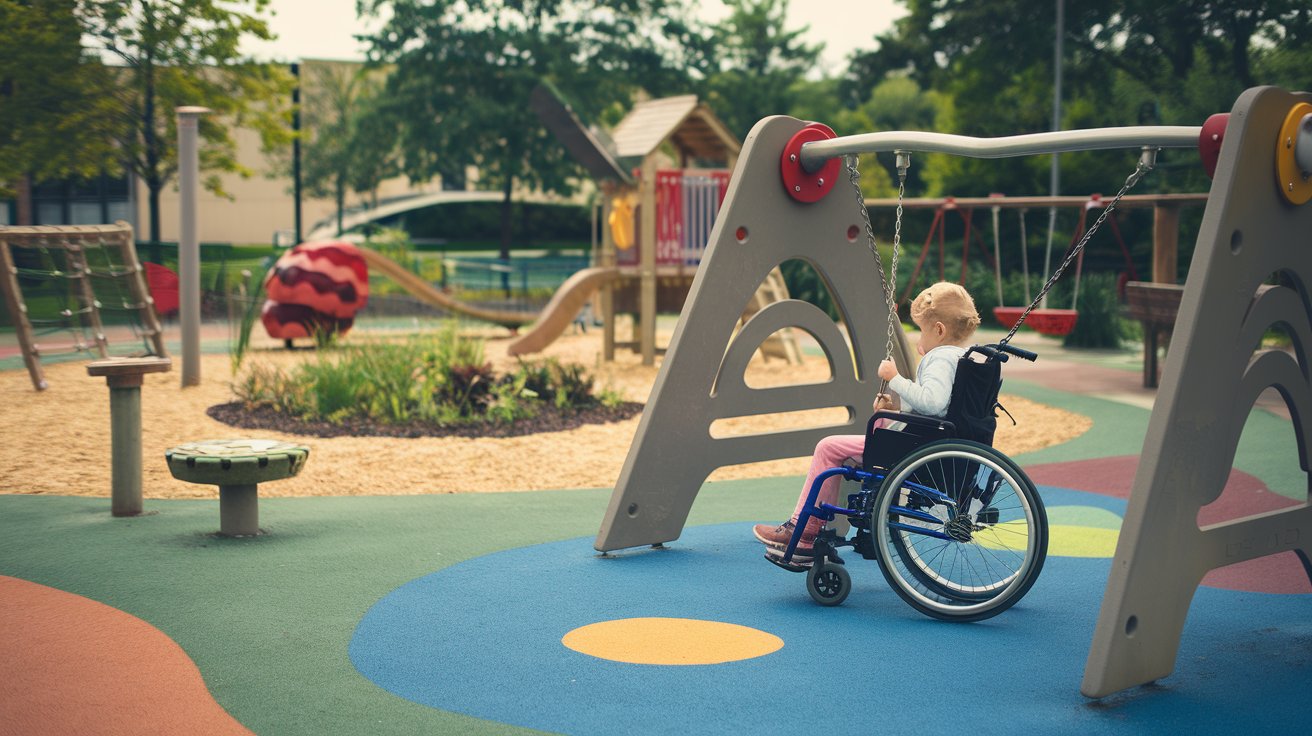
Choosing appropriate commercial preschool playground equipment involves matching developmental capabilities with equipment challenges. Children ages 2-5 benefit most from ground-level play panels, low climbing structures under 48 inches, accessible ramps with gentle inclines, and toddler-specific swings with full bucket seats. Modern 2026 equipment emphasizes inclusive design with wheelchair-accessible transfer platforms, sensory-rich components, and adaptive swing options that accommodate diverse abilities within integrated play structures rather than segregated areas.
Strategic equipment placement within your preschool playground layout requires separating active zones from quiet areas. Position climbers, slides, and overhead equipment in one designated section with adequate fall zones, while locating dramatic play structures, sensory gardens, and music walls in calmer perimeter areas. Swing zones demand special attention, requiring clear sight lines for supervision and positioning away from circulation paths where children transition between activity areas. Equipment spacing must account for both manufacturer specifications and ASTM F1487 standards that mandate minimum distances between structures.
Functional Zone Planning for Optimal Development
Effective preschool playground design divides outdoor space into distinct developmental zones that support varied learning objectives. Research from the National Association for the Education of Young Children demonstrates that children engage longer and more meaningfully when playgrounds offer clearly defined activity areas rather than random equipment placement.
Active Physical Play Zone Design
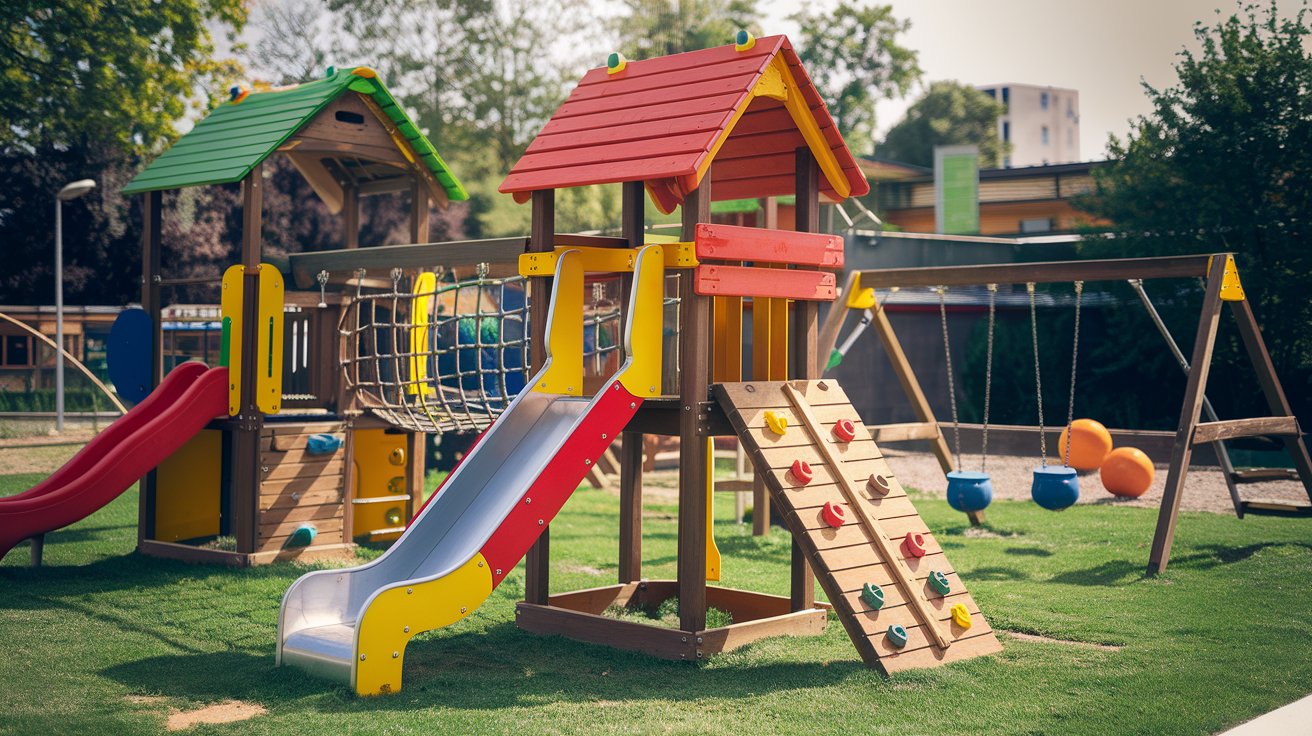
The active play zone typically consumes 40-50% of total playground area and accommodates gross motor development through climbing, sliding, swinging, and balancing activities. This zone requires maximum safety surfacing depth, clear fall zones, and positioning where supervisors maintain unobstructed visibility from multiple vantage points. Include age-appropriate challenges such as low rock walls, crawl tubes, overhead ladder rungs spaced for small hands, and graduated climbing opportunities that allow children to self-select difficulty levels. Modern equipment increasingly incorporates STEM learning elements through pulley systems, gear panels, and cause-effect mechanical components integrated into climbing structures.
Sensory and Nature Exploration Areas
Sensory zones have gained prominence in 2026 preschool playground layouts as educators recognize their impact on emotional regulation and cognitive development. These areas feature musical instruments mounted at accessible heights, textured pathways combining smooth concrete, rough stone, and soft rubber surfaces, and water play tables with controlled drainage systems meeting health code requirements. Nature exploration spaces incorporate raised garden beds at 18-24 inch heights suitable for preschoolers, bug observation stations with magnifying panels, and loose parts play areas containing natural materials like logs, stones, and tree cookies that children manipulate for creative construction.
Dramatic Play and Social Interaction Zones
Dedicated dramatic play areas support social-emotional development through role-playing and cooperative activities. Effective designs include playhouses scaled to 4-5 foot ceiling heights, outdoor kitchens with realistic appliances, and themed structures like market stands or vehicle replicas. Position these zones in partially shaded areas with seating options where children engage in extended imaginative scenarios. Include storage solutions for dramatic play props, ensuring weather-resistant bins or built-in cabinets that keep materials accessible yet protected. These social zones benefit from semi-enclosed designs that create cozy spaces while maintaining supervisor sight lines required by licensing regulations.
Surfacing Materials and Safety Compliance
Selecting appropriate playground surfacing represents one of the most critical decisions in preschool layout design, directly impacting both safety compliance and long-term maintenance costs. The 2026 United States market offers four primary surfacing categories approved for childcare facilities: engineered wood fiber, rubber tiles, poured-in-place rubber, and artificial turf with shock-absorbing underlayment. Each material carries specific ASTM F1292 impact attenuation ratings that must match your equipment’s maximum fall heights, with independent testing certificates required for licensing inspections.
Engineered wood fiber remains the most economical option at approximately 3-6 dollars per square foot installed, requiring 9-12 inch depth for adequate protection under equipment with 6-foot fall heights. However, this loose-fill surfacing demands continuous maintenance including monthly raking, annual top-dressing to maintain depth, and replacement every 7-10 years as materials decompose. Rubber surfacing options provide superior accessibility for wheelchairs and walkers, with poured-in-place installations costing 15-25 dollars per square foot offering the longest lifespan of 12-15 years and minimal maintenance beyond periodic power washing. Many 2026 preschools opt for hybrid approaches, using rubber surfacing under primary equipment with high traffic while utilizing wood fiber in secondary play areas to balance budget constraints.
Budget Planning for Preschool Playground Projects
Comprehensive preschool playground budgets in 2026 typically range from 45,000 to 150,000 dollars for complete installations serving 50-75 children, with per-child costs averaging 600-2,000 dollars depending on equipment quality, surfacing choices, and site preparation requirements. Budget allocation should dedicate approximately 50-60% to equipment purchases, 25-35% to surfacing materials and installation, 10-15% to site work including grading and drainage, and 5% to amenities like fencing, shade structures, and storage solutions.
Funding strategies have evolved significantly, with many United States preschools accessing grant opportunities through organizations like KaBOOM, Target, and Lowe’s Charitable Foundation that specifically support playground development for underserved communities. State childcare improvement grants administered through Child Care and Development Fund allocations often designate portions for outdoor learning environment enhancements. Phased implementation approaches allow preschools to develop comprehensive layouts over 2-3 budget cycles, initially installing essential safety surfacing and foundational climbing structures before adding specialized zones like sensory gardens and nature play areas in subsequent phases. Leasing programs from major commercial playground manufacturers now offer alternative financing with 60-month terms, reducing upfront capital requirements while ensuring equipment meets current safety standards.
Design Layout Tools and Professional Resources
Modern playground design has been revolutionized by digital planning tools that allow preschool directors to visualize layouts before construction begins. Several manufacturers offer free design software including BCI Burke’s Playground Configurator, Landscape Structures’ PlayBuilder, and GameTime’s CAD libraries that enable users to arrange equipment within scaled site dimensions. These platforms automatically calculate fall zones, surface area requirements, and ADA compliance factors while generating equipment specifications and budget estimates. More sophisticated options like SketchUp Pro with playground-specific plugins provide 3D modeling capabilities that help stakeholders visualize completed projects from child-height perspectives.
Professional consultation services provide invaluable expertise for complex projects or facilities navigating strict licensing requirements. Certified Playground Safety Inspectors credentialed through the National Recreation and Park Association conduct pre-design site assessments identifying potential challenges like drainage issues, soil contamination concerns, or overhead power line clearances before equipment selection. Landscape architects specializing in early childhood environments integrate playgrounds within broader site plans, addressing circulation patterns, parent drop-off zones, and outdoor classroom adjacencies. Many 2026 preschools engage playground design-build firms that provide comprehensive services from initial concept through installation and staff training, with project management ensuring timeline adherence critical for summer construction windows when facilities typically close for renovations.
Outdoor Preschool Playground Layout Configurations
Effective playground layout configurations vary significantly based on available space geometry, with rectangular, L-shaped, and irregular lots each presenting unique design opportunities and constraints. Rectangular sites measuring 60 feet by 80 feet work well for zoned approaches with active equipment along one long edge, dramatic play structures opposite, and sensory elements positioned in corner alcoves. This configuration creates natural circulation loops where children flow between activity zones without crossing high-traffic throughways or active play fall zones.
Narrow lots common in urban preschool settings require creative vertical solutions and compact equipment selections. Multi-level play structures maximize limited square footage by stacking climbing challenges, slides, and play panels within consolidated footprints measuring 20 by 30 feet. Perimeter utilization becomes essential, with wall-mounted music panels, garden beds attached to fencing, and overhead shade structures incorporating activity elements like climbing nets. L-shaped configurations naturally separate age groups when serving mixed-age populations, designating the shorter leg for toddlers with ground-level equipment while older preschoolers access more challenging apparatus in the longer section. Corner lots benefit from diagonal pathways creating movement interest while positioning equipment to maximize supervision sight lines from building exits where teachers monitor from doorways.
Daycare Playground Requirements by State Regulations
State-specific daycare playground requirements vary substantially across the United States, with licensing agencies enforcing divergent standards for outdoor play space dimensions, equipment specifications, and safety features. California mandates 75 square feet per child with at least 50% shaded coverage, while Texas requires 100 square feet per child without specific shade mandates. Florida regulations specify equipment appropriate for age groups with documented manufacturer age ranges, whereas New York emphasizes fall surfacing compliance with monthly inspection documentation submitted to licensing authorities.
Understanding your state’s specific requirements proves essential before beginning design work, as non-compliance results in licensing violations preventing facility operation. Many states now require licensed childcare providers to conduct annual playground safety inspections by CPSI-certified professionals, with written reports addressing equipment condition, surfacing depth measurements, and hazard corrections. Fence specifications demonstrate significant variation, with some states accepting 4-foot chain link while others mandate 6-foot privacy fencing with locked gates. Water play features face increasingly stringent health department oversight, requiring backflow preventers, daily sanitation protocols, and sometimes separate plumbing permits. Progressive states like Washington and Oregon have adopted nature-based playground guidelines encouraging loose parts play, living willow structures, and edible gardens while maintaining safety standards through risk-benefit assessment frameworks rather than prescriptive equipment prohibitions.
Incorporating Nature and Sustainable Design Elements
The 2026 trend toward nature-based preschool playgrounds reflects growing research demonstrating enhanced cognitive development, creativity, and emotional wellbeing when children engage with natural elements. Modern designs integrate living components including native plant gardens requiring minimal irrigation, fruit-bearing trees providing seasonal learning opportunities, and pollinator habitats featuring child-safe flowering species. These biophilic design elements reduce urban heat island effects while creating dynamic environments that change throughout seasons, offering ongoing discovery experiences impossible with static manufactured equipment.
Sustainable materials have become standard in contemporary playground construction, with recycled rubber surfacing derived from reclaimed tires, composite lumber manufactured from post-consumer plastics, and metal components featuring powder-coat finishes eliminating toxic paint concerns. Rainwater harvesting systems integrated into playground designs collect roof runoff for garden irrigation while teaching children about water conservation through visible cisterns and manual pumping stations. Solar-powered lighting extends playground usability during early morning and late afternoon hours while demonstrating renewable energy concepts. Many preschools incorporate weather monitoring stations, composting areas, and recycling sorting stations directly within playground layouts, transforming outdoor spaces into comprehensive environmental education laboratories that align with Next Generation Science Standards emphasized in 2026 early childhood curricula.
ADA Accessibility and Inclusive Design Standards
The 2010 ADA Standards for Accessible Design, enforced throughout 2026, mandate that preschool playgrounds provide accessible routes connecting at least 50% of elevated play components and 70% of ground-level play experiences. Accessible route specifications require 60-inch minimum widths with firm, stable, slip-resistant surfaces maintaining maximum 1:12 slopes or 1:16 for longer distances. Transfer platforms positioned at 11-18 inch heights enable children using wheelchairs to access elevated structures, with transfer steps and supportive handrails facilitating independent movement between platform levels.
Inclusive design extends beyond minimum compliance to create truly integrated play experiences where children of all abilities engage together rather than utilizing separate adaptive equipment. Modern 2026 playgrounds feature ramp-accessible slides, sensory panels positioned at multiple heights accommodating standing and seated users, and adaptive swings with harness systems installed adjacent to traditional belt swings rather than isolated in separate zones. Ground-level play components have expanded dramatically, offering rich experiences for children unable to access elevated structures through interactive panels, musical instruments, sand and water tables, and dramatic play elements all positioned along accessible routes. Communication boards featuring picture symbols support children with speech delays, while high-contrast colors and tactile elements assist those with visual impairments. Leading playground manufacturers now offer comprehensive inclusive play consultation services, evaluating designs against Principles of Universal Design that benefit all children regardless of ability status.
Maintenance Planning and Long-Term Operations
Sustainable playground operations require comprehensive maintenance protocols establishing daily, weekly, monthly, and annual inspection schedules. Daily quick-checks conducted before children access outdoor areas identify immediate hazards like broken glass, animal waste, vandalism damage, or equipment failures requiring temporary closure. Weekly detailed inspections documented on standardized forms examine equipment stability, hardware tightness, surfacing displacement, and wear patterns indicating replacement needs. Monthly maintenance activities include thorough cleaning of all surfaces, replenishing loose-fill materials, lubricating moving parts, and addressing minor repairs before they escalate into safety hazards or costly replacements.
Annual comprehensive playground audits performed by CPSI-certified inspectors generate detailed reports evaluating compliance with current ASTM and CPSC standards, equipment condition ratings, and prioritized repair recommendations. These professional assessments prove invaluable for budget planning, licensing renewal documentation, and liability protection should incidents occur. Proactive replacement scheduling based on manufacturer-specified component lifespans prevents unexpected failures, with high-wear elements like swing seats, slide surfaces, and climbing grips typically requiring replacement every 3-5 years while structural components last 15-20 years under proper maintenance. Many preschools establish playground improvement funds allocating annual percentages of operating budgets toward equipment refresh, ensuring outdoor environments remain engaging and safe without requiring emergency capital campaigns when major components reach end-of-life status.
Related video about design preschool playground layout
This video complements the article information with a practical visual demonstration.
FAQ – Common Questions
What is the minimum square footage required for a preschool playground?
Most United States licensing agencies require between 75-100 square feet of outdoor play space per child, though specific requirements vary by state. California mandates 75 square feet per child, Texas requires 100 square feet, and Florida specifies 80 square feet minimum. These measurements typically include all playground areas but exclude non-play spaces like storage sheds or equipment fall zones that children cannot access. For a facility licensed for 60 children, this translates to approximately 4,500-6,000 square feet of usable outdoor space, roughly equivalent to a 60 by 80-foot area. Always verify current requirements with your state childcare licensing authority, as regulations undergo periodic updates.
How much does it cost to design and install a preschool playground?
Complete preschool playground installations in 2026 typically cost between 45,000 and 150,000 dollars depending on size, equipment quality, and site conditions. Budget approximately 600-2,000 dollars per child based on licensed capacity. Equipment expenses consume 50-60% of total budgets, with commercial-grade play structures ranging from 15,000-60,000 dollars. Safety surfacing represents 25-35% of costs, with rubber surfacing at 15-25 dollars per square foot or engineered wood fiber at 3-6 dollars per square foot. Site preparation including grading, drainage, and fencing adds 10-15%. Many preschools utilize phased approaches or access playground-specific grants from organizations like KaBOOM and Target Foundation to reduce immediate financial burden.
What safety standards must preschool playgrounds meet in 2026?
Preschool playgrounds must comply with Consumer Product Safety Commission guidelines and ASTM F1487 standards addressing equipment design, installation, surfacing, and maintenance. Key requirements include 6-foot minimum fall zones around stationary equipment, impact-attenuating surfaces tested for specific critical fall heights, equipment scaled for ages 2-5 with platforms under 48 inches, and proper use zone spacing preventing activity overlap. State licensing regulations add supplementary requirements including minimum square footage per child, fence heights of 4-6 feet with self-latching gates, shade coverage specifications, and documentation of annual safety inspections by certified playground safety inspectors. All equipment must display manufacturer age range labels and comply with current ASTM standards at time of installation.
Can I design a preschool playground layout myself or do I need professional help?
Many preschool directors successfully develop preliminary playground layouts using free design software from manufacturers like Landscape Structures PlayBuilder or BCI Burke’s online configurator. These tools help visualize equipment placement, calculate fall zones, and estimate budgets. However, professional consultation proves valuable for ensuring licensing compliance, addressing site-specific challenges like drainage or soil conditions, and maximizing developmental value within budget constraints. Certified Playground Safety Inspectors provide pre-design assessments identifying potential issues, while landscape architects specializing in early childhood environments create comprehensive plans integrating playgrounds with broader site considerations. Consider professional involvement particularly for projects exceeding 75,000 dollars, complex sites with significant grading needs, or facilities navigating strict licensing requirements in states with detailed outdoor play regulations.
What are the best materials for preschool playground surfacing?
The four primary safety surfacing options for preschool playgrounds each offer distinct advantages. Engineered wood fiber costs 3-6 dollars per square foot, provides excellent impact attenuation at 9-12 inch depths, but requires monthly maintenance and replacement every 7-10 years. Rubber tiles at 8-12 dollars per square foot offer easier maintenance and good accessibility, with 10-12 year lifespans. Poured-in-place rubber surfacing, the premium option at 15-25 dollars per square foot, provides superior wheelchair accessibility, minimal maintenance, and 12-15 year longevity. Artificial turf with shock-absorbing underlayment combines natural appearance with moderate maintenance at 10-18 dollars per square foot. Selection depends on budget constraints, maintenance capabilities, accessibility priorities, and climate considerations, with many facilities using hybrid approaches combining materials for optimal performance and cost management.
How do I incorporate nature-based elements into a preschool playground design?
Nature-based preschool playground design integrates living elements alongside traditional equipment to enhance developmental outcomes and environmental connection. Start with native plant gardens featuring child-safe, non-toxic species arranged in raised beds at 18-24 inch heights accessible for preschoolers. Include edible gardens with herbs, vegetables, and berry bushes providing seasonal learning opportunities. Create nature exploration zones with logs, stumps, and boulders for climbing and balancing, supplemented by loose parts like pine cones, shells, and smooth stones for creative play. Add sensory pathways combining various natural textures, bug observation stations with magnifying panels, and weather monitoring equipment teaching scientific concepts. Incorporate shade trees providing cooling canopy while reducing surfacing heat, and consider living willow structures or sunflower houses offering dynamic play spaces that grow and change seasonally, creating ongoing discovery impossible with static manufactured equipment.
| Design Element | Key Specifications | Developmental Benefit |
|---|---|---|
| Safety Surfacing | 9-12 inch depth wood fiber or poured rubber rated for fall heights; 6-foot minimum fall zones | Prevents injuries while meeting CPSC and state licensing requirements |
| Active Play Zone | 40-50% of total area; equipment under 48 inches with age-appropriate challenges | Develops gross motor skills, coordination, and physical confidence |
| Sensory Areas | Musical instruments, textured pathways, water tables, nature elements | Enhances cognitive development and emotional regulation |
| Dramatic Play Structures | Playhouses, themed equipment, semi-enclosed social spaces | Supports social-emotional growth through cooperative imaginative play |
| Space Requirements | 75-100 sq ft per child based on state regulations | Ensures adequate room for safe play and licensing compliance |
| Accessibility Features | 60-inch accessible routes, transfer platforms, ground-level play options | Creates inclusive environments serving children of all abilities |
| Budget Planning | $600-2,000 per child; 50-60% equipment, 25-35% surfacing | Enables realistic project scoping and phased implementation |