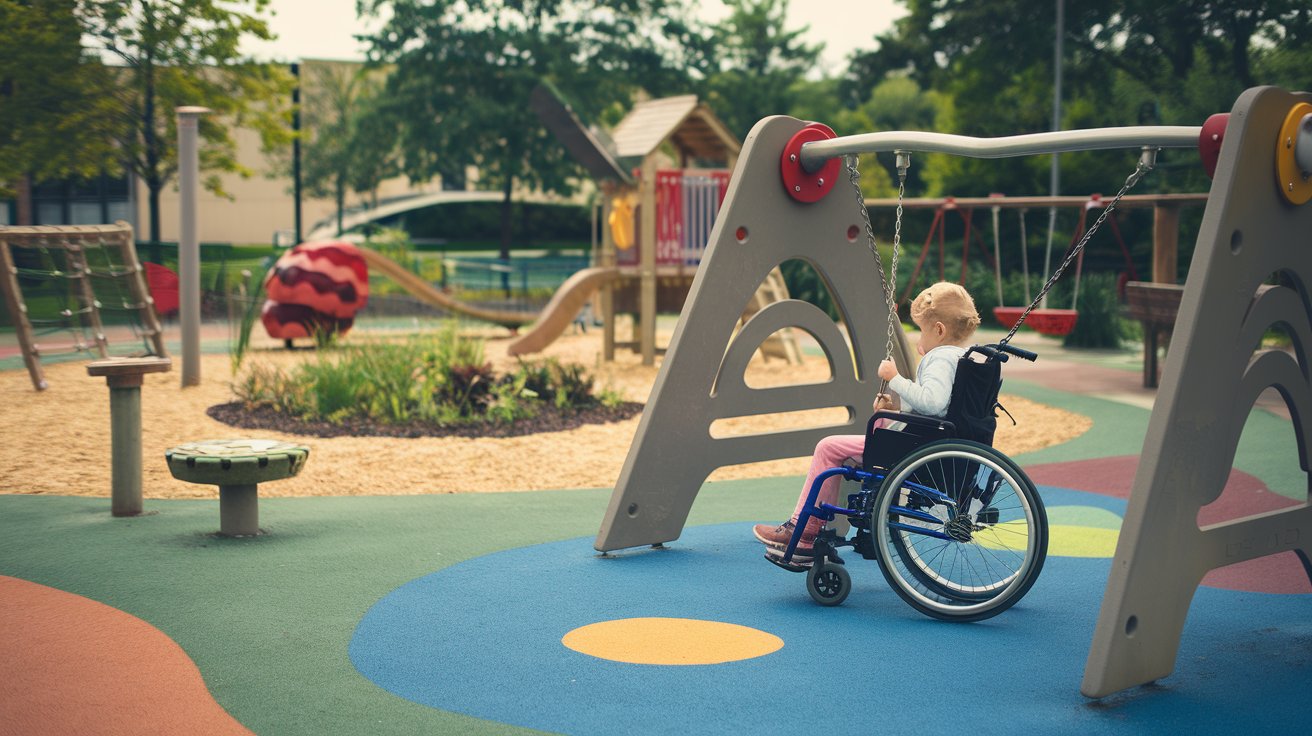
The 7 principles of inclusive playground design represent a transformative approach to creating play spaces where children of all abilities can engage, interact, and thrive together. These principles ensure that inclusive playground equipment and layouts provide equal opportunities for physical, social, and cognitive development. As communities across the United States prioritize accessibility and equity in 2026, understanding these fundamental design concepts becomes essential for educators, architects, and municipal planners committed to building truly welcoming play environments.
Understanding Inclusive Playground Design
Inclusive playground design goes far beyond simply meeting ADA compliance standards. It represents a comprehensive philosophy that ensures all children, regardless of physical, cognitive, sensory, or social abilities, can play together in meaningful ways. According to 2026 data from the National Recreation and Park Association, approximately 1 in 4 children in the United States has some form of disability or developmental difference, making inclusive design principles more critical than ever. These playgrounds eliminate barriers that traditionally separated children, creating environments where diversity becomes a strength rather than an obstacle.
The foundation of inclusive playground design rests on the understanding that play is not a privilege but a fundamental right for every child. Traditional playgrounds often inadvertently exclude children with mobility challenges, sensory processing differences, or cognitive disabilities. Modern playground designs now incorporate universal design principles that anticipate diverse needs from the initial planning stages. Research from the University of Buffalo’s Center for Inclusive Design shows that when children of all abilities play together, it enhances social skills, empathy, and understanding for everyone involved, creating benefits that extend far beyond the playground itself.
The 7 Principles of Inclusive Playground Design
The 7 principles of inclusive playground design provide a comprehensive framework for creating play spaces that accommodate every child. These principles were developed through collaboration between designers, therapists, educators, and families to address the full spectrum of play needs. Each principle works in concert with the others to create environments where fairness, accessibility, and engagement become standard features rather than afterthoughts.
1. Fairness: Ensuring Equity for All Children
The first principle emphasizes that fairness in playground design means providing equivalent experiences rather than identical ones. This principle ensures that children using wheelchairs, those with sensory sensitivities, and those with typical development all have access to play experiences that are equally challenging and rewarding. In 2026, leading playground designers achieve this by offering multiple pathways to the same play outcome, such as providing both stairs and ramps to elevated structures, or creating ground-level play panels alongside raised activity boards.
Fairness extends to social integration as well. Inclusive playground equipment should allow children to play alongside peers rather than in segregated areas. For example, a music play area with instruments at varying heights enables children in wheelchairs to jam with standing peers. Data from the Inclusive Play Design Guide indicates that playgrounds implementing fairness principles see 73% more mixed-ability interactions compared to traditional designs. This principle transforms the playground landscape design into a space where every child feels they truly belong and can participate meaningfully in play activities.
2. Inclusion: Bridging Gaps and Building Friendships
The inclusion principle focuses on creating opportunities for children of all abilities to play together rather than merely near each other. This means designing activities that naturally encourage cooperative play and social interaction. School playground design in 2026 increasingly features elements like group swings that accommodate wheelchairs alongside traditional seats, or collaborative play structures that require teamwork to operate, such as multi-person see-saws or musical installations that create harmonies when multiple children participate.
Research from the Center for Universal Design demonstrates that inclusive play environments significantly reduce social barriers between children with and without disabilities. These spaces incorporate elements like quiet zones for children who need sensory breaks, alongside active play areas, ensuring that different play preferences and needs are respected. The most successful playground designs create what experts call “zones of proximal interaction” where children naturally come together around shared interests. According to 2026 studies, children who regularly play in truly inclusive environments show 64% higher rates of cross-ability friendships that extend beyond the playground.
3. Smart Design: Enhancing Understanding and Engagement
Smart design, also known as the principle of simple and intuitive use, ensures that playground equipment is easy to understand regardless of a child’s experience, knowledge, language skills, or cognitive ability. This principle means that children should be able to figure out how to use playground equipment without extensive instruction or reading ability. Visual cues, tactile indicators, and intuitive shapes guide children naturally toward appropriate use, reducing frustration and increasing independent exploration.
In 2026, best playground designers implement smart design through color-coded activity zones, textured pathways that indicate different play areas, and equipment shapes that suggest their function. For example, a tunnel’s open ends naturally invite crawling through, while curved slides clearly indicate the direction of movement. The basic playground layout should communicate its organization through logical spatial relationships. Studies show that playgrounds incorporating smart design principles see 58% fewer safety incidents and 82% higher sustained engagement from children with cognitive disabilities. This principle ensures that the design elements themselves become teachers, allowing children to learn through exploration without constant adult intervention.
4. Independence: Empowering Every Child
The independence principle ensures that all children can access and use playground equipment without requiring constant assistance. This doesn’t mean children play alone, but rather that the design allows them to make choices and navigate the space according to their abilities. Accessible playground design in 2026 features transfer platforms at appropriate heights, accessible routes to all play areas, and equipment controls positioned within reach of children using mobility devices or those with shorter stature.
Creating independence requires thoughtful consideration of design elements throughout the playground. Ramps with appropriate slopes (typically 1:12 or gentler), wide pathways that accommodate wheelchairs and walkers, and ground-level play activities ensure that children don’t need to wait for adult help to access play opportunities. Gametime inclusive playground research indicates that when children can independently access 80% or more of playground features, their confidence increases significantly, and they’re more likely to attempt new challenges. This principle transforms playground landscape design from a space where some children depend on others into an environment where autonomy and self-directed play flourish for everyone.
5. Safety: Creating Secure Play Environments
Safety in inclusive playground design extends beyond preventing falls and injuries to include creating emotionally safe spaces where children feel secure trying new activities. Physical safety considerations include impact-absorbing surfaces like poured-in-place rubber or engineered wood fiber that accommodate wheelchairs while protecting from falls. In 2026, advanced surfacing materials provide ADA-compliant accessibility while meeting ASTM safety standards, with some innovative designs incorporating sensory-friendly textures that appeal to children with tactile sensitivities.
Emotional safety requires designing spaces where children of varying abilities can participate without fear of failure or embarrassment. This means providing equipment with multiple challenge levels, ensuring that a child using a wheelchair isn’t limited to toddler-level activities while their peers engage in age-appropriate play. Safety First principles also include sight lines that allow caregivers to monitor children while respecting their need for independent exploration. According to the National Program for Playground Safety, inclusive playgrounds designed with comprehensive safety principles show 45% fewer injuries and significantly higher usage rates across all ability levels. The key playground design principles balance appropriate risk-taking, which develops resilience and confidence, with responsible hazard elimination.
6. Active Play: Encouraging Physical and Social Engagement
The active play principle recognizes that play experiences should engage children physically, cognitively, socially, and sensory in ways appropriate to their abilities. This doesn’t mean every child climbs or swings in the same way, but rather that the playground offers diverse opportunities for movement and challenge. All inclusive playground equipment in 2026 features activities that promote upper body strength for children who can’t walk, vestibular stimulation through accessible spinning equipment, and proprioceptive feedback through climbing structures with varied textures and resistance levels.
Research shows that active play benefits extend far beyond physical fitness. The 7 elements of play including sensory, creative, physical, social, dramatic, communicative, and cognitive play should all find expression in truly inclusive environments. Modern playground designs incorporate music walls that encourage auditory creativity, sand and water play areas accessible from wheelchair height, and dramatic play structures like accessible playhouses. According to 2026 data from the American Academy of Pediatrics, children who engage in varied active play show improved executive function, better emotional regulation, and stronger peer relationships. The active play principle ensures that inclusive playground design promotes holistic development for every child, regardless of their starting abilities.
7. Comfort: Enhancing the Overall Play Experience
Comfort in playground design addresses both physical ease and sensory appropriateness. This principle ensures that children can sustain play over time without discomfort that might force early departure. Physical comfort includes providing shaded areas to prevent overheating, rest zones for children who fatigue more quickly, and equipment designed to accommodate various body types and sizes. In 2026, advanced playground landscape design incorporates natural shade structures, covered play areas, and seating integrated throughout the space rather than relegated to perimeter benches.
Sensory comfort is equally crucial for inclusive design principles. This means managing sound levels to prevent overwhelming children with auditory sensitivities, using colors that provide visual interest without causing overstimulation, and creating quiet zones where children can decompress. School playground design increasingly features gradations from high-energy areas to calm spaces, allowing children to self-regulate their sensory input. Studies indicate that playgrounds incorporating comfort principles see 67% longer average play sessions and attract more diverse users including children with autism spectrum disorder and sensory processing differences. The comfort principle recognizes that when children feel physically and emotionally comfortable, they engage more deeply in play, form stronger social connections, and develop critical skills that extend far beyond the playground environment.
Implementing Universal Design in Playground Planning
Universal Design playground concepts form the foundation for applying the seven principles effectively. Unlike accessible design, which often retrofits existing spaces, universal design anticipates diverse needs from the project’s inception. This proactive approach creates more cohesive, aesthetically pleasing, and functionally superior play environments. In 2026, communities investing in universal design principles from the start report 40% lower long-term maintenance costs and significantly higher community satisfaction compared to those that add accessibility features as afterthoughts.
The 7 principles of inclusive design translate into specific planning decisions that shape the entire playground experience. Site selection should prioritize level terrain or areas where grade changes can be managed with accessible routes. Surface material selection must balance safety, accessibility, drainage, and maintenance requirements. Playground landscape design should integrate natural elements like trees for shade, hills for varied topography, and gardens at accessible heights. Leading best playground designers now use 3D modeling software to test sight lines, traffic flow patterns, and accessibility routes before construction begins, ensuring that the design principles are fully realized in the finished product.
Equipment Selection for Inclusive Playgrounds
Selecting appropriate inclusive playground equipment requires understanding how different play components serve varied developmental needs. The market in 2026 offers unprecedented options, from traditional swings modified with high-back bucket seats and harness systems to innovative sensory walls that engage children through touch, sound, and visual elements. All inclusive playground equipment should represent a balanced ecosystem of activities addressing different play types and ability levels.
Modern playground equipment manufacturers like those producing Gametime inclusive playground systems offer modular designs that allow customization based on community needs and budget constraints. Ground-level play panels provide cognitive and fine motor challenges for children who cannot access elevated structures, while transfer stations enable children to move from wheelchairs to climbing equipment when they choose. Research indicates that the most successful inclusive playgrounds dedicate at least 50% of their play components to ground-level or easily accessible activities, ensuring that children using wheelchairs have equivalent variety and challenge. The key is selecting equipment that serves multiple purposes and accommodates the widest possible range of abilities while maintaining age-appropriate challenge levels.
Surfacing Solutions for Accessibility and Safety
Surface material selection represents one of the most critical decisions in inclusive playground design, directly impacting both accessibility and safety. In 2026, the basic playground surfaces that meet ADA accessibility standards include poured-in-place rubber, rubber tiles, and engineered wood fiber when properly maintained. Each material offers distinct advantages: poured-in-place rubber provides the smoothest wheelchair navigation and virtually maintenance-free longevity, while engineered wood fiber offers natural aesthetics and lower initial costs but requires more frequent replenishment and maintenance.
The Americans with Disabilities Act requires accessible routes and use zones around playground equipment to have firm, stable, and slip-resistant surfaces. However, truly inclusive design goes beyond minimum compliance. Advanced surfacing systems in 2026 incorporate color variations to delineate different play zones, textured patterns that provide tactile wayfinding for children with visual impairments, and impact attenuation that meets ASTM F1951 standards for critical fall heights. Playground landscape design experts recommend seamless transitions between different surface types to prevent wheelchair entrapment or tripping hazards. Studies show that appropriate surfacing increases playground usage by children with mobility devices by 85%, demonstrating that this foundational element significantly impacts whether the design principles translate into actual inclusive play experiences.
Creating Sensory-Rich Inclusive Play Experiences
Sensory play opportunities represent essential elements of inclusive playground design, engaging children through sight, sound, touch, smell, and movement. In 2026, understanding of sensory processing differences has advanced significantly, leading playground designers to create spaces that offer rich sensory input while also providing regulation opportunities. Music and sound play areas with bells, drums, and chimes allow children to explore cause-and-effect relationships and creative expression regardless of mobility or cognitive abilities.
Tactile experiences through varied textures, water play, and sand areas engage children with visual impairments while providing therapeutic benefits for those with sensory processing needs. School playground design increasingly incorporates nature play elements like logs, boulders, and plantings that offer unpredictable, ever-changing sensory experiences that manufactured equipment cannot replicate. Research from the International Play Association indicates that playgrounds offering diverse sensory experiences see 78% higher engagement from children with autism spectrum disorder and significantly longer play sessions across all user groups. The 7 principles of inclusive playground design emphasize that sensory-rich environments benefit every child, not just those with identified sensory needs, making these features valuable investments for any community playground project.
Community Engagement in Inclusive Design Process
Successful implementation of inclusive design principles requires meaningful community engagement throughout the planning process. In 2026, best practices include forming diverse steering committees that include parents of children with disabilities, occupational and physical therapists, special education teachers, and most importantly, children themselves. These stakeholders bring invaluable perspectives that professional designers might miss, ensuring that the playground designs truly meet community needs rather than imposing theoretical solutions.
Community input shapes not only equipment selection but also the overall philosophy and priorities of the space. Some communities prioritize social play opportunities, leading to designs heavy on collaborative equipment and gathering spaces. Others emphasize physical challenge and sensory exploration. The key playground design principles provide a framework, but local implementation should reflect specific community values and needs. Surveys, focus groups, and design charrettes allow community members to provide input at critical decision points. According to 2026 data from the National Recreation and Park Association, playgrounds developed with robust community engagement show 92% higher satisfaction ratings and 45% greater long-term usage compared to those designed without meaningful stakeholder input. This collaborative approach ensures that the 7 principles translate into spaces that truly serve their communities.
Budgeting and Funding Inclusive Playground Projects
Implementing inclusive playground design principles requires thoughtful budgeting that balances initial investment with long-term value. In 2026, comprehensive inclusive playgrounds typically cost between $150,000 and $500,000 depending on size, equipment selection, and site conditions. While this represents a significant investment, communities should consider the extended usability and reduced need for future modifications. Universal Design playground spaces serve a broader age range and ability spectrum, effectively increasing the number of children who can use the facility and justifying the higher initial expenditure.
Numerous funding sources support inclusive playground development across the United States. Federal programs like the Land and Water Conservation Fund provide matching grants for playground projects that meet accessibility standards. Many states offer specific funding for inclusive playground equipment through disability services agencies or education departments. Private foundations including the Shane’s Inspiration Foundation and the Kiwanis Club regularly fund inclusive playground projects. Corporate sponsorships, community fundraising campaigns, and crowdfunding platforms provide additional revenue streams. The best playground designers work with communities to develop phased implementation plans that allow projects to move forward even with limited initial funding, ensuring that the 7 principles of inclusive playground design can be realized regardless of budget constraints. Strategic planning allows communities to prioritize high-impact features while planning for future enhancements.
Related video about 7 principles of inclusive playground design
This video complements the article information with a practical visual demonstration.
Everything you need to know about 7 principles of inclusive playground design
What are the 7 basic principles of design?
The 7 principles of inclusive playground design are: 1) Fairness, ensuring equity in play experiences for all children; 2) Inclusion, creating opportunities for children of all abilities to play together; 3) Smart Design, making equipment intuitive and easy to understand; 4) Independence, enabling children to access and use equipment without constant assistance; 5) Safety, providing physically and emotionally secure environments; 6) Active Play, encouraging physical and social engagement appropriate to varied abilities; and 7) Comfort, ensuring physical ease and sensory appropriateness. These principles work together to create play spaces where every child can participate meaningfully regardless of physical, cognitive, sensory, or social abilities.
What are the elements of an inclusive playground?
An inclusive playground incorporates multiple essential elements including accessible routes connecting all play areas, ground-level play components for children using wheelchairs, sensory play features like music walls and tactile panels, accessible surfacing that accommodates mobility devices while providing fall protection, varied equipment offering multiple challenge levels, transfer systems allowing children to move from wheelchairs to elevated structures, quiet zones for sensory regulation, shade structures for comfort, and clear sight lines for supervision. In 2026, successful inclusive playgrounds ensure that at least 50% of play experiences are accessible at ground level, with ramps and transfers providing additional access to elevated features, creating truly welcoming environments for children of all abilities.
What are the key playground design principles?
Key playground design principles include Universal Design that anticipates diverse needs from the planning stage, accessibility that provides firm and stable surfacing and routes to all play areas, developmental appropriateness offering age-suitable challenges, safety through proper fall zones and equipment spacing, variety in play types addressing physical, social, sensory, and cognitive needs, durability through quality materials and construction, and maintainability ensuring long-term sustainability. The 7 principles of inclusive playground design specifically focus on creating equity, inclusion, intuitive use, independence, safety, active engagement, and comfort. Together, these principles ensure playgrounds serve the broadest possible range of users while providing meaningful play experiences that support child development across all domains.
How does Universal Design differ from accessible design in playgrounds?
Universal Design playground concepts differ fundamentally from accessible design in their approach and outcomes. Accessible design typically involves retrofitting existing spaces to meet ADA compliance standards, often resulting in separate or add-on features for children with disabilities. Universal Design, by contrast, anticipates diverse needs from the project’s inception, creating inherently inclusive spaces where accessibility is seamlessly integrated. In 2026, Universal Design playgrounds feature equipment that multiple children of varying abilities can use simultaneously, aesthetically cohesive designs where accessibility features enhance rather than compromise appearance, and proactive planning that reduces long-term modification costs. This approach creates more functional, beautiful, and truly inclusive play environments that benefit all children.
What surfacing materials work best for inclusive playgrounds?
The best surfacing materials for inclusive playgrounds in 2026 include poured-in-place rubber, which provides the smoothest wheelchair navigation and requires minimal maintenance; rubber tiles offering similar accessibility with easier repair capabilities; and properly maintained engineered wood fiber that meets accessibility standards while providing natural aesthetics and lower initial costs. Poured-in-place rubber remains the gold standard for accessibility, meeting ASTM F1951 standards for wheelchair maneuverability while providing excellent impact attenuation. Each material should be evaluated based on climate considerations, budget constraints, maintenance capabilities, and aesthetic preferences. Successful inclusive playground design ensures seamless transitions between different surface types and maintains firm, stable, slip-resistant surfaces throughout accessible routes and use zones around all equipment.
How can communities fund inclusive playground projects?
Communities can fund inclusive playground projects through diverse sources including federal grants like the Land and Water Conservation Fund, state disability services or education department funding, private foundations such as Shane’s Inspiration and GameTime’s Let’s Play grant program, corporate sponsorships from businesses committed to community development, crowdfunding platforms targeting specific equipment or features, community fundraising events, and partnerships with local service organizations like Kiwanis or Rotary clubs. In 2026, successful funding strategies typically combine multiple sources and implement phased development plans. Many communities start with core accessible features and expand over time, ensuring that the 7 principles of inclusive playground design guide the project even when budget constraints require staged implementation. Professional grant writers and experienced playground consultants can significantly improve funding success rates.
| Principle | Core Focus | Key Benefit |
|---|---|---|
| Fairness | Providing equivalent play experiences for all abilities | Ensures every child accesses meaningful challenges |
| Inclusion | Creating opportunities for children to play together | Builds cross-ability friendships and social skills |
| Smart Design | Making equipment intuitive and easy to understand | Reduces frustration and increases independent exploration |
| Independence | Enabling access without constant assistance | Empowers children and builds confidence |
| Safety | Creating physically and emotionally secure environments | Reduces injuries while encouraging appropriate risk-taking |
| Active Play | Encouraging physical and social engagement | Promotes holistic development across all domains |
| Comfort | Ensuring physical ease and sensory appropriateness | Extends play sessions and welcomes diverse users |