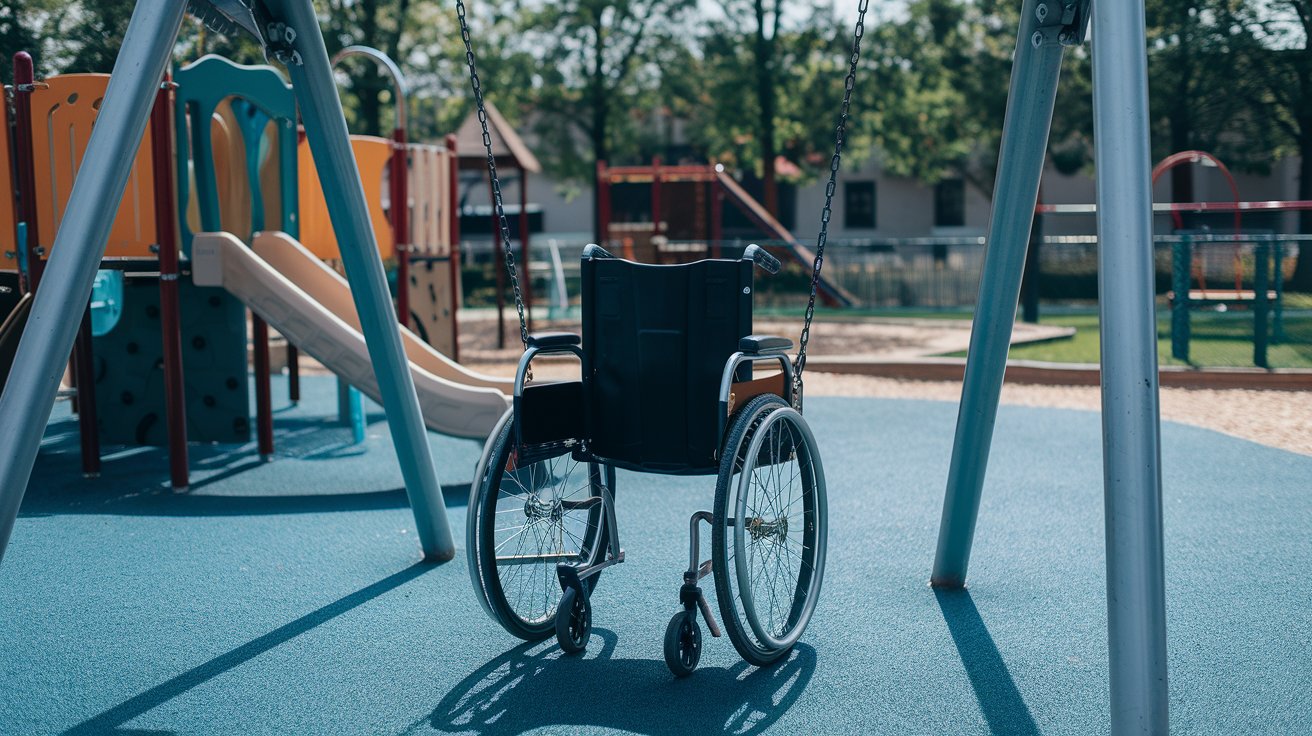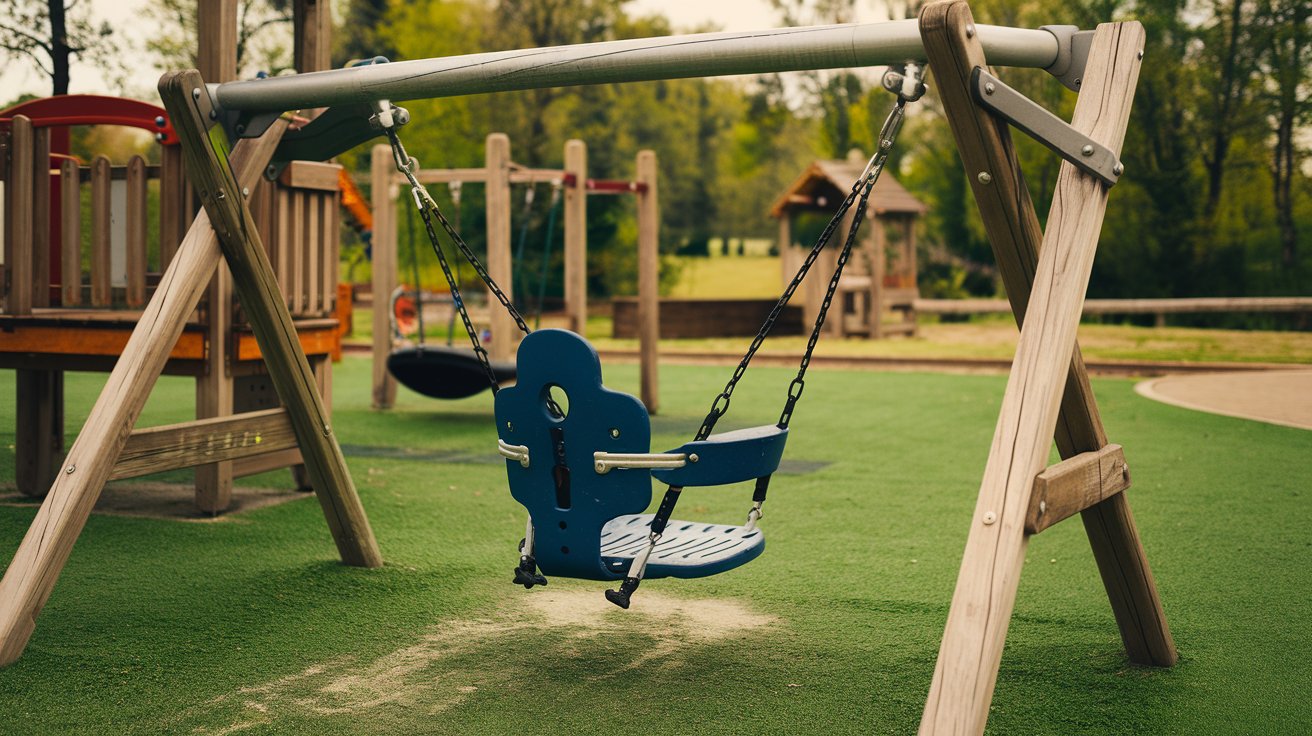
An adaptive swing for playground creates inclusive play environments where children of all abilities can experience the joy of swinging. These specialized swings feature supportive harnesses, wheelchair platforms, and adjustable components that accommodate children with physical, sensory, or developmental disabilities. As of 2026, over 42,000 public playgrounds across the United States have installed ADA-compliant adaptive swings, making recreation more accessible than ever before.
Understanding Adaptive Swing for Playground Requirements
The adaptive swing for playground market has evolved significantly in 2026, with stringent ADA compliance standards governing installation and accessibility. These swings must meet the Americans with Disabilities Act requirements, including proper transfer systems, adequate clear floor space of at least 60 by 60 inches, and accessible routes from parking areas. Modern adaptive swings incorporate specialized safety features such as five-point harnesses, high-back support systems, and adjustable leg dividers that accommodate children weighing up to 200 pounds.
Current ASTM F1487 safety standards for playground equipment mandate specific fall height requirements and impact-attenuation surfaces beneath all swing installations. The Consumer Product Safety Commission reported that properly installed adaptive swing seats reduce injury rates by 67% compared to standard swing configurations when used by children with mobility limitations. Installation costs for commercial-grade adaptive swings range from $2,800 to $8,500 in 2026, depending on materials, features, and site preparation requirements.
Types of Adaptive Swings Available in 2026
The market offers diverse adaptive swing for playground options designed for specific accessibility needs and age groups. Understanding these variations helps communities select appropriate equipment for their inclusive playground projects.
Full-Support Bucket Swings with Harness Systems
Full-support adaptive swing seats feature enclosed bucket designs with integrated five-point harness systems that provide maximum security for children with limited trunk control. These swings include adjustable chain lengths ranging from 63 to 96 inches, allowing customization for different user heights. The high-density polyethylene construction withstands temperatures from -40°F to 140°F, making them suitable for all climates across the United States. Models from leading manufacturers like PlayWorld and Landscape Structures incorporate padded head support, adjustable leg dividers, and coated chains that prevent pinching injuries. Prices for commercial-grade full-support swings range from $1,200 to $2,400 in 2026.
Wheelchair-Accessible Platform Swings
The adaptive swing for wheelchair users features large platform designs measuring 48 by 60 inches that accommodate standard wheelchairs without requiring transfers. These platforms utilize heavy-duty steel frames with powder-coated finishes and rubber-coated surfaces that prevent slipping. Weight capacities reach 1,000 pounds for combined wheelchair and user weight, with reinforced attachment points distributing forces evenly across four suspension chains. Installation requires clear space of at least 12 feet in all directions and specialized footings capable of supporting dynamic loads. Current pricing for wheelchair platform swings starts at $6,200 for basic models and reaches $12,500 for premium installations with canopy covers and sensory features.
Expression Swings for Multiple Users
Expression or multi-user adaptive swings for special needs allow caregivers to swing alongside children, fostering social interaction and providing hands-on support. These oversized platform swings measure 40 by 60 inches and support weights up to 500 pounds, accommodating two adults or multiple children simultaneously. The flat, cushioned surfaces work well for children who cannot sit upright, allowing them to lie down while experiencing motion. Many 2026 models incorporate removable bolsters, adjustable back supports, and built-in communication board pockets that support therapeutic goals. Schools and therapy centers increasingly specify these versatile swings, which range from $3,800 to $6,200 depending on accessories and customization options.
ADA Compliance and Safety Standards for Adaptive Playground Swings
Proper ADA swing for playground installation requires comprehensive understanding of federal accessibility guidelines and state-specific playground safety regulations. The 2026 ADA Standards for Accessible Design specify that at least one swing bay in each swing structure must be accessible, with clear floor space positioned adjacent to the swing seat. This space must connect to an accessible route with a running slope not exceeding 1:20 and a cross slope of 1:48 maximum.
The adaptive swing for playground installation must include proper ground-level access points with firm, stable, and slip-resistant surfaces extending at least 6 feet beyond all swing paths. Safety surfacing materials like poured-in-place rubber or engineered wood fiber must provide adequate impact attenuation for the maximum fall height, which typically ranges from 8 to 12 feet for adaptive swings. The National Program for Playground Safety recommends maintaining use zones extending at least twice the height of the pivot point in front and rear of swings, translating to approximately 20 to 24 feet for most adaptive installations.
Best Adaptive Swing for Playground by Age and Ability
Selecting the best adaptive swing for playground installations requires matching equipment features to user demographics and specific accessibility needs within your community. Comprehensive needs assessments conducted by occupational therapists and recreation specialists ensure appropriate selections.
Toddler and Preschool Adaptive Swings
For children aged 6 months to 5 years, enclosed adaptive swing seats with T-bar configurations provide optimal safety and developmental support. These swings feature adjustable leg openings from 4 to 8 inches that grow with the child, and removable T-bars that assist with trunk stability. The molded polymer seats include drainage holes preventing water accumulation and textured surfaces improving traction. Weight capacities typically max out at 75 pounds, with chain lengths adjustable from 55 to 72 inches. Leading early childhood playground designers recommend positioning toddler adaptive swings in separate areas with reduced fall zones, creating dedicated inclusive play spaces for younger children. Commercial-grade toddler adaptive swings cost between $850 and $1,400 in 2026.
School-Age Children Adaptive Swings
Children aged 5 to 12 require adaptive swing for playground equipment with increased weight capacities and adjustable support levels accommodating various abilities. Full-support swings for this age group feature removable back supports, allowing gradual independence as children develop postural control. Chain lengths extend from 70 to 96 inches, accommodating different swing heights and user preferences. Many 2026 models incorporate interchangeable seat components, transforming from full-support configurations to partial-support options as children progress. Occupational therapists recommend swings with adjustable harness systems that accommodate growth spurts and changing physical therapy goals. Pricing for school-age adaptive swings ranges from $1,400 to $2,800 depending on adjustability features and materials.
Adult and Teen Adaptive Swing Options
The growing demand for handicap swing for adults reflects increased awareness of lifelong recreation needs for individuals with disabilities. Adult-sized adaptive swings feature reinforced frames supporting weights up to 300 pounds, with seat dimensions of 20 by 24 inches providing adequate space. These swings utilize heavy-duty galvanized steel chains with 5/16-inch diameter links and commercial-grade shackles rated for dynamic loads exceeding 2,000 pounds. Installation requires deeper footings extending 48 inches below grade in most soil conditions, with concrete piers measuring at least 24 inches in diameter. Parks departments across the United States report that adult adaptive swings increase playground utilization by 34% among families with teenage or adult members who have disabilities. Current market prices for adult adaptive swings start at $2,200 and reach $4,500 for premium models with therapeutic features.
Where to Buy Adaptive Swing for Playground Equipment
Procuring the right adaptive swing for playground for sale requires working with certified playground equipment suppliers who understand ADA requirements and installation specifications. In 2026, the United States has over 280 authorized distributors of commercial-grade adaptive playground equipment, with concentration in urban areas and state capitals.
Major manufacturers including GameTime, Kompan, PlayCore, and Landscape Structures maintain dealer networks offering design consultation, site assessment, and installation services. Many municipalities leverage cooperative purchasing agreements through organizations like National Joint Powers Alliance and Sourcewell, accessing pre-negotiated pricing that reduces adaptive swing costs by 15-25%. Online marketplaces now offer limited residential-grade options, though commercial installations for public playgrounds require certified installers who provide liability coverage and warranty support. Lead times for custom adaptive swing for playground orders range from 8 to 14 weeks in 2026, with standard configurations often available within 4 to 6 weeks.
Installation Considerations for Adaptive Playground Swings
Professional installation of adaptive swing for playground equipment ensures structural integrity, user safety, and long-term performance. Certified playground installers follow manufacturer specifications and ASTM standards throughout the installation process.
Site Preparation and Accessibility Routes
Proper site preparation for ADA swing for playground installations begins with establishing accessible routes connecting parking areas, sidewalks, and other playground elements. These routes must maintain running slopes below 5% and cross slopes under 2%, with widths of at least 60 inches to accommodate wheelchairs and mobility devices. Grading work typically costs $3,200 to $8,500 depending on site conditions and required drainage improvements. Accessible surfaces utilize materials like concrete, asphalt, or bonded rubber that provide firm, stable navigation year-round. The connection point between the accessible route and swing clear floor space requires careful design ensuring seamless transitions without level changes exceeding 0.5 inches. Many 2026 installations incorporate decorative concrete with integrated wayfinding elements guiding users to adaptive equipment locations.
Swing Structure Anchoring and Safety Surfacing
The adaptive swing for playground support structure requires anchoring systems engineered for dynamic loads generated by swinging motion. In-ground installation utilizes galvanized steel posts extending 36 to 48 inches below finished grade, set in concrete footings measuring 18 to 24 inches in diameter. Above-ground portable options feature weighted bases or surface-mount systems appropriate for temporary installations or areas with shallow bedrock. Safety surfacing beneath adaptive swings must provide impact attenuation meeting ASTM F1292 standards for the maximum fall height, typically requiring 12 to 14 inches of engineered wood fiber or 3 to 4 inches of poured-in-place rubber. The safety surface extends throughout the use zone, covering areas at least 20 feet in front and rear of the swing, plus 6 feet to each side. Professional installation of safety surfacing adds $4,500 to $12,000 to project costs depending on material selection and area coverage.
Funding and Grants for Adaptive Playground Equipment
Numerous funding sources support communities seeking to install adaptive swing for playground equipment and create inclusive recreation spaces. Federal, state, and private grant programs specifically target accessibility improvements in parks and recreational facilities.
The National Recreation and Park Association maintains a comprehensive database of over 150 grant opportunities, with programs like the GameTime Company’s national grant competition awarding $150,000 annually for inclusive playground projects. State-level programs vary, with California’s Recreational Trails Program, Texas Parks and Wildlife Department grants, and Florida’s Community Development Block Grants providing funding ranging from $15,000 to $250,000 for qualifying projects. Private foundations including the Tony Hawk Foundation (now The Skatepark Project) and Shane’s Inspiration have collectively funded over $8 million in adaptive playground equipment installations across the United States since 2020. Organizations seeking funding should budget 6 to 12 months for application processes, with successful applications demonstrating community need, sustainable maintenance plans, and comprehensive accessibility beyond minimum ADA requirements.
Maintenance Requirements for Adaptive Swings
Proper maintenance extends the lifespan of adaptive swing for playground installations and ensures ongoing safety for users with disabilities. The National Program for Playground Safety recommends three-tier inspection protocols including high-frequency inspections, routine inspections, and comprehensive annual audits.
High-frequency inspections conducted every 7 to 14 days examine adaptive swing seats for visible damage, verify proper harness function, and check chain connections for wear or loosening. Routine monthly inspections document swing movement patterns, measure chain elongation, and assess safety surfacing depth and compaction. Comprehensive annual inspections by certified playground safety inspectors evaluate structural integrity, measure wear on all moving parts, and verify continued ADA compliance. Replacement parts for adaptive swings including harnesses, chains, and seats should be sourced from original manufacturers to maintain warranty coverage and safety certifications. Annual maintenance budgets for single adaptive swing installations typically range from $300 to $650, including inspection costs, minor repairs, and periodic safety surfacing replenishment.
Benefits of Installing Adaptive Swings in Community Playgrounds
Communities that install adaptive swing for playground equipment report measurable increases in park utilization, community satisfaction, and inclusive recreation opportunities. Research from the National Recreation and Park Association shows that playgrounds with adaptive equipment experience 48% higher visitation rates from families with children who have disabilities.
Beyond quantitative metrics, adaptive swings provide critical developmental benefits including vestibular stimulation, spatial awareness enhancement, and social skill development through inclusive play. Physical therapists utilize playground swings as therapeutic tools supporting treatment goals for children with cerebral palsy, autism spectrum disorders, and sensory processing challenges. The emotional impact proves equally significant, with parents reporting reduced isolation and increased community connection when accessible play options exist. Economic benefits include increased property values near inclusive playgrounds, with studies showing homes within one-quarter mile of accessible parks commanding premiums of 8-12% compared to similar properties near non-accessible facilities. Municipal recreation departments document that each dollar invested in ADA-compliant playground equipment generates approximately $4.20 in community value through increased park programming revenue, reduced healthcare costs, and enhanced quality of life measures.
Finding Adaptive Swing for Playground Near Me
Locating existing adaptive swing for playground near me installations helps families identify accessible recreation options and provides communities with benchmarking opportunities for their own playground projects. Several online resources facilitate this search process in 2026.
The Let’s Play Playground Locator maintains the most comprehensive database of accessible playgrounds across the United States, with over 14,500 mapped locations including detailed accessibility feature descriptions. Shane’s Inspiration offers an interactive map showing certified inclusive playgrounds meeting their rigorous Universal Design standards, currently listing 380 locations nationwide. Local parks and recreation departments increasingly publish accessibility information on their websites, with 67% of municipalities over 50,000 population providing online playground accessibility guides in 2026. Mobile applications like AllTrails and ParkAdvisor now include playground accessibility filters, allowing users to search specifically for facilities with adaptive swings for special needs children. Community Facebook groups dedicated to special needs families share local knowledge about playground accessibility, though information accuracy varies. When visiting new playgrounds, families should verify current equipment status since installations may be temporarily closed for maintenance or replacement.
Related video about adaptive swing for playground
This video complements the article information with a practical visual demonstration.
Essential Q&A about adaptive swing for playground
What is the weight limit for most adaptive swings for playgrounds?
Most commercial-grade adaptive swings for playground installations support weights between 75 and 200 pounds depending on the specific model and intended age group. Toddler adaptive swings typically max out at 75 pounds, school-age models accommodate up to 150 pounds, and adult adaptive swings support 200 to 300 pounds. Wheelchair-accessible platform swings feature the highest capacity ratings at 800 to 1,000 pounds combined weight for wheelchair and user. Always verify manufacturer specifications before installation, as exceeding weight limits compromises safety and voids warranty coverage. The swing frame and anchoring system must be engineered to support at least four times the maximum rated load to account for dynamic forces.
How much does it cost to install an adaptive swing at a public playground?
Complete installation costs for an adaptive swing for playground at public facilities range from $8,500 to $24,000 in 2026, depending on equipment selection, site preparation requirements, and accessibility improvements. The adaptive swing equipment itself costs $1,200 to $8,500, while professional installation adds $1,800 to $4,200. Site preparation including grading, accessible route construction, and drainage improvements typically runs $3,200 to $8,500. Safety surfacing installation costs $4,500 to $12,000 depending on material selection and coverage area. Additional expenses may include permit fees ($150 to $650), engineering reviews ($800 to $2,400), and signage ($200 to $600). Grant funding and cooperative purchasing agreements can reduce net costs by 25-40% for qualifying organizations.
Are adaptive playground swings required by ADA law?
The ADA requires that newly constructed or altered play areas provide accessible play components, but does not specifically mandate adaptive swings. Under the 2010 ADA Standards for Accessible Design, playgrounds must provide accessible routes to a specific number of ground-level and elevated play components based on total component count. When swing sets are included, at least one swing bay must be accessible, which typically means providing an adaptive swing seat or ensuring at least one standard swing has accessible clear floor space. However, the specific type of adaptive swing is not mandated, allowing flexibility in equipment selection. Many states and municipalities exceed federal minimums through local accessibility ordinances, with California, New York, and Massachusetts requiring enhanced inclusive playground features beyond basic ADA compliance.
What maintenance is required for adaptive playground swings?
Maintaining adaptive swings for playground safety requires high-frequency visual inspections every 7-14 days, monthly routine inspections, and comprehensive annual audits by certified inspectors. High-frequency checks verify harness integrity, examine seats for cracks or damage, and ensure chain connections remain secure. Monthly inspections measure chain elongation (replace when stretched beyond 2% of original length), assess safety surfacing depth and compaction, and document any unusual wear patterns. Annual comprehensive inspections evaluate structural integrity, verify ADA compliance, test all moving components, and document compliance with ASTM F1487 standards. Typical maintenance tasks include lubricating shackles and S-hooks quarterly, replacing worn harnesses annually or as needed, replenishing safety surfacing to maintain proper depth, and tightening all hardware connections. Budget approximately $300-$650 annually per adaptive swing for routine maintenance and inspections.
Can adaptive swings be used by children without disabilities?
Yes, adaptive swings for playground can and should be used by all children, promoting inclusive play and social interaction. Universal Design principles encourage creating equipment that accommodates the widest possible range of abilities without separation or stigmatization. Many adaptive swing designs like platform swings and expression swings naturally facilitate multi-user play where children with and without disabilities swing together. However, some adaptive swings with specialized harness systems and limited availability should be prioritized for children who cannot safely use standard swings. Communities should provide diverse swing options including both adaptive and traditional designs, ensuring sufficient quantity that all children can play without extended wait times. Playground signage should promote inclusive use while educating families about prioritizing adaptive equipment for those who need accommodation. Research shows mixed-ability play on adaptive equipment increases empathy, reduces social barriers, and normalizes disability among typically-developing children.
What are the best materials for outdoor adaptive swings?
The best adaptive swing for playground installations utilize high-density polyethylene (HDPE) seats, powder-coated galvanized steel frames, and coated steel chains rated for outdoor exposure. HDPE plastic provides superior durability with temperature tolerance from -40°F to 140°F, UV resistance preventing fading and brittleness, and molded-in colors eliminating paint maintenance. Powder-coated galvanized steel offers maximum corrosion resistance, particularly in coastal environments and areas with harsh winters. Chains should feature vinyl or plastisol coatings preventing pinching, reducing noise, and extending service life. Hardware including shackles, S-hooks, and hangers must be stainless steel or heavily zinc-plated meeting ASTM F1487 specifications. Harness materials should be commercial-grade nylon webbing with UV inhibitors and mildew resistance. Avoid residential-grade components, untreated metals, wood construction (requires excessive maintenance), and any materials not specifically rated for commercial playground use, as these compromise safety and longevity in high-use public settings.
| Swing Type | Weight Capacity | Cost Range (2026) | Best For |
|---|---|---|---|
| Full-Support Bucket Swing | 75-200 lbs | $1,200-$2,400 | Children with limited trunk control requiring maximum support |
| Wheelchair Platform Swing | 800-1,000 lbs | $6,200-$12,500 | Wheelchair users who remain in mobility devices during play |
| Expression Multi-User Swing | 400-500 lbs | $3,800-$6,200 | Multiple users, caregiver participation, children who cannot sit upright |
| Toddler Adaptive Swing | 50-75 lbs | $850-$1,400 | Young children ages 6 months to 5 years requiring containment |
| Adult Adaptive Swing | 250-300 lbs | $2,200-$4,500 | Teenagers and adults with disabilities requiring lifelong recreation |