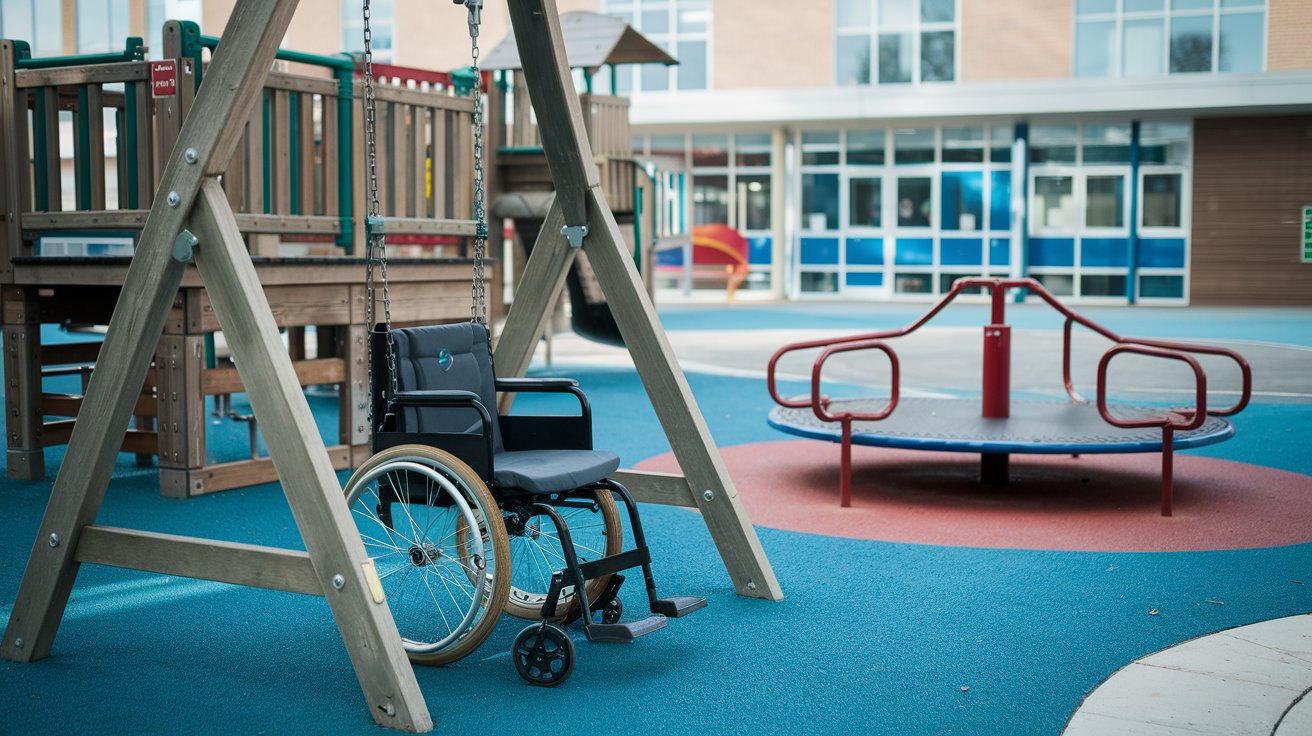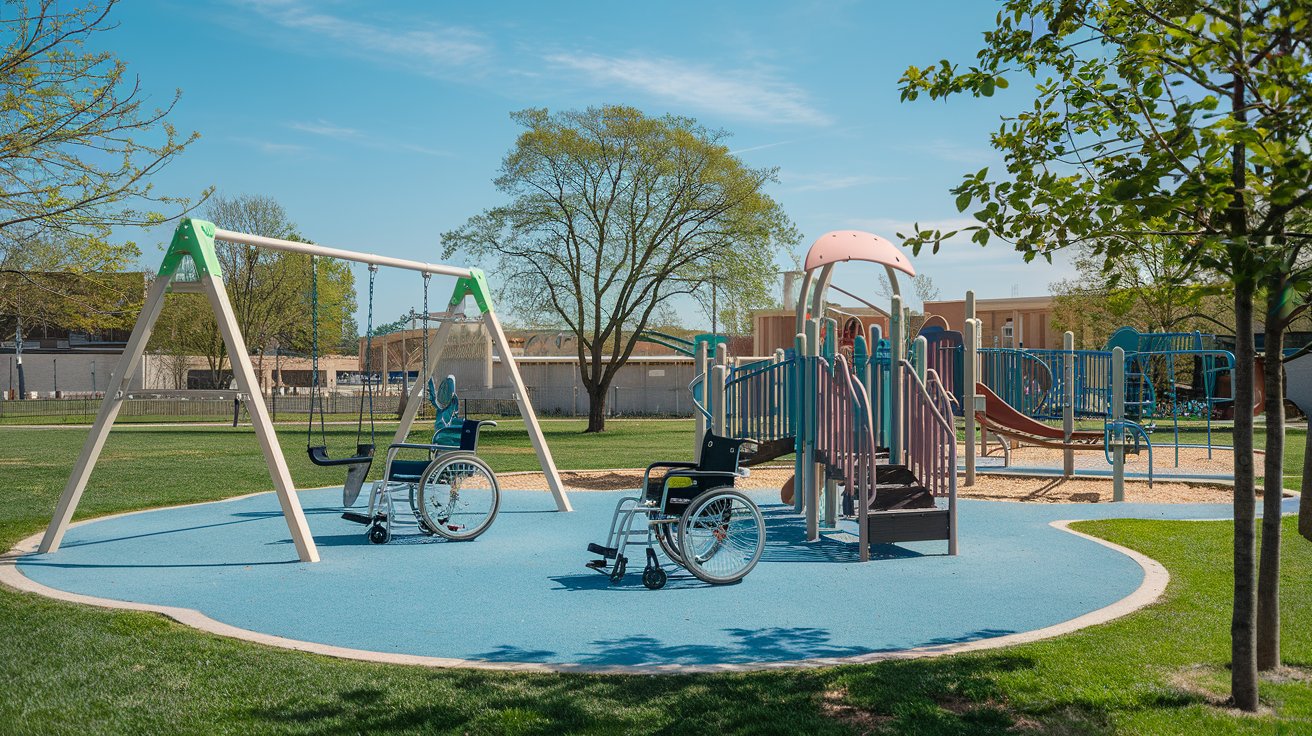
Creating truly inclusive playgrounds requires thoughtful selection of wheelchair accessible playground equipment that meets both federal ADA standards and the diverse needs of children with varying abilities. In 2026, the United States market offers advanced solutions that transform traditional play spaces into welcoming environments where every child can participate, socialize, and develop critical motor and cognitive skills through accessible play experiences.
Understanding Wheelchair Accessible Playground Equipment Standards
The Americans with Disabilities Act (ADA) establishes comprehensive guidelines for wheelchair accessible playground equipment that ensure safe and inclusive play environments. Updated accessibility standards in 2026 require that all new playground installations in the United States incorporate ground-level play components accessible to children using wheelchairs or other mobility devices. These regulations mandate specific transfer system heights, clear floor spaces, and accessible routes throughout the play area.
Modern inclusive playground equipment must provide wheelchair users with independent access to at least 50% of ground-level play components and 25% of elevated play activities. The disability inclusive playground equipment market has responded with innovative designs featuring wide ramps with gentle slopes (maximum 1:12 ratio), transfer platforms positioned 11-18 inches high, and reinforced support structures that accommodate adaptive equipment weighing up to 500 pounds.
Essential Types of Wheelchair Accessible Play Structures
The landscape of accessible playground equipment has evolved significantly, offering diverse options that cater to different age groups and ability levels across American communities.
Ramped Play Systems and Transfer Stations
Ramped play systems represent the gold standard in wheelchair accessible playground equipment, featuring wide pathways with non-slip surfaces that allow children in wheelchairs to navigate independently to elevated platforms. These structures incorporate transfer stations with appropriate grab bars, back support, and adjacent wheelchair parking spaces. Current 2026 designs integrate sensory panels, interactive games, and collaborative play elements directly into ramp pathways, transforming the access route into an engaging play experience. Premium systems include adaptive playground equipment with multiple entry points, ensuring children can join activities from various access levels without assistance.
Ground-Level Interactive Play Panels
Ground-level play components provide crucial accessibility for children with mobility limitations, featuring sensory playground equipment positioned at wheelchair-accessible heights (18-24 inches from ground surface). These panels incorporate tactile elements, musical instruments, problem-solving activities, and nature-themed manipulatives that engage children without requiring transfers from mobility devices. The latest 2026 models feature weather-resistant digital interfaces, programmable sensory experiences, and inclusive gaming systems that connect ground-level players with those on elevated structures, promoting integrated social play across ability levels.
Inclusive Swing Systems and Motion Equipment
Specialized swing equipment designed for wheelchair accessible playgrounds includes basket swings, platform swings, and adaptive seat designs that accommodate children with varying postural support needs. Modern installations feature transfer-accessible swing bays with solid surfacing, adequate clear space for wheelchair maneuvering (60-inch diameter minimum), and support systems that secure both child and mobility device safely. The 2026 market offers innovative motion equipment including wheelchair-accessible merry-go-rounds with ramped entries, spring riders with supportive seating and safety harnesses, and inclusive seesaw designs that allow wheelchair users to participate alongside ambulatory peers.
Selecting Wheelchair Accessible Playground Equipment for Schools
Educational institutions face unique considerations when implementing inclusive playground equipment for schools, balancing budget constraints, student population needs, and educational objectives. The average investment for comprehensive accessible playground renovations in United States schools ranges from $75,000 to $250,000 in 2026, depending on facility size and existing infrastructure. Federal funding opportunities through the Individuals with Disabilities Education Act (IDEA) and state-level accessibility grants can offset 30-50% of implementation costs.
School administrators should prioritize wheelchair accessible playground equipment that supports developmental curriculum goals while accommodating diverse student abilities. Effective school playgrounds incorporate multiple play zones addressing physical development, sensory exploration, social interaction, and cognitive challenge. The 2026 trend emphasizes modular equipment systems that allow schools to phase installations over multiple budget cycles while maintaining ADA compliance and functional accessibility throughout each implementation stage.
Commercial Options for Wheelchair Accessible Playground Equipment for Sale
The market for wheelchair accessible playground equipment for sale has expanded significantly, with major manufacturers offering comprehensive product lines specifically designed for inclusive play environments throughout the United States.
Premium Manufacturer Solutions and Pricing
Leading suppliers of disability inclusive playground equipment include companies like Landscape Structures, GameTime, and Playworld, which offer complete accessible play systems ranging from $15,000 for basic inclusive swing sets to $180,000 for comprehensive multi-component play structures. These manufacturers provide detailed ADA compliance documentation, custom design services, and installation support that ensures proper implementation of accessibility features. The 2026 market reflects increased demand for sustainable materials, with 65% of new wheelchair accessible playground equipment installations incorporating recycled plastics, sustainably harvested wood, and powder-coated metals designed for 15-20 year lifespans.
Evaluating Quality and Safety Certifications
Quality inclusive playground equipment must meet rigorous safety standards established by the Consumer Product Safety Commission (CPSC) and ASTM International. Purchasers should verify that equipment carries proper certifications, includes comprehensive warranty coverage (typically 10-15 years for structural components), and comes from manufacturers with documented experience in accessible design. The 2026 industry standard requires third-party safety audits, impact attenuation testing for accessible surfacing materials, and ongoing maintenance protocols that preserve accessibility features throughout the equipment’s operational life.
Wheelchair Accessible Playground Equipment for Adults
The growing recognition of lifelong recreation needs has sparked increased demand for wheelchair accessible playground equipment for adults, particularly in community parks, rehabilitation facilities, and senior living communities across the United States. Adult-focused accessible equipment differs significantly from children’s playground structures, featuring higher weight capacities (800-1000 pounds), larger dimensional requirements, and activity types aligned with adult fitness and social objectives.
Modern installations include wheelchair-accessible outdoor fitness equipment with adjustable resistance systems, accessible tai chi wheels, sensory gardens with raised planting beds at wheelchair height, and social gathering spaces with accessible seating and shade structures. The 2026 market data indicates that communities investing in intergenerational play spaces that accommodate both children and adults report 40% higher utilization rates and stronger community engagement compared to age-segregated facilities. Equipment pricing for adult accessible playground installations typically ranges from $25,000 for basic fitness stations to $150,000 for comprehensive multi-generational recreation complexes.
Designing Fully Inclusive Playground Environments
Creating truly effective wheelchair accessible playgrounds extends beyond equipment selection to encompass comprehensive site design, surfacing materials, and environmental considerations that ensure complete accessibility.
Accessible Surfacing and Pathway Systems
The foundation of accessible play environments requires appropriate surfacing that allows wheelchair mobility while providing adequate fall protection. Poured-in-place rubber surfacing remains the preferred solution for disability inclusive playground equipment areas in 2026, offering consistent accessibility, ADA-compliant firmness, and ASTM-certified impact attenuation. This surfacing typically costs $12-18 per square foot installed, with expected lifespans of 10-12 years. Alternative options include engineered wood fiber (EWF) systems with specialized bonding agents that maintain wheelchair accessibility while meeting safety standards, and synthetic turf with shock-absorbing underlayment designed specifically for accessible play environments.
Sensory Integration and Autism-Friendly Features
Modern inclusive playground design incorporates dedicated sensory zones featuring specialized sensory playground equipment that supports children with autism spectrum disorders and sensory processing differences. These areas include quiet spaces with visual barriers, tactile play walls with varied textures and materials, musical elements that encourage creative expression, and interactive water features that provide calming sensory experiences. The 2026 design approach emphasizes predictable layouts with clear visual wayfinding, multiple entrance and exit options that reduce crowding anxiety, and adjustable sensory elements that allow children to control stimulation intensity according to their individual needs and comfort levels.
Funding and Grant Opportunities for Accessible Playgrounds
Implementing comprehensive wheelchair accessible playground equipment requires significant financial investment, but numerous funding sources exist to support accessibility improvements in United States communities. Federal programs including the Land and Water Conservation Fund (LWCF) allocate millions annually toward accessible recreation facility development, while the Community Development Block Grant (CDBG) program specifically funds ADA compliance improvements in public spaces.
State-level accessibility grant programs vary by jurisdiction, with states like California, New York, and Texas offering dedicated funding pools ranging from $50,000 to $500,000 for inclusive playground equipment projects. Private foundation grants from organizations such as the Shane’s Inspiration Foundation, Kaboom!, and local community foundations provide additional funding opportunities. Successful grant applications in 2026 emphasize community needs assessments demonstrating demand for accessible play, partnerships with disability advocacy organizations, and comprehensive accessibility plans extending beyond minimum ADA compliance to create truly welcoming inclusive environments.
Maintenance and Long-Term Accessibility Preservation
Sustaining the functionality of wheelchair accessible playground equipment requires proactive maintenance protocols that preserve accessibility features throughout the equipment’s operational life. Regular inspection schedules should evaluate ramp surface conditions, transfer platform stability, accessible route integrity, and the operational status of interactive components. The National Program for Playground Safety recommends comprehensive accessibility audits every six months for high-use facilities, with detailed documentation of surface firmness, clear space measurements, and equipment functionality.
Maintenance budgets for accessible playgrounds typically represent 8-12% of initial installation costs annually, covering surface repairs, equipment adjustments, and accessibility feature preservation. The 2026 best practice emphasizes preventive maintenance strategies that address minor accessibility issues before they create barriers to use, including regular surfacing renewal, hardware tightening, and cleaning protocols that maintain proper friction coefficients on ramps and transfer surfaces. Communities should establish dedicated maintenance teams trained in accessibility requirements and equipped with specialized tools and materials appropriate for maintaining inclusive play environments.
Community Impact and Social Benefits of Inclusive Playgrounds
Research conducted across United States communities in 2026 demonstrates that investments in wheelchair accessible playground equipment generate substantial social returns extending far beyond recreation access. Studies indicate that inclusive playgrounds increase overall facility usage by 45-60% compared to traditional playgrounds, attracting diverse families and fostering intergenerational community connections. Children who regularly play in inclusive environments develop stronger empathy, improved social skills, and reduced bias toward individuals with disabilities.
The economic impact of accessible playground installations includes increased property values in surrounding neighborhoods (average 5-8% increase within half-mile radius), enhanced community reputation, and reduced healthcare costs associated with improved physical activity levels among children with disabilities. Communities report that inclusive playgrounds serve as gathering spaces that strengthen neighborhood cohesion, support mental health through outdoor activity opportunities, and demonstrate municipal commitment to equity and universal design principles. These facilities frequently become signature community assets that attract visitors, support local businesses, and generate positive media attention that enhances community identity and pride.
Future Trends in Wheelchair Accessible Playground Design
The evolution of inclusive playground equipment continues to accelerate, with emerging technologies and design philosophies reshaping accessible play experiences throughout the United States. The 2026 industry trend emphasizes smart playground integration, incorporating interactive digital elements, programmable sensory experiences, and connected play systems that link ground-level and elevated activities through augmented reality interfaces accessible to children using assistive technologies.
Emerging innovations include wheelchair-compatible virtual reality play experiences, adaptive gaming systems with customizable difficulty levels and control interfaces, and bio-responsive equipment that adjusts challenge levels based on individual user capabilities. Environmental sustainability remains a priority, with manufacturers developing wheelchair accessible playground equipment from 100% recycled materials, incorporating solar-powered interactive elements, and designing for disassembly and component recycling at end-of-life. The industry projection for 2026-2030 anticipates 35% annual growth in the accessible playground market, driven by increased ADA enforcement, growing disability rights awareness, and recognition that inclusive design benefits all children regardless of ability level.
Related video about wheelchair accessible playground equipment
This video complements the article information with a practical visual demonstration.
Questions & Answers
What is the average cost of wheelchair accessible playground equipment in 2026?
The cost of wheelchair accessible playground equipment varies significantly based on complexity and scale. Individual accessible components like inclusive swings range from $3,500 to $12,000, while ground-level interactive panels cost $1,800 to $6,500 each. Complete accessible play structures with ramps and transfer systems typically range from $35,000 to $85,000. Comprehensive playground renovations incorporating multiple inclusive playground equipment pieces, accessible surfacing, and site modifications generally cost between $75,000 and $250,000 for school or community installations. Premium custom designs can exceed $400,000 for large-scale facilities.
How do I find wheelchair accessible playgrounds near me?
Several resources help locate wheelchair accessible playgrounds in your area. The Easterseals Disability Services maintains a national database of accessible play spaces searchable by location. Mobile applications like AccessNow and Inclusivity App provide crowdsourced information about playground accessibility features. Contact your local parks and recreation department directly, as they maintain records of ADA-compliant facilities. Many municipalities now include accessibility information on their official websites, specifying which parks feature inclusive playground equipment. Parent advocacy groups and disability service organizations in your community often maintain updated lists of accessible play spaces with detailed accessibility descriptions.
What makes playground equipment truly wheelchair accessible versus ADA compliant?
While ADA compliance establishes minimum legal accessibility standards, truly wheelchair accessible playground equipment exceeds these requirements to provide meaningful play experiences. ADA standards mandate specific percentages of accessible play components and transfer systems, but comprehensive accessibility includes intuitive layouts enabling independent navigation, diverse play activities at wheelchair-accessible heights, integrated design where accessible features aren’t segregated, and consideration for various mobility devices beyond standard wheelchairs. The best inclusive playground equipment allows children using mobility devices to participate in the same activities as their peers rather than simply being present in the play space.
Can existing playgrounds be retrofitted with wheelchair accessible equipment?
Yes, many existing playgrounds can be successfully retrofitted with wheelchair accessible playground equipment, though the scope varies based on current infrastructure. Retrofitting typically involves adding accessible ground-level play panels, replacing standard swings with inclusive swing systems, installing ramp systems to connect existing elevated structures, and upgrading surfacing materials to wheelchair-accessible options. Complete retrofits cost 60-75% of new construction expenses, ranging from $45,000 to $180,000 depending on site conditions. Site assessment by accessibility specialists determines feasibility and identifies the most cost-effective approach to improving accessibility while preserving functional existing equipment. Federal and state grants often prioritize retrofit projects that improve accessibility in underserved communities.
What maintenance is required for wheelchair accessible playground equipment?
Maintaining wheelchair accessible playground equipment requires specialized attention to accessibility features beyond standard playground maintenance. Monthly inspections should verify ramp surface integrity, transfer platform stability, and clear space preservation around accessible components. Accessible surfacing requires regular testing to ensure proper firmness and stability for wheelchair mobility while maintaining fall protection standards. Hardware on adaptive swings and support systems needs quarterly tightening and lubrication. Annual comprehensive accessibility audits should measure compliance with ADA standards, including slope verification, clear space dimensions, and reach range requirements. Budget approximately 8-12% of initial installation costs annually for proper maintenance, with surface renewal typically needed every 8-12 years depending on usage intensity and climate conditions.
Are there specific requirements for wheelchair accessible playground equipment in schools?
Schools installing wheelchair accessible playground equipment must comply with both ADA standards and Section 504 of the Rehabilitation Act, which prohibits disability discrimination in federally-funded programs. Educational facilities require accessible routes connecting playgrounds to school buildings, appropriate supervision sight lines for teachers monitoring diverse student needs, and equipment selections supporting educational and therapeutic objectives outlined in students’ Individualized Education Programs (IEPs). Schools must ensure that inclusive playground equipment for schools accommodates the specific disability profiles of enrolled students, provides adequate space for specialized mobility devices and adaptive equipment, and includes rest areas with accessible seating. Many states impose additional accessibility requirements beyond federal minimums, and school playgrounds often undergo more rigorous safety inspections than public parks.
| Equipment Category | Key Features | Typical Investment Range |
|---|---|---|
| Ramped Play Systems | Wide pathways, transfer stations, multi-level access, integrated activities | $35,000 – $85,000 |
| Ground-Level Panels | Interactive elements, sensory features, accessible height positioning | $1,800 – $6,500 per panel |
| Inclusive Swing Systems | Basket swings, platform swings, supportive seating, transfer accessibility | $3,500 – $12,000 per bay |
| Accessible Surfacing | Poured rubber, bonded EWF, firm and stable surface meeting ASTM standards | $12 – $18 per square foot |
| Sensory Equipment | Tactile walls, musical instruments, nature elements, autism-friendly features | $2,500 – $8,000 per element |
| Complete School Installation | Multiple zones, comprehensive accessibility, educational curriculum support | $75,000 – $250,000 |