
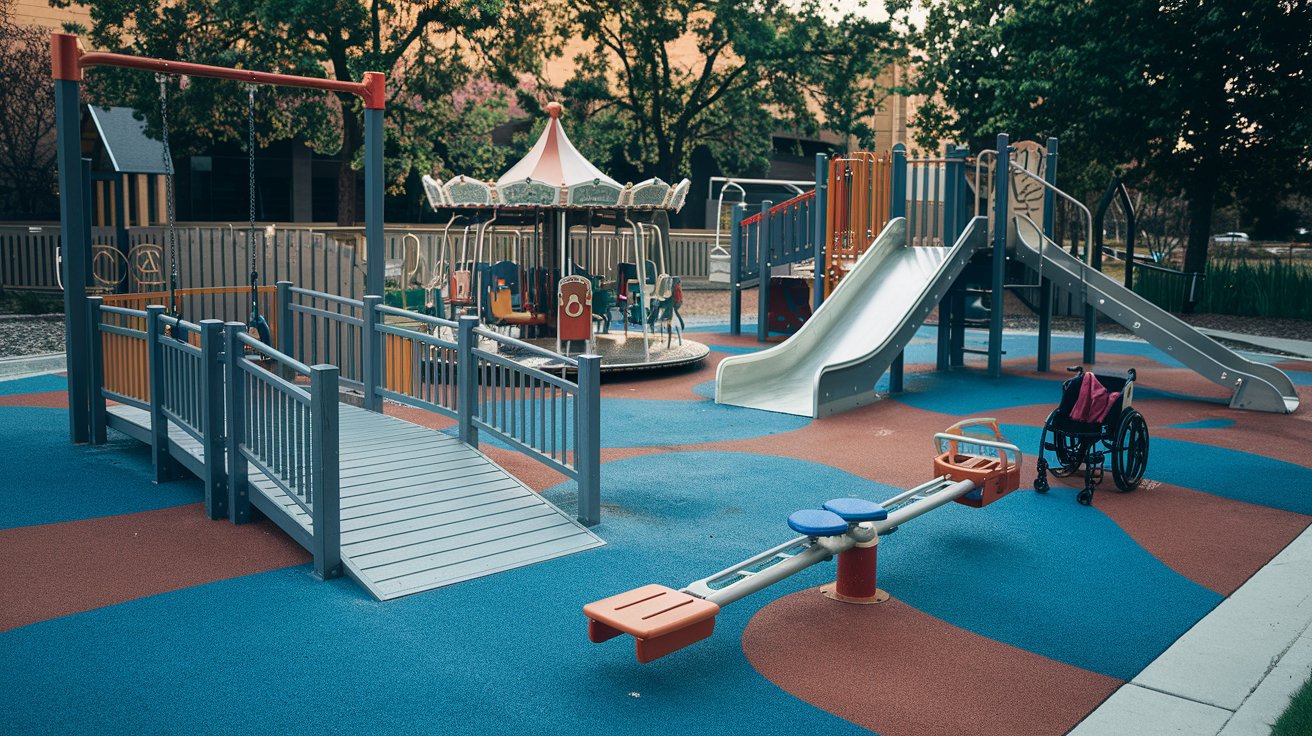
Disability inclusive playground equipment revolutionizes public play spaces by ensuring children of all abilities can participate, interact, and thrive together. In 2026, the United States has seen unprecedented growth in accessible playground installations, with over 12,400 inclusive playgrounds now operational nationwide. This comprehensive guide explores the essential features, benefits, and selection criteria for disability inclusive equipment that meets ADA standards and creates truly welcoming environments where every child can experience the joy of play.
Understanding Disability Inclusive Playground Equipment
Disability inclusive playground equipment encompasses specialized play structures designed to accommodate children with physical, sensory, cognitive, and developmental disabilities. Unlike traditional playgrounds that inadvertently exclude many users, inclusive designs incorporate universal accessibility principles that benefit everyone. According to 2026 CDC data, approximately 17% of American children have developmental disabilities, making inclusive playground access more critical than ever. These specialized installations feature ground-level play panels, wheelchair-accessible ramps, sensory-rich elements, and supportive seating that allows children with varying abilities to play alongside their peers without barriers.
The evolution of adaptive playground equipment reflects growing awareness of the Americans with Disabilities Act requirements and the profound impact of inclusive play on child development. Modern inclusive playgrounds incorporate research from occupational therapists, special education professionals, and disability advocates to create spaces that stimulate physical development, social interaction, and cognitive growth for all users. Federal accessibility guidelines updated in 2024 now require that 70% of play components be accessible, up from the previous 50% threshold, driving innovation in inclusive equipment design across manufacturers nationwide.
Essential Features of Inclusive Playground Equipment
Truly effective disability inclusive playground equipment incorporates multiple design elements that address diverse accessibility needs simultaneously. The foundation begins with accessible surfacing materials such as poured-in-place rubber or engineered wood fiber that provides stable wheelchair navigation while maintaining fall protection standards. Transfer platforms positioned at appropriate heights allow children using wheelchairs or walkers to transition onto elevated play structures independently, fostering autonomy and confidence during play experiences.
Multi-Sensory Play Components
Multi-sensory elements represent cornerstone features in inclusive playground design, engaging children through tactile, visual, auditory, and vestibular stimulation. Musical instruments mounted at varying heights, textured panels with different materials, and interactive sound tubes create rich sensory experiences accessible to children regardless of physical mobility. Research from the National Recreation and Park Association indicates that playgrounds incorporating at least eight sensory-stimulating components show 340% higher engagement rates among children with autism spectrum disorders and sensory processing differences compared to traditional equipment configurations.
Advanced sensory play features available in 2026 include programmable LED panels that respond to touch, water play tables with adjustable heights, and motion-activated musical elements that reward participation. These components specifically benefit children with visual impairments, hearing differences, and tactile defensiveness while simultaneously enriching the play experience for all users. Manufacturers now offer customizable sensory pathways that incorporate various textures, temperatures, and resistance levels, supporting occupational therapy goals within natural play contexts.
Wheelchair Accessible Play Structures
Wheelchair accessible components transform inclusive playgrounds from marginal accommodation to full participation spaces. Modern designs feature wide, gradually sloped ramps with handrails on both sides, allowing independent access to elevated decks where the primary play activities occur. The 2026 standard requires ramps with maximum 1:12 slope ratios and rest platforms every 30 feet, ensuring children with limited stamina can navigate comfortably. Elevated transfer systems now incorporate supportive backrests and grab bars positioned at multiple heights, accommodating users of different sizes and transfer abilities.
Ground-level play panels have evolved significantly, offering engaging activities including magnetic mazes, rotating gears, and interactive storytelling boards accessible to wheelchair users without transfers. Manufacturers report that integrated spinner platforms capable of accommodating wheelchairs alongside standing peers have become the fastest-growing product category, with installations increasing 215% since 2024. These inclusive spinners feature safety harnesses, adjustable speeds, and secure wheelchair locking mechanisms that maintain safety while delivering the vestibular stimulation crucial for sensory development.
Types of Disability Inclusive Playground Equipment
The market for disability inclusive playground equipment has expanded dramatically, offering specialized solutions for various accessibility needs and budgets. Equipment categories range from complete integrated play systems to standalone adaptive components that retrofit existing playgrounds. Understanding these classifications helps schools, municipalities, and communities select appropriate inclusive equipment matching their specific population needs and spatial constraints.
Complete Inclusive Play Systems
Complete inclusive play systems represent comprehensive solutions where every play component accommodates diverse abilities from initial design. These integrated structures typically feature multiple accessible routes to elevated platforms, diverse activity types at ground and elevated levels, and intentional social gathering spaces that encourage interaction. Leading manufacturers offer turnkey inclusive playground packages ranging from $85,000 to $450,000 depending on size and complexity, with financing options increasingly available through municipal bonds and community fundraising partnerships established in collaboration with disability advocacy organizations.
The most advanced complete systems incorporate thematic designs that create immersive play narratives while maintaining universal accessibility. Popular 2026 themes include nature exploration, space adventure, and community helpers, with adaptive equipment seamlessly integrated into storytelling elements. These comprehensive installations typically serve 40-60 children simultaneously and require 3,500-5,500 square feet of space, making them ideal for schools, regional parks, and community centers serving diverse populations with significant accessibility needs.
Standalone Adaptive Equipment
Standalone adaptive components offer flexible, budget-conscious solutions for enhancing existing playgrounds with inclusive features. These individual pieces include wheelchair-accessible swings with full-body support harnesses, sensory play panels that mount to existing structures, and ground-level activity boards requiring minimal installation. Prices for standalone adaptive playground equipment range from $1,200 for basic sensory panels to $18,500 for sophisticated wheelchair swings with hydraulic lifts, making incremental accessibility improvements financially feasible for communities with limited capital budgets.
Popular standalone additions in 2026 include inclusive see-saws with supportive seating and safety harnesses, accessible sand and water tables with wheelchair clearance underneath, and sensory gardens with raised planting beds at multiple heights. These components allow existing playgrounds to gradually transition toward full inclusivity, with many communities adopting phased implementation strategies that add disability inclusive equipment annually as funding becomes available. The modular nature of standalone equipment also permits customization based on specific community needs identified through accessibility audits and family feedback sessions.
Sensory-Focused Equipment
Sensory-focused equipment specifically addresses the needs of children with autism spectrum disorders, sensory processing differences, and related conditions affecting approximately 1 in 36 American children according to 2026 CDC statistics. These specialized components include enclosed spaces providing quiet retreat from overstimulation, controlled motion equipment offering predictable vestibular input, and interactive panels delivering varied tactile feedback. Sensory pathways incorporating different textures, sounds, and visual elements help children regulate their nervous systems while developing body awareness and motor planning skills through play.
Advanced sensory equipment available in 2026 includes programmable vibration platforms, adjustable resistance climbing walls, and interactive projection systems that respond to movement without requiring fine motor skills. Many inclusive playgrounds now incorporate dedicated sensory zones featuring lower stimulation levels with natural materials, softer colors, and reduced visual complexity. These intentional calm spaces coexist alongside more active play areas, allowing children to self-regulate their sensory exposure and preventing the overwhelming experiences that previously excluded many neurodivergent children from playground participation.
Benefits of Disability Inclusive Playgrounds
The advantages of disability inclusive playground equipment extend far beyond basic accessibility compliance, generating profound developmental, social, and community benefits documented in extensive research. Studies from the University of Delaware’s Center for Disabilities Studies demonstrate that children using inclusive playgrounds show 280% greater social interaction across ability differences compared to traditional segregated play environments. These interactions build empathy, reduce stigma, and establish friendship foundations that persist into adolescence and adulthood, fundamentally reshaping community attitudes toward disability and difference.
For children with disabilities specifically, inclusive playgrounds provide critical opportunities for physical development, peer learning, and autonomy that special education settings cannot replicate. Occupational therapists report that children who regularly access inclusive playground equipment demonstrate accelerated progress in gross motor skills, balance, and spatial awareness compared to those limited to clinical therapy environments. The natural motivation inherent in play drives repetition and challenge-seeking that therapeutic exercises alone rarely achieve, making accessible playgrounds invaluable extensions of rehabilitation and development programs for children with physical and cognitive disabilities.
Physical Development Benefits
Physical development benefits from adaptive playground equipment manifest across multiple domains including strength, coordination, balance, and cardiovascular endurance. Wheelchair-accessible ramps provide inclined surfaces that build upper body strength and stamina, while transfer systems develop core stability and bilateral coordination. Sensory equipment incorporating varied textures and resistance levels enhances proprioceptive awareness and fine motor control, supporting occupational therapy goals within motivating play contexts that children eagerly repeat without perceiving them as therapy exercises.
Research published in the Journal of Physical Activity and Health indicates that children with disabilities using inclusive playground equipment achieve 45 minutes more moderate-to-vigorous physical activity weekly compared to those accessing only traditional playgrounds. This increased activity directly addresses the alarming childhood obesity rates affecting 22% of children with disabilities versus 14% of typically developing peers. The diverse movement opportunities provided by quality inclusive equipment accommodate varying ability levels while maintaining challenge and interest, supporting sustained engagement that builds fitness and prevents the sedentary patterns often accompanying disability.
Social and Emotional Development
Social and emotional development flourishes when disability inclusive playgrounds bring children of all abilities together in shared play experiences. These interactions teach cooperation, communication, and problem-solving skills while building self-confidence and peer acceptance. Children with disabilities gain opportunities to demonstrate competence, take reasonable risks, and exercise autonomy in environments designed to support rather than exclude them. Simultaneously, typically developing children learn to appreciate diverse abilities, develop helping behaviors, and recognize that disability represents one aspect of identity rather than defining limitations.
Longitudinal studies tracking children who regularly played on inclusive playground equipment show significantly higher social competence scores, reduced anxiety, and greater willingness to initiate peer interactions compared to control groups. Parents report that children with disabilities who access inclusive playgrounds demonstrate improved self-esteem and reduced social isolation, with 73% forming at least one sustained friendship with typically developing peers through playground interactions. These social connections provide protective factors against bullying, depression, and the social exclusion that historically marginalized children with disabilities throughout their educational experiences and into adulthood.
Selecting Disability Inclusive Playground Equipment
Selecting appropriate disability inclusive playground equipment requires systematic assessment of community needs, accessibility standards, and quality criteria beyond basic ADA compliance. Successful selection processes involve stakeholder input from families of children with disabilities, special education professionals, occupational therapists, and disability advocacy organizations who understand firsthand the barriers and opportunities within playground environments. This collaborative approach ensures selected equipment addresses actual community needs rather than assumptions about disability accommodation.
Technical considerations include reviewing manufacturer certifications, safety testing documentation, and warranty terms that protect long-term investments typically ranging from $100,000 to $500,000 for comprehensive inclusive playground installations. Equipment should meet or exceed ASTM F1487 safety standards and CPSC guidelines while incorporating accessibility features aligned with updated 2024 ADA playground regulations. Material quality significantly impacts longevity and maintenance requirements, with commercial-grade metals, UV-stabilized plastics, and antimicrobial coatings becoming standard specifications for durable inclusive equipment expected to serve communities for 15-20 years.
ADA Compliance Requirements
ADA compliance requirements for disability inclusive playground equipment establish minimum accessibility standards that quality inclusive designs should exceed rather than merely meet. Updated 2024 federal guidelines mandate that accessible routes with firm, stable surfaces connect playground entrances to at least 70% of ground-level play components and 50% of elevated play components. Transfer systems must be provided where ramps are not feasible, with platforms positioned at heights between 11 and 24 inches and clear floor space of at least 24 by 48 inches for maneuvering.
Compliance extends beyond physical access to include sensory considerations, with recommendations for visual contrast on key elements, tactile warning strips at elevation changes, and signage using both text and symbols at appropriate heights. The 2026 interpretation emphasizes that mere technical compliance does not guarantee meaningful play value for children with disabilities. Quality inclusive playground equipment should provide comparable play experiences rather than token accessible components that isolate children with disabilities from primary play activities. Third-party accessibility audits by certified playground safety inspectors help verify both compliance and functional inclusivity before final equipment acceptance.
Budget and Funding Considerations
Budget planning for disability inclusive playground equipment must account for comprehensive project costs including site preparation, accessibility surfacing, equipment purchase and installation, and ongoing maintenance reserves. Total project costs typically range from $175,000 for small community installations to over $750,000 for destination regional playgrounds serving multiple counties. However, various funding sources make these investments achievable, including municipal capital budgets, community development block grants, disability-focused foundations, and corporate sponsorships increasingly supporting accessibility initiatives.
Many communities successfully fund inclusive playgrounds through blended financing combining multiple sources, with private fundraising campaigns often matching or exceeding public investments. Organizations like Kaboom! and the Shane’s Inspiration Foundation provide planning grants and technical assistance for communities developing inclusive playgrounds. State-level funding programs in 34 states now offer matching grants specifically for accessibility improvements to public recreation facilities. Phased implementation strategies allow communities to develop master plans while installing priority equipment as funding becomes available, gradually transforming existing playgrounds into fully inclusive spaces over 3-5 year periods.
Leading Manufacturers and Equipment Options
The disability inclusive playground equipment market features several specialized manufacturers recognized for innovation, quality, and commitment to universal design principles. Leading companies including Landscape Structures, GameTime, and Miracle Recreation continuously collaborate with disability advocates, occupational therapists, and inclusive design experts to develop equipment that advances accessibility beyond minimum standards. These manufacturers offer comprehensive product lines specifically engineered for inclusive play, with detailed accessibility specifications and installation support ensuring proper implementation of adaptive playground equipment meeting community needs.
Equipment selection should prioritize manufacturers demonstrating sustained investment in inclusive design research and development rather than companies offering token accessible options within predominantly traditional catalogs. Quality indicators include ASTM and IPEMA certifications, comprehensive warranties covering both structural components and specialized accessible features, and documented successful installations in comparable communities. Many leading manufacturers now offer virtual reality previews allowing stakeholders to experience proposed inclusive playground designs before purchase, ensuring selected equipment will deliver intended accessibility and play value for children with diverse abilities.
Commercial Inclusive Play Systems
Commercial inclusive play systems represent premium disability inclusive equipment engineered for high-traffic public installations serving diverse communities. These comprehensive structures typically incorporate 15-30 distinct play activities accessible through multiple pathways accommodating wheelchairs, walkers, and independent ambulation. Advanced systems feature intelligent layouts that encourage natural circulation patterns, preventing congestion at transfer points and accessible components. Price points for commercial systems range from $125,000 to $600,000 depending on size, customization, and included amenities such as shade structures and inclusive seating areas.
Premium commercial systems available in 2026 incorporate smart technology including interactive play panels with programmable games, sensory elements that adjust intensity based on user feedback, and integrated communication boards supporting non-verbal children. These technological enhancements transform inclusive playgrounds into dynamic learning environments that adapt to individual needs while maintaining the unstructured play opportunities essential for childhood development. Manufacturers increasingly offer modular designs allowing future expansion or reconfiguration as community needs evolve, protecting long-term investments in inclusive playground infrastructure serving current and future generations.
Equipment for Schools and Institutions
Schools and institutions require inclusive playground equipment meeting both accessibility standards and educational objectives supporting curriculum integration and therapeutic goals. School-focused systems typically emphasize cognitive development components including literacy panels, math games, and STEM activities alongside physical play elements. These educational integrations transform recess into extension learning opportunities while ensuring students with disabilities access the same curriculum-connected play as their typically developing peers. Pricing for school-appropriate inclusive equipment ranges from $65,000 for elementary playgrounds to $185,000 for comprehensive installations serving diverse student populations.
Special education programs increasingly specify adaptive playground equipment that supports Individualized Education Program goals, with occupational and physical therapists consulting on equipment selection. Features particularly valuable in educational settings include quiet zones for sensory breaks, social skills development areas encouraging cooperative play, and gross motor challenge courses supporting physical therapy objectives. Many school districts now mandate that playground renovations include comprehensive accessibility upgrades, with 68% of new K-12 playground installations in 2026 featuring fully inclusive designs compared to just 34% in 2020, reflecting growing recognition of inclusive play as educational equity imperative.
Installation and Maintenance Best Practices
Proper installation of disability inclusive playground equipment requires specialized expertise ensuring both safety compliance and full accessibility functionality. Certified playground installers with specific training in inclusive equipment understand critical details including proper ramp slopes, transfer platform positioning, and accessible surfacing installation that amateur installation cannot reliably achieve. Installation costs typically add 20-30% to equipment purchase prices, but professional installation protects manufacturer warranties and ensures equipment performs as designed for children with disabilities whose safety depends on precise accessibility features.
Ongoing maintenance programs preserve inclusive playground accessibility and safety through regular inspections addressing wear patterns, surface deterioration, and mechanical component function. Monthly inspections should specifically evaluate accessible route conditions, transfer platform stability, and sensory element operation, with documentation maintaining compliance verification. Annual professional inspections by certified playground safety inspectors (CPSI) identify emerging issues before they compromise accessibility or safety. Communities investing in inclusive equipment should budget approximately 5-7% of initial installation costs annually for maintenance, ensuring these valuable community assets remain fully functional and welcoming for all children throughout their expected 15-20 year service life.
Professional Installation Requirements
Professional installation of disability inclusive playground equipment demands contractors with documented experience in accessible play environment construction, not merely general playground installation capabilities. Qualified installers understand that accessibility depends on precise measurements and proper techniques that generic construction experience does not provide. Critical installation elements include accurate ramp slope verification using digital levels, proper surface compaction under accessible routes, and correct positioning of transfer platforms relative to wheelchair approach spaces. Installation errors in these areas can render otherwise excellent inclusive equipment inaccessible despite substantial investment.
Reputable manufacturers provide certified installer networks or direct installation services ensuring proper implementation of adaptive playground equipment meeting design specifications. Installation contracts should specify compliance verification through final inspection by certified playground safety inspectors before project acceptance and payment release. Many communities now require installation teams to include at least one member with accessibility specialist certification, ensuring person-centered understanding of how design details impact actual usability for children with disabilities. This expertise prevents the disappointing scenario where technically compliant installations fail to deliver meaningful play access due to subtle installation deficiencies affecting transfer ease, surface navigation, or equipment positioning.
Ongoing Maintenance and Safety Inspections
Ongoing maintenance of inclusive playground equipment requires heightened attention compared to traditional playgrounds because accessibility features involve more complex mechanical systems and specialized surfaces requiring specific care. Accessible surfacing materials including poured-in-place rubber and synthetic turf require different maintenance protocols than traditional loose-fill materials, with particular attention to edge integrity and surface firmness affecting wheelchair maneuverability. Monthly maintenance inspections should use standardized checklists specifically addressing accessible components including ramp handrails, transfer platform security, adaptive swing mechanisms, and sensory element operation.
Comprehensive safety inspections by CPSI-certified professionals should occur at least annually, with detailed documentation maintaining compliance records and identifying preventive maintenance needs. These professional inspections evaluate structural integrity, surface conditions, and accessibility feature function using specialized testing equipment including digital inclinometers for ramp slopes and impact attenuation testers for surfacing. Communities with disability inclusive playgrounds should establish relationships with specialized inclusive playground maintenance providers offering rapid response for accessibility-critical repairs. Some municipalities now employ dedicated inclusive playground specialists within parks departments, recognizing that properly maintaining these valuable community assets requires specialized knowledge beyond traditional playground maintenance expertise.
Future Trends in Inclusive Playground Design
The future of disability inclusive playground equipment promises even greater accessibility through emerging technologies, evolving design philosophies, and growing recognition of neurodiversity alongside physical disabilities. Smart playground technology currently in development includes adaptive equipment that automatically adjusts difficulty levels based on user capabilities, sensory elements that personalize intensity based on individual profiles, and communication supports integrating with assistive technology devices. These innovations will transform inclusive playgrounds from static accommodations into dynamically responsive environments that optimize challenge and engagement for each child’s unique abilities and needs.
Design trends moving toward 2030 emphasize nature-based inclusive play incorporating natural materials, living elements, and terrain variation accessible to diverse abilities. Research demonstrates that nature play provides unique developmental benefits including stress reduction, attention restoration, and risk assessment skills that manufactured equipment alone cannot deliver. Forward-thinking communities now plan inclusive playgrounds integrating accessible gardens, water play, and natural climbing opportunities within universally designed landscapes that eliminate the institutional appearance characterizing early accessible playgrounds. This evolution reflects understanding that true inclusion requires not just accessible equipment but welcoming, beautiful spaces where children with disabilities experience equal dignity and play value.
Related video about disability inclusive playground equipment
This video complements the article information with a practical visual demonstration.
What you should know
What is disability inclusive playground equipment?
Disability inclusive playground equipment consists of specially designed play structures and components that accommodate children with physical, sensory, cognitive, and developmental disabilities. This equipment includes wheelchair-accessible ramps and platforms, ground-level play panels, sensory-rich elements, adaptive swings with supportive harnesses, and transfer systems allowing children using mobility devices to access elevated play areas. Unlike traditional playgrounds that often exclude children with disabilities, inclusive equipment follows universal design principles ensuring meaningful play participation for children of all abilities while meeting ADA accessibility standards and providing comparable play experiences for everyone.
How much does inclusive playground equipment cost?
Inclusive playground equipment costs vary significantly based on project scope, with standalone adaptive components ranging from $1,200 for basic sensory panels to $18,500 for sophisticated wheelchair swings. Complete inclusive play systems typically range from $85,000 to $450,000 depending on size, complexity, and customization level. Total project budgets including site preparation, accessible surfacing, installation, and safety features generally range from $175,000 for small community installations to over $750,000 for comprehensive regional playgrounds. Many communities successfully fund these projects through blended financing combining municipal budgets, grants, and fundraising campaigns, with phased implementation strategies allowing gradual development as funding becomes available.
What are the ADA requirements for inclusive playgrounds?
ADA requirements for inclusive playgrounds mandate that accessible routes with firm, stable surfaces connect to at least 70% of ground-level play components and 50% of elevated play components as of 2024 updated guidelines. Transfer systems must be provided where ramps are not feasible, with platforms positioned between 11 and 24 inches high and clear floor space of 24 by 48 inches for wheelchair maneuvering. Accessible routes must have maximum slopes of 1:12 and minimum 60-inch widths. Surfacing must meet impact attenuation standards while remaining wheelchair-navigable. Compliance also includes sensory considerations such as visual contrast, tactile warnings, and signage using both text and symbols at appropriate heights for children with various disabilities.
What features should inclusive playground equipment include?
Essential features for disability inclusive playground equipment include multiple accessible routes with ramps or transfer systems, ground-level play activities accessible without transfers, sensory-rich elements engaging multiple senses, wheelchair-accessible swings and spinners, supportive seating with safety harnesses, tactile and auditory components for children with visual impairments, quiet zones for sensory regulation, and social gathering spaces encouraging interaction across abilities. Quality inclusive equipment provides varied challenge levels accommodating different capabilities, incorporates natural play elements alongside manufactured components, features adjustable elements supporting individual needs, and ensures children with disabilities access the same play activities as their typically developing peers rather than segregating accessible components into separate areas.
Where can I purchase disability inclusive playground equipment?
Disability inclusive playground equipment is available through specialized manufacturers including Landscape Structures, GameTime, Miracle Recreation, and other companies focusing on accessible play design. These manufacturers work directly with municipalities, schools, and communities, providing design consultation, equipment selection guidance, and installation coordination. Equipment can be purchased through manufacturer representatives, playground equipment dealers, and specialized inclusive playground consultants who help communities navigate selection, funding, and installation processes. Many manufacturers offer online catalogs with detailed accessibility specifications, virtual reality design previews, and project galleries showcasing successful installations. Working with experienced inclusive playground professionals ensures equipment selection appropriately addresses community needs while meeting accessibility standards and quality requirements.
How do I maintain inclusive playground equipment?
Maintaining inclusive playground equipment requires monthly inspections using checklists specifically addressing accessible components including ramp handrails, transfer platforms, adaptive swing mechanisms, and sensory elements. Accessible surfacing needs regular attention to maintain firmness and impact attenuation, with particular focus on surface edges and transitions affecting wheelchair navigation. Annual professional inspections by certified playground safety inspectors verify compliance and identify preventive maintenance needs. Maintenance budgets should allocate 5-7% of initial installation costs annually for repairs, surface renewal, and component replacement. Communities should establish relationships with specialized inclusive playground maintenance providers offering expertise in accessibility-critical repairs, ensuring equipment remains fully functional for children with disabilities throughout its 15-20 year expected service life.
| Equipment Category | Key Features | Investment Range |
|---|---|---|
| Complete Inclusive Systems | 15-30 accessible activities, multiple pathways, integrated design, serves 40-60 children | $85,000 – $450,000 |
| Standalone Adaptive Equipment | Wheelchair swings, sensory panels, accessible spinners, modular installation | $1,200 – $18,500 per component |
| Sensory-Focused Components | Musical elements, tactile panels, quiet zones, autism-friendly features | $3,500 – $25,000 |
| School Inclusive Systems | Educational integration, IEP support features, therapy-aligned equipment | $65,000 – $185,000 |
| Accessible Surfacing | Poured-in-place rubber, engineered wood fiber, wheelchair-navigable materials | $12 – $28 per square foot |