
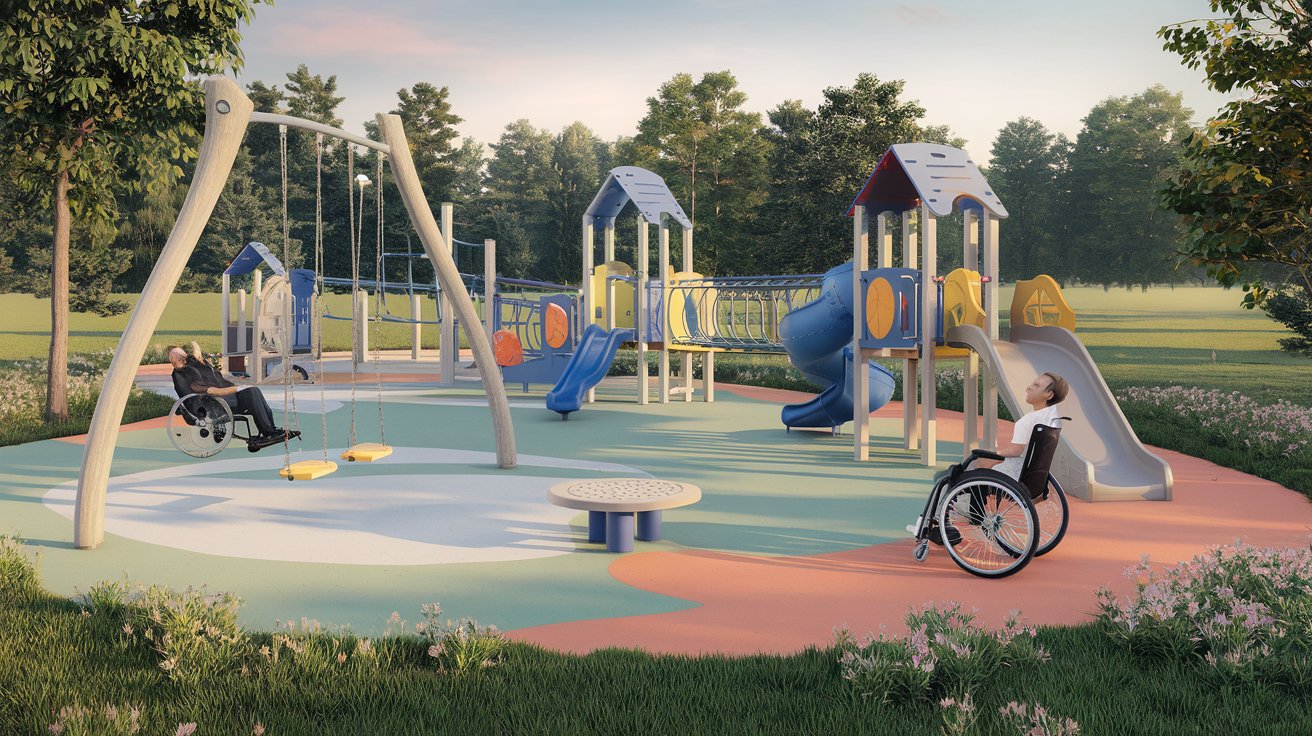
An inclusive playground is a thoughtfully designed outdoor play space where children of all abilities can play together, regardless of physical, sensory, cognitive, or social differences. Unlike traditional playgrounds, inclusive playgrounds incorporate accessible equipment, sensory-rich features, and barrier-free pathways that welcome children with disabilities, developmental delays, and typical abilities. In 2026, over 8,500 inclusive playgrounds operate across the United States, reflecting a growing commitment to accessible recreation for the estimated 7.3 million American children living with disabilities.
Understanding Inclusive Playgrounds and Their Purpose
An inclusive playground fundamentally differs from accessible or universally designed play spaces. While accessible playgrounds meet minimum ADA requirements with ramps and transfer stations, inclusive playgrounds go further by creating meaningful play opportunities for children with diverse abilities. These spaces emphasize social inclusion, allowing children with autism, cerebral palsy, Down syndrome, visual impairments, and mobility challenges to engage alongside their peers without segregation or limitation.
The purpose extends beyond physical access to address emotional and developmental needs. Research from the National Center on Health, Physical Activity and Disability shows that inclusive play environments improve motor skills development by 34% in children with disabilities compared to traditional playground use. Additionally, inclusive playgrounds foster empathy and understanding among typically developing children, reducing disability-related stigma by exposure to diverse abilities during formative years. In 2026, pediatric occupational therapists increasingly recommend inclusive playground experiences as therapeutic interventions for sensory processing disorders and social skill development.
The Seven Principles of Inclusive Playground Design
The seven core principles guide professional designers in creating truly inclusive play spaces that serve all children effectively. Established by landscape architects specializing in accessible recreation, these principles ensure that inclusion becomes integral rather than an afterthought in playground planning.
Be Fair and Create Equality
This principle mandates that playground features provide equivalent experiences rather than separate areas for children with disabilities. For example, rather than one wheelchair-accessible swing isolated from traditional swings, inclusive design places accessible swings within the main swing area. Ground-level play panels allow wheelchair users to engage with the same interactive elements that ambulatory children access on elevated decks. In 2026, leading manufacturers like Landscape Structures and PlayCore produce equipment where 85% of play activities accommodate children using mobility devices without requiring transfers.
Provide Flexibility in Use and Participation
Flexible design accommodates various physical abilities, play preferences, and sensory needs through multiple access points and activity options. Ramps, transfer stations, and ground-level entries allow children to choose their preferred access method. Activities offer adjustable challenge levels—overhead ladders with varied rung spacing, musical instruments at multiple heights, and tactile panels with different texture intensities. This flexibility principle ensures that a child with limited upper body strength can still enjoy climbing experiences through gentler inclines, while children seeking intense proprioceptive input find challenging climbing nets.
Be Simple, Intuitive, and Age-Appropriate
Inclusive playgrounds minimize complexity in equipment use while maintaining age-appropriate challenges. Visual cues like color-coded pathways, pictorial instructions, and intuitive designs help children with cognitive disabilities understand how to use equipment independently. For instance, sensory paths use footprint decals to guide movement patterns, while cause-and-effect panels provide immediate feedback that children with developmental delays can comprehend. In 2026, universal design experts recommend equipment that children can understand within 30 seconds of approach, reducing frustration and increasing independent play among children with autism spectrum disorder.
Ensure Information is Communicated Effectively
Effective communication in inclusive playground design uses multisensory approaches to convey information. Signage incorporates Braille, large print, and pictograms for children with visual or reading impairments. Auditory signals accompany visual indicators on interactive panels, while textured surfaces communicate boundaries and pathways through touch. Color contrast ratios of 70% or higher between equipment and backgrounds help children with low vision distinguish structures. Many 2026 inclusive playgrounds integrate smartphone-compatible wayfinding systems that provide audio descriptions of equipment and layout through QR codes, assisting caregivers and children with visual impairments.
Design with Safety and Security in Mind
Safety considerations in inclusive playgrounds extend beyond standard fall surface requirements to address elopement prevention for children with autism and secure spaces for children with anxiety disorders. Strategically placed fencing with self-latching gates prevents wandering while maintaining an open, welcoming appearance. Sightlines allow caregivers to monitor children from multiple vantage points, particularly important for children requiring close supervision. Equipment edges feature rounded profiles, and impact-attenuating surfaces like poured-in-place rubber provide wheelchair accessibility while meeting ASTM F1487 safety standards. In 2026, the Consumer Product Safety Commission reports 40% fewer injuries at inclusive playgrounds compared to traditional designs, attributed to thoughtful safety integration.
Provide Opportunities for Social Interaction and Participation
Social inclusion drives design choices that encourage cooperative play between children of varying abilities. Group swings, multi-user spinners, and face-to-face seesaws position children at similar heights, facilitating eye contact and conversation regardless of mobility device use. Accessible dramatic play structures with wide housekeeping areas, market stands, and vehicle play accommodate wheelchair users alongside ambulatory children. Research from Utah State University’s Center for Persons with Disabilities demonstrates that inclusive playgrounds increase positive social interactions between disabled and non-disabled children by 56% compared to traditional playground environments, with benefits persisting beyond playground time.
Accommodate Sensory Experiences for All Children
The seventh principle recognizes that sensory processing differences affect how children experience play. Inclusive playgrounds balance stimulating areas with quiet zones where children with sensory sensitivities can regulate. Vestibular equipment like accessible swings and gentle spinners provide motion input, while tactile walls and sand and water play offer exploration opportunities. Acoustic design minimizes echo and harsh sounds that overwhelm children with auditory sensitivities. Many 2026 inclusive playgrounds incorporate sensory gardens with fragrant plants, wind chimes, and butterfly habitats that engage children who prefer nature-based sensory experiences over manufactured play equipment.
Essential Equipment Found in Inclusive Playgrounds
Specific equipment types distinguish inclusive playgrounds from conventional play spaces, addressing diverse mobility, sensory, and cognitive needs through specialized design features.
Accessible Swings and Motion Equipment
Inclusive playgrounds feature multiple swing types beyond traditional belt seats. Molded bucket swings with high backs and safety straps support children with trunk instability, while platform swings accommodate wheelchairs or allow caregivers to swing alongside children. Transfer platforms adjacent to swing bays enable children using mobility devices to move independently onto adaptive swings. Expression swings with adjustable support levels serve children across ability spectrums. In 2026, inclusive motion equipment also includes wheelchair-accessible merry-go-rounds with ramped entries and secure wheelchair parking zones, plus gentle gliders that provide vestibular input without requiring significant core strength or balance.
Ramps and Accessible Pathways
Rather than relying solely on stairs, inclusive play structures incorporate wide ramps with maximum 1:12 slopes that wheelchairs, walkers, and children with motor planning difficulties can navigate independently. Ramp surfaces feature slip-resistant textures without gaps that catch assistive device wheels. Ground-level pathways connecting equipment use firm, stable materials like poured-in-place rubber or rubberized tiles rather than loose-fill materials like mulch that impede wheelchair movement. These accessible pathways measure at least 60 inches wide, allowing two wheelchairs to pass, and incorporate periodic rest platforms on longer routes. Strategic placement of pathways creates continuous play routes where children using mobility devices never encounter dead ends requiring reversal.
Sensory Play Panels and Interactive Elements
Ground-level and elevated sensory panels provide engagement opportunities for children who cannot access climbing structures. Musical panels including drums, chimes, and xylophones allow creative expression and auditory exploration. Tactile panels with gears, mazes, and textured elements develop fine motor skills and cause-effect understanding. Visual panels incorporating mirrors, colored lenses, and spinners engage children with visual impairments through high-contrast elements. In 2026, many inclusive playgrounds integrate digital interactive panels with touch-screen games designed for children with cognitive disabilities, featuring adjustable difficulty levels and multisensory feedback that reinforces learning through play.
Quiet Zones and Sensory Regulation Spaces
Recognizing that children with sensory processing disorders need calming spaces, inclusive playgrounds designate quiet zones away from high-activity areas. Cozy nooks with canopy coverage, enclosed spaces with see-through panels, and nature-inspired retreats provide refuge when children feel overwhelmed. Seating areas with back support accommodate children and caregivers needing rest. Some 2026 inclusive playgrounds feature sensory regulation equipment like compression tunnels, weighted lap pads on benches, and fidget walls with calming manipulatives that help children self-regulate before rejoining active play.
Cost Considerations for Inclusive Playgrounds
Understanding inclusive playground costs helps communities plan realistic budgets for these specialized play spaces. Expenses vary significantly based on size, equipment selection, surfacing choices, and site preparation requirements.
Small inclusive playgrounds serving 25-50 children simultaneously typically cost between 150,000 and 300,000 dollars, covering basic accessible equipment, safety surfacing, and site preparation. Medium-sized installations for 50-100 children range from 300,000 to 600,000 dollars, incorporating diverse equipment types, extensive ramp systems, and comprehensive sensory elements. Large community inclusive playgrounds exceeding 10,000 square feet commonly cost 600,000 to 1.5 million dollars or more. The premium over traditional playgrounds averages 30-50%, attributed to specialized equipment manufacturing, accessible surfacing materials, and grading requirements for barrier-free access. However, 2026 federal funding through the Playground Equity Grant Program and state-level inclusion initiatives help offset costs, with qualifying communities receiving 40-60% matching grants for inclusive playground development.
Planning and Implementing an Inclusive Playground Project
Successful inclusive playground development requires systematic planning involving multiple stakeholders and careful attention to community needs assessment.
Begin with community engagement including parents of children with disabilities, special education teachers, therapists, and disability advocacy organizations. Their insights identify specific needs your playground should address—whether mobility access, sensory accommodations, or social interaction opportunities. Many communities form playground committees representing diverse perspectives to guide design decisions. Site selection considers accessibility from parking areas, public transportation routes, and nearby facilities like accessible restrooms. Topography impacts grading costs, with relatively flat sites reducing expenses significantly. In 2026, successful inclusive playground projects typically span 18-36 months from initial planning through ribbon cutting, with phased implementation allowing communities to build core features initially while fundraising for additional elements over time.
Funding Sources for Inclusive Playground Development
Multiple funding mechanisms support inclusive playground creation, making these projects financially feasible for communities of all sizes.
Government Grants and Public Funding
Federal programs including the Land and Water Conservation Fund and Community Development Block Grants allocate resources for accessible recreation facilities. The 2026 Playground Equity Grant Program specifically targets inclusive playground development in underserved communities, providing up to 500,000 dollars per project. State parks and recreation departments offer matching grants, while local governments frequently include inclusive playground funding in parks master plans and capital improvement budgets. Some municipalities dedicate portions of development impact fees from new construction specifically to inclusive playground creation, recognizing these facilities as essential community infrastructure.
Private Fundraising and Corporate Partnerships
Community fundraising drives through playground committees, parent-teacher organizations, and nonprofit partners supplement public funding. Corporate sponsors increasingly support inclusive playground projects as community investment initiatives, with healthcare systems, disability service providers, and family-oriented businesses contributing 25,000 to 100,000 dollars or more. Crowdfunding platforms enable communities to reach broader donor bases, while memorial and tribute giving programs allow families to honor loved ones through playground feature sponsorships. Equipment manufacturers sometimes offer discounted pricing or in-kind donations for inclusive playground projects, particularly those serving as demonstration sites showcasing innovative inclusive design.
Maintaining Inclusive Playgrounds for Long-Term Success
Proper maintenance protocols ensure inclusive playgrounds remain safe, functional, and welcoming for all children throughout their lifespan.
Daily inspections address immediate hazards like debris on accessible pathways, damaged equipment components, and surfacing displacement. Monthly detailed inspections document equipment wear, hardware tightness, and surface depth measurements. Annual professional inspections by Certified Playground Safety Inspectors verify continued compliance with ASTM and ADA standards. Maintenance staff require specialized training in accessible equipment repair and inclusive surface restoration. Surface materials demand particular attention—poured-in-place rubber surfaces need periodic patching and recoating every 8-10 years, while engineered wood fiber requires regular raking and replenishment to maintain ADA-compliant firmness and depth. In 2026, preventive maintenance programs extending equipment life by 5-7 years prove cost-effective compared to reactive repairs, with communities allocating 3-5% of initial playground costs annually for maintenance activities.
Benefits of Inclusive Playgrounds for All Children
Research demonstrates that inclusive playgrounds benefit children across the ability spectrum, not only those with disabilities.
Children with disabilities gain opportunities for physical activity essential for health, with studies showing inclusive playground users engaging in moderate-to-vigorous physical activity 45% of play time compared to 28% in traditional playground environments. Social skill development accelerates through interactions with diverse peers, reducing isolation experienced when separate adaptive playgrounds segregate children by ability. Typically developing children develop empathy and understanding of differences through shared play experiences, with longitudinal research indicating reduced disability-related bullying in schools with inclusive playgrounds nearby. Parents and caregivers benefit from community spaces where all children play together, eliminating the exclusion families with disabled children often experience at traditional playgrounds. In 2026, public health researchers increasingly recognize inclusive playgrounds as health equity interventions addressing activity disparities affecting children with disabilities, who experience obesity rates 38% higher than peers due partly to limited accessible recreation options.
Finding Inclusive Playgrounds Near You
Locating existing inclusive playgrounds helps families access these valuable community resources and provides inspiration for communities planning new installations.
Several online databases catalog inclusive playgrounds across the United States. The Shane’s Inspiration Inclusive Playground Locator maps over 3,500 inclusive playgrounds nationwide, with detailed information about accessible features and equipment types. The Access Northern California playground database focuses on West Coast accessible play spaces with user reviews and accessibility ratings. Many state parks and recreation associations maintain inclusive playground directories for their jurisdictions. Social media groups dedicated to special needs parenting frequently share recommendations and reviews of local inclusive playgrounds. When visiting potential playgrounds, observe whether children using mobility devices can access most equipment independently, whether sensory-rich and calming spaces coexist, and whether design creates opportunities for children of all abilities to play together rather than in segregated areas. These observations help families identify truly inclusive environments versus playgrounds that merely meet minimum accessibility requirements.
Related video about what is an inclusive playground
This video complements the article information with a practical visual demonstration.
Questions & Answers
What does it mean for a playground to be inclusive?
An inclusive playground means a play space designed so children of all abilities can play together, regardless of physical, sensory, cognitive, or developmental differences. It goes beyond basic accessibility by creating meaningful play opportunities where children using wheelchairs, children with autism, those with visual or hearing impairments, and typically developing children engage with the same equipment and activities. Inclusive playgrounds feature ramps instead of only stairs, ground-level play panels, accessible swings, sensory-rich elements, and wide pathways that accommodate mobility devices. The goal is full participation rather than simply meeting minimum ADA requirements, fostering social inclusion and shared experiences among all children.
What is an example of inclusive play?
An example of inclusive play occurs when a wheelchair-accessible merry-go-round allows a child using a wheelchair to ride alongside ambulatory peers at the same level, facilitating conversation and shared enjoyment. Another example involves musical play panels mounted at multiple heights where a child using a wheelchair and a standing child can create music together side-by-side. Inclusive play also includes a child with autism finding calm in a designated quiet zone with sensory regulation equipment, then returning to join peers on accessible swings when ready. These examples demonstrate equipment and spaces designed for simultaneous use by children with diverse abilities, creating natural opportunities for interaction, cooperation, and friendship formation that segregated or traditional playgrounds cannot provide.
How to make an inclusive playground?
Making an inclusive playground requires following the seven design principles: providing equality through equivalent experiences, offering flexibility in use, keeping equipment simple and intuitive, communicating information through multiple senses, ensuring safety with appropriate fencing and sightlines, creating social interaction opportunities, and accommodating diverse sensory needs. Practically, this means installing ramps with 1:12 maximum slopes, using firm and stable surfacing like poured-in-place rubber, incorporating accessible swings and ground-level play panels, adding sensory elements and quiet zones, ensuring 60-inch minimum pathway widths, and positioning equipment to facilitate face-to-face interaction. Engage families with disabled children, therapists, and accessibility consultants during planning to identify community-specific needs. Budget typically 30-50% more than traditional playgrounds, and seek federal grants, state matching funds, and corporate partnerships to fund development.
How much does an inclusive playground cost?
An inclusive playground costs between 150,000 and 1.5 million dollars depending on size, equipment selection, and site conditions. Small installations serving 25-50 children range from 150,000 to 300,000 dollars, medium playgrounds for 50-100 children cost 300,000 to 600,000 dollars, and large community playgrounds exceed 600,000 dollars, sometimes reaching 1.5 million dollars for extensive facilities. This represents approximately 30-50% more than traditional playgrounds due to specialized accessible equipment, ramp systems, and inclusive surfacing materials. However, 2026 funding assistance reduces out-of-pocket costs significantly—the federal Playground Equity Grant Program provides up to 500,000 dollars, while state matching grants cover 40-60% of expenses for qualifying communities. Additional funding comes from corporate sponsorships, community fundraising, and private foundations supporting inclusive recreation.
What are the main features that make a playground truly inclusive?
The main features making a playground truly inclusive include wide ramps and accessible pathways allowing wheelchair users to reach elevated play structures, diverse equipment types addressing physical, sensory, and cognitive needs, ground-level interactive elements like musical and tactile panels accessible without climbing, accessible swings including bucket swings and platform swings, firm and stable safety surfacing that wheelchairs can traverse, sensory-rich areas with varied textures and sounds alongside quiet zones for regulation, appropriate fencing preventing elopement for children with autism while maintaining open aesthetics, and social play equipment like group swings and multi-user spinners that position children at similar heights. Equipment placement that creates continuous play routes without dead ends and signage using multiple communication methods including Braille, pictograms, and high-contrast text further distinguish truly inclusive playgrounds from those meeting only minimum accessibility standards.
Are inclusive playgrounds only for children with disabilities?
No, inclusive playgrounds serve all children, not exclusively those with disabilities. The inclusive design philosophy creates spaces where children of all abilities play together, benefiting everyone involved. Research shows typically developing children gain empathy, understanding of differences, and reduced prejudice through shared play with disabled peers. They also enjoy the varied sensory experiences, creative play elements, and unique equipment that inclusive design provides. Many features targeting specific disabilities—like sensory panels, musical instruments, and nature elements—appeal to all children regardless of ability. Parents and caregivers appreciate inclusive playgrounds as community gathering spaces where all families feel welcome without separation or exclusion. The goal is integration rather than segregation, creating richer play experiences through diversity and ensuring no child sits on the sidelines while others play.
| Key Aspect | Important Details | Benefit |
|---|---|---|
| Design Principles | Seven core principles guide inclusive playground creation: fairness, flexibility, simplicity, effective communication, safety, social interaction, and sensory accommodation | Ensures playgrounds truly serve all abilities rather than meeting minimum standards |
| Cost Range | 150,000 to 1.5 million dollars depending on size; 30-50% premium over traditional playgrounds | Federal and state grants cover 40-60% of costs for qualifying communities |
| Essential Equipment | Accessible swings, wide ramps, ground-level sensory panels, firm surfacing, quiet zones, social play elements | Enables children using mobility devices to access 85% of play activities independently |
| Health Impact | Users engage in moderate-vigorous activity 45% of play time versus 28% at traditional playgrounds | Addresses activity disparities affecting 7.3 million American children with disabilities |
| Social Benefits | Increases positive interactions between disabled and non-disabled children by 56% | Reduces disability-related bullying and builds empathy among all children |
| Safety Record | 40% fewer injuries compared to traditional playgrounds due to thoughtful design integration | Provides safer play environment while maintaining engaging challenges |